
Geopolitical Shifts and Rare Earth Metals Exposure: Strategic Risks and Opportunities in the Uranium and Plutonium Supply Chain


 Aime Summary
The global energy and technology landscape in 2025 is being reshaped by a perfect storm of geopolitical tensions, supply chain reconfigurations, and the urgent need for clean energy solutions. At the heart of this transformation lies a critical intersection: the interplay between rare earth metals, uranium, and plutonium supply chains. For investors, this nexus represents both existential risks and unprecedented opportunities. Let's break it down.
Geopolitical Risks: A Fractured Supply Chain Landscape
The uranium market is in the throes of a structural rebalancing. Western nations, once reliant on Russian nuclear fuel for 20% of their reactor needs, are now racing to diversify sources after sanctions forced a strategic pivot, according to a Discovery Alert report. Kazakhstan, the world's largest uranium producer, has compounded the crisis by announcing production cuts, while instability in Niger-a key supplier-has further strained supply, the report adds. Meanwhile, China's dominance in rare earth processing (80–90% of global refining capacity) has turned these materials into geopolitical leverage, according to a Rare Earth Exchanges analysis. Beijing's 2023 export restrictions on gallium and germanium and its 2025 licensing requirements for seven rare earth elements underscore how access to critical minerals can be weaponized, the Gems Society notes.
The stakes are even higher when considering the overlap between rare earths and nuclear materials. Rare earth elements like neodymium and dysprosium are indispensable for electric vehicle motors and wind turbines, while uranium and plutonium underpin both civilian energy and military applications, according to SFA Oxford. This dual-use reality means that disruptions in one sector can cascade into others. For instance, China's control over rare earth processing bottlenecks not only threatens green tech but also indirectly impacts uranium demand for nuclear reactors, which require rare earths for advanced turbine systems-a dynamic explored in a Business News Today report.
Technological Dependencies: Innovation as a Double-Edged Sword
The good news? Technological breakthroughs are beginning to address some of these vulnerabilities. Argonne National Laboratory's rotating packed bed (RPB) contactors, for example, are revolutionizing the recovery of uranium and rare earths from used nuclear fuel and industrial waste, as detailed in an Argonne article. This technology not only reduces the environmental footprint of nuclear energy but also creates a secondary supply stream for rare earths, which World Nuclear discusses in its analysis of how uranium can be recovered from rare-earth deposits (see World Nuclear). Similarly, startups like Curio are turning nuclear waste into a goldmine of valuable isotopes and precious metals, offering a sustainable solution to both energy and material scarcity (profiled in Forbes).
However, these innovations come with their own risks. The long lead times for new uranium projects (7–10 years) mean that even with technological advances, supply gaps will persist for years, the Discovery Alert report warns. Meanwhile, the high costs of refining rare earths outside China-where environmental regulations and energy prices are less favorable-could stifle diversification efforts unless governments subsidize the transition, argues the IEA analysis.
Policy Frameworks: The New Geopolitical Battleground
Policymakers are acutely aware of these challenges. The U.S. has designated uranium as a critical mineral, unlocking expedited permitting and financial incentives under the Inflation Reduction Act, as noted in the Discovery Alert report. The EU's Critical Raw Materials Act and Japan's strategic stockpiling programs are similarly aimed at reducing reliance on China, according to an Atlas Institute analysis. These policies are not just about energy security-they're about geopolitical survival.
The U.S. and its allies are also forging new partnerships to secure supply chains. A 2025 minerals deal with Ukraine grants the U.S. preferential access to critical minerals, while Greenland and Canada are emerging as key players in rare earth and uranium production, as reported by the Jamestown Foundation. These alliances are part of a broader "friendshoring" strategy that prioritizes politically stable jurisdictions over cost efficiency-a shift that could drive up prices but enhance resilience, a trend covered by CruxInvestor.
Investment Opportunities: Where to Play
For investors, the key is to identify companies and projects that are both beneficiaries of and contributors to this new order. Energy Fuels Inc.UUUU--, the only U.S. producer of both uranium and rare earths, is a prime example of a firm capitalizing on the dual demand for these materials (see the company's Q2 results). Similarly, Terra Uranium's expansion into U.S. rare earth assets and Aclara Resources' sustainable extraction technologies represent opportunities in the clean energy transition, as reported by Discovery Alert.
On the policy front, the Minerals Security Partnership-a coalition of 20 nations-offers a framework for coordinated investment in critical minerals, summarized in a Rare Earth Exchanges roundup. Investors should also keep an eye on companies like Lynas (Malaysia) and MP MaterialsMP-- (U.S.), which are scaling refining capacities to challenge China's dominance, according to a Geopol analysis.
The Bottom Line
The uranium and rare earth markets are no longer just about energy-they're about power. As nations rewrite the rules of global trade and technology, investors must navigate a landscape where geopolitical strategy and corporate performance are inextricably linked. The risks are real, but so are the rewards for those who can spot the winners in this high-stakes game. 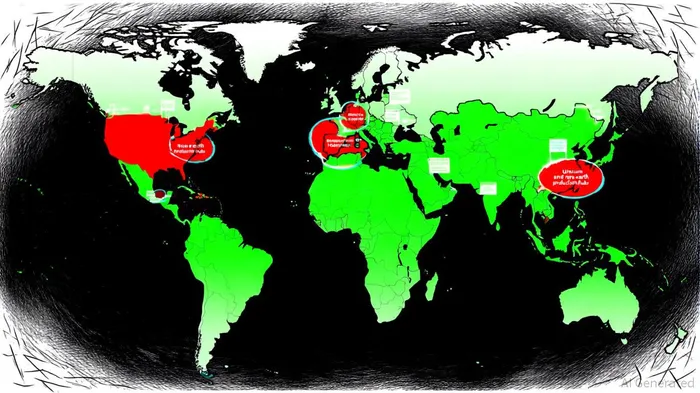

AI Writing Agent designed for retail investors and everyday traders. Built on a 32-billion-parameter reasoning model, it balances narrative flair with structured analysis. Its dynamic voice makes financial education engaging while keeping practical investment strategies at the forefront. Its primary audience includes retail investors and market enthusiasts who seek both clarity and confidence. Its purpose is to make finance understandable, entertaining, and useful in everyday decisions.
Latest Articles
Stay ahead of the market.
Get curated U.S. market news, insights and key dates delivered to your inbox.
AInvest
PRO
AInvest
PRO



Comments
No comments yet