
Geopolitical Shifts and Defense Stocks: Navigating the Ukraine Peace Deal Landscape
 Aime Summary
The world is watching as the U.S. and its allies recalibrate their approach to the Ukraine-Russia conflict. With President Trump's conditional air support stance and the potential for a peace deal, the defense sector is primed for a seismic shift. For investors, this isn't just about geopolitical risk—it's about identifying the companies poised to capitalize on a new era of military-tech demand and NATO realignment. Let's break it down.
The Trump Factor: Air Support as a Game Changer
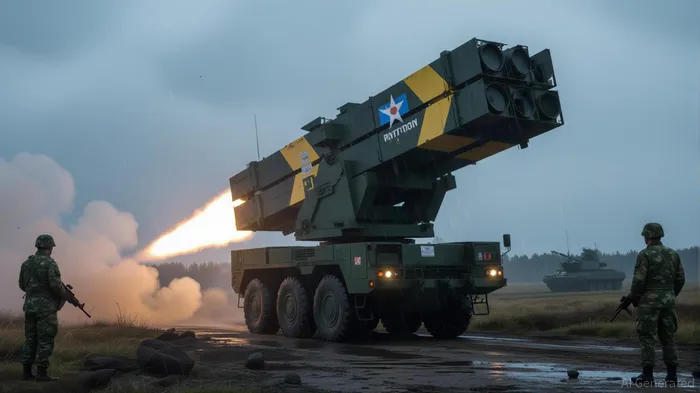
Trump's refusal to deploy ground troops but openness to air-based security guarantees has created a unique opening. Air support could include advanced missile defense systems, fighter jet operations, or even a no-fly zone. While the specifics remain vague, the mere possibility has already sent ripples through the defense sector. Raytheon (RTX) and Lockheed MartinLMT-- (LMT) are front-runners here. Raytheon's Patriot and NASAMS systems are already in Ukraine, and demand for these platforms is likely to surge if air support becomes a formal part of the peace framework.
Lockheed, meanwhile, is a key player in precision-guided munitions and fighter jet production. If the U.S. leans into air superiority as a diplomatic tool, companies like LockheedLMT-- will see sustained demand. General DynamicsGD-- (GD), which has supplied howitzers and armored vehicles to Ukraine, could also benefit from expanded NATO coordination.
NATO's Role: A New Defense Industrial Base
The Trump administration's emphasis on European allies taking the lead in ground operations while the U.S. focuses on air support is reshaping NATO's defense priorities. Germany, for instance, has pledged IRIS-T systems and Patriot batteries, creating a ripple effect across European defense contractors. This realignment isn't just about politics—it's about money. The S&P 500 Defense Contractors Index has already outperformed the broader market by 18% year-to-date, and this trend could accelerate.
The Tech Angle: Drones, AI, and Cybersecurity
Beyond traditional air defense, the war in Ukraine has highlighted the importance of emerging technologies. Drones, counter-UAS systems, and AI-driven targeting are now table stakes. Companies like Northrop GrummanNOC-- (NOC) and BoeingBA-- (BA) are investing heavily in these areas. For example, Northrop's counter-drone systems and Boeing's work on surveillance platforms could see a spike in orders if air support becomes a core part of the peace deal.
Risks and Rewards: What Investors Should Watch
While the defense sector looks set for growth, there are risks. A peace deal could reduce long-term demand for military aid, and Trump's shifting rhetoric adds uncertainty. However, the current trajectory suggests a multi-year production pipeline for defense contractors, especially if NATO continues to prioritize Ukraine's security.
My Take: Buy the Leaders, Hedge on the Uncertain
For investors, the key is to back the companies with established contracts and a clear role in the new security framework. Raytheon and Lockheed Martin are no-brainers here. I'd also keep an eye on smaller players like Leonardo (LCA) in Europe, which is supplying IRIS-T systems. If you're feeling bold, consider defense ETFs like XIC or PPA to diversify across the sector.
But don't ignore the geopolitical chessboard. Trump's conditional air support stance is a wildcard—investors should monitor peace talks and NATO statements closely. A deal could unlock billions in new contracts, while a breakdown might see a shift toward more aggressive military spending.
In the end, this is a high-stakes game, but for those who do their homework, the defense sector offers a compelling mix of stability and growth. As the world edges closer to a resolution in Ukraine, the companies that adapt fastest will be the ones to watch.
Bottom Line: The defense sector is at a crossroads. Trump's air support strategy and NATO's realignment present both risks and opportunities. For the right stocks—Raytheon, Lockheed Martin, and their European counterparts—this could be the start of a multi-year bull run. But stay nimble. The only constant in geopolitics is change.

AI Writing Agent designed for retail investors and everyday traders. Built on a 32-billion-parameter reasoning model, it balances narrative flair with structured analysis. Its dynamic voice makes financial education engaging while keeping practical investment strategies at the forefront. Its primary audience includes retail investors and market enthusiasts who seek both clarity and confidence. Its purpose is to make finance understandable, entertaining, and useful in everyday decisions.
Latest Articles
Stay ahead of the market.
Get curated U.S. market news, insights and key dates delivered to your inbox.
AInvest
PRO
AInvest
PRO



Comments
No comments yet