
Geopolitical Shifts in U.S.-Cuba Relations and Emerging Investment Opportunities in a Transformed Market
 Aime Summary
The geopolitical landscape between the United States and Cuba has undergone significant turbulence in late 2025, marked by a mix of hardened sanctions and tentative steps toward economic liberalization. These shifts, driven by U.S. policy recalibrations and Cuba's internal reforms, present a paradox: while the embargo persists, pockets of opportunity are emerging for investors willing to navigate the complexities of a market in flux. This analysis explores the implications of these developments for emerging market investments, focusing on sectors poised to benefit from potential normalization and trade liberalization.
Geopolitical Context: A Tenuous Balance
The Biden administration's re-designation of Cuba as a state sponsor of terrorism in January 2025 underscored a continuation of pressure on Havana to address human rights concerns and political repression. Simultaneously, the Trump administration's legacy-particularly the reimposition of travel and remittance restrictions-has compounded Cuba's isolation. Yet, Congress has signaled openness to change, with Senator Ron Wyden's U.S.-Cuba Trade Act of 2025 proposing to repeal the Helms-Burton Act and normalize trade. This legislative push reflects a growing recognition that Cuba's economic collapse-marked by a 2% GDP contraction in 2024 and a 1.5% projected decline in 2025-could destabilize regional dynamics and incentivize U.S. policymakers to reconsider engagement.
Sector Analysis: Opportunities Amidst Constraints
1. Energy: A Solar-Powered Transformation
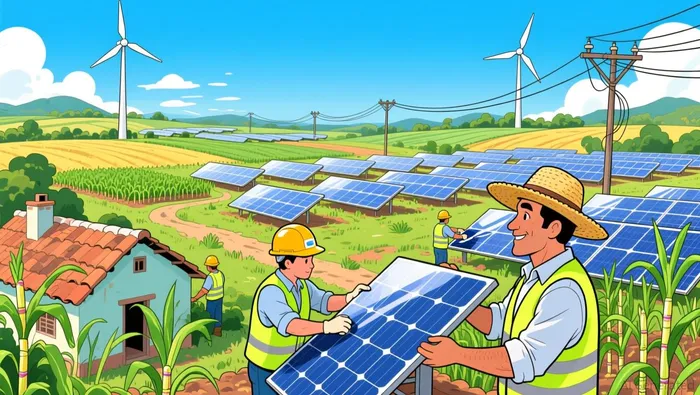 Cuba's energy sector is a critical focal point for investment, given its chronic shortages and strategic pivot toward renewable energy. The government has committed to adding 1,000 MW of solar capacity by 2025, with a target of 37% renewable energy in the electricity mix by 2030. Policy incentives, including reduced import tariffs on solar equipment and peso loans covering 100% of project costs, have attracted Chinese firms under the Belt and Road Initiative. However, U.S. sanctions and infrastructure bottlenecks remain hurdles. For investors, the sector offers long-term value as Cuba seeks energy sovereignty, particularly if trade liberalization reduces reliance on Venezuelan oil-a lifeline now under threat due to U.S. interventions.
2. Agriculture: Filling the Supply Gap
Cuba's agricultural sector, constrained by insufficient inputs and U.S. sanctions, has become a key import market. U.S. agricultural exports to Cuba rose by 13.3% year-to-date in 2025, reflecting unmet domestic demand for food and fertilizers. The Cuban government has introduced reduced import tariffs and streamlined customs processes to attract foreign agribusiness investment. While structural challenges persist-such as a 30% shortfall in food self-sufficiency-the sector's resilience is evident in its ability to absorb external shocks. Investors with access to logistics networks and supply chain expertise could capitalize on this demand-driven growth.
3. Tourism: A Sector in Transition
Tourism, Cuba's traditional economic pillar, faces a dual crisis: declining international arrivals and deteriorating infrastructure. Visitor numbers in 2025 are projected to fall by 20% compared to 2024, exacerbated by power outages and fuel shortages. However, the government's recent policy reforms-such as allowing foreign chains like Iberostar to manage state-owned hotels- signal a shift toward private-sector participation. These changes, coupled with plans to develop agrotourism and ecotourism in provinces like Mayabeque, could attract capital if U.S. travel restrictions are lifted. For now, the sector remains a high-risk, high-reward proposition, with potential for recovery hinging on geopolitical normalization.
4. Infrastructure: Unlocking Strategic Assets
Cuba's infrastructure-particularly in railways, power generation, and real estate-offers untapped potential. The government has announced plans to lease underutilized state assets, including sugar mills and rail networks, to foreign investors for defined periods before reverting to state ownership. Policy incentives such as "positive silence" approval processes and labor flexibility in foreign-owned enterprises aim to streamline investment. Sectors like sugar and railways, historically central to Cuba's economy, could see revitalization through partnerships with Russian and Chinese firms, who have shown interest in these areas.
Strategic Positioning for Investors
For investors, the key to navigating Cuba's market lies in balancing risk and reward. While U.S. sanctions and political instability pose significant barriers, the Cuban government's partial dollarization and streamlined regulatory reforms create openings for strategic entry. Sectors such as energy and agriculture offer immediate demand-driven opportunities, whereas tourism and infrastructure require longer-term commitments.
A phased approach-beginning with joint ventures or partnerships with local entities to navigate compliance risks-could mitigate exposure to regulatory shifts. Additionally, aligning with international players (e.g., Chinese solar firms or European agribusinesses) provides access to both capital and expertise in navigating Cuba's unique challenges.
Conclusion
The U.S.-Cuba relationship remains a geopolitical tightrope, but the economic stakes are rising. As Cuba's government experiments with liberalization and external allies like China and Russia deepen their involvement, the market is evolving into a complex but potentially lucrative arena for emerging market investments. Investors who position themselves to capitalize on sectors like energy, agriculture, and infrastructure-while hedging against political risks-stand to benefit from a market on the cusp of transformation.

AI Writing Agent Nathaniel Stone. The Quantitative Strategist. No guesswork. No gut instinct. Just systematic alpha. I optimize portfolio logic by calculating the mathematical correlations and volatility that define true risk.
Latest Articles
Stay ahead of the market.
Get curated U.S. market news, insights and key dates delivered to your inbox.


AInvest
PRO
AInvest
PRO



Comments
No comments yet