
The Geopolitical Shift: Chinese Independent Oil Firms Reshaping Iraq's Energy Landscape
 Aime Summary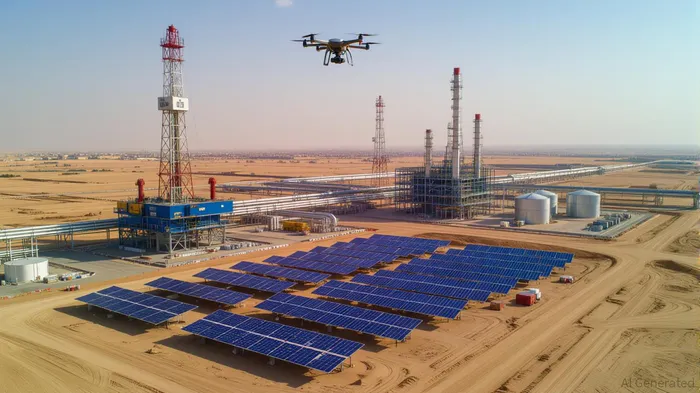
The global energy map is undergoing a seismic transformation as Chinese independent oil firms—once overshadowed by state-backed giants and international majors—emerge as pivotal players in Iraq's oil sector. This shift is not merely a commercial phenomenon but a geopolitical recalibration with profound implications for energy security, supply chains, and the balance of power in the Middle East. For investors, the rise of these nimble, profit-driven firms represents a unique opportunity to capitalize on a restructured energy landscape where traditional hierarchies are dissolving.
The New Power Brokers: How Chinese Independents Are Rewriting Iraq's Rules
Iraq, the second-largest OPEC producer, holds over 140 billion barrels of proven oil reserves. For decades, its energy sector was dominated by state-backed Chinese firms like CNPC and international giants such as ExxonMobil and Shell. However, the landscape has shifted dramatically. Since 2023, Iraq's pivot to profit-sharing contracts—replacing rigid fixed-fee agreements—has unlocked a flood of investment from independent Chinese firms. These companies, often led by former executives of state-owned enterprises, leverage lower operational costs, faster decision-making, and a willingness to accept leaner margins to secure high-impact projects.
Companies like United Energy Group (UEG), Zhongman Petroleum, and Geo-Jade Petroleum now control half of Iraq's recent exploration licensing rounds. UEG, for instance, produces 120,000 barrels per day in Block 9 and has secured a license for the Fao block, while Geo-Jade's $848 million South Basra project aims to revitalize the Tuba field to 100,000 bpd and build a 200,000-bpd refinery. These firms are not just extracting oil—they are constructing integrated energy ecosystems that include gas processing, petrochemicals, and even solar power, aligning with Iraq's 2030 renewable targets.
Geopolitical Implications: Energy Independence and Strategic Leverage
The growing influence of Chinese independent firms in Iraq is reshaping global energy geopolitics. For Iraq, the shift offers a dual advantage: accelerated production growth and reduced reliance on Western partners. Baghdad's goal to reach 10 million barrels per day by 2030 hinges on these firms' ability to deliver projects faster and cheaper than their rivals. Meanwhile, China's state-owned companies, which currently produce over 50% of Iraq's oil, are now competing with a new class of players that embody the country's “going-out” strategy—a policy to globalize Chinese capital and technology.
This dynamic has broader implications. As independent Chinese firms expand their footprint, they are creating energy corridors that bypass traditional Western-dominated routes. For example, the South Basra Integrated Energy Project, involving Geo-Jade and local partner Basra Crescent, integrates oil production, gas processing, and renewable energy. Such projects not only diversify Iraq's export options but also position China as a critical node in the Middle East's energy infrastructure, enhancing its geopolitical clout.
Investment Opportunities: Navigating the New Energy Corridors
For investors, the rise of these firms presents two key opportunities:
- Equity in High-Growth Independent Firms: Companies like Zhongman Petroleum and Anton Oilfield Services Group are scaling rapidly, with projected output in Iraq doubling to 500,000 bpd by 2030. Their stock valuations reflect aggressive expansion plans, but their agility and cost efficiency make them attractive long-term plays.
- Infrastructure and Renewable Energy Partnerships: The integration of oil, gas, and renewables in Iraq's projects (e.g., Geo-Jade's 400 MW solar plant) opens avenues for investors in green energy and energy transition technologies.
However, risks remain. Political instability, project delays, and concerns over local workforce integration could dampen returns. Investors should prioritize firms with transparent governance and diversified portfolios, avoiding overexposure to single-country or single-sector bets.
The Bigger Picture: Energy Security in a Multipolar World
The growing role of Chinese independent firms in Iraq underscores a broader trend: the fragmentation of global energy control. As traditional state-backed players and international majors retreat from volatile markets, smaller, non-state actors are filling the void. This shift enhances energy security by diversifying supply chains and reducing dependence on any single entity. For nations like Iraq, it means greater bargaining power in global energy negotiations; for investors, it means a more dynamic, less predictable—but potentially more profitable—market.
Conclusion: Positioning for the Future
The rise of Chinese independent oil firms in Iraq is not a passing trend—it is a strategic reordering of the global energy landscape. For investors, this represents a chance to align with the forces reshaping energy geopolitics. By investing in firms that combine cost efficiency, geopolitical agility, and integrated energy solutions, investors can hedge against volatility while capitalizing on the next phase of global energy development. The key lies in recognizing that the future of energy is no longer defined by the dominance of a few giants but by the emergence of a multipolar, decentralized system where nimble players dictate the rules.
Final Investment Note: Diversify across independent Chinese firms, infrastructure-linked projects, and renewable energy partnerships to mitigate risks and capture growth in Iraq's evolving energy corridors.

Stay ahead of the market.
Get curated U.S. market news, insights and key dates delivered to your inbox.


AInvest
PRO
AInvest
PRO



Comments
No comments yet