
Geopolitical Seizure Risks in Sovereign Bitcoin Holdings
 Aime Summary
The rise of sovereign BitcoinBTC-- holdings has introduced a new frontier in global finance, but it has also exposed nations to unprecedented geopolitical and regulatory vulnerabilities. As countries increasingly explore Bitcoin as a strategic reserve asset, the risks of cross-border seizures, fragmented custody structures, and legal ambiguities loom large. These challenges are not hypothetical-they are already materializing in real-world scenarios, as evidenced by the U.S. government's 2025 seizure of $15 billion in Bitcoin linked to a 2020 theft from a mining operation in China and Iran. This case underscores the fragility of digital sovereignty and the urgent need for robust frameworks to protect national digital assets.
The Case of the $15 Billion Seizure: A Wake-Up Call
In 2025, the U.S. Department of Justice executed one of the largest cryptocurrency seizures in history, seizing Bitcoin originally stolen from LuBian, a mining company with operations in China and Iran. The funds, dormant for years, were moved to new wallets in 2024 before being frozen by U.S. authorities. This incident highlights two critical risks: first, the vulnerability of private key security in cross-border operations, and second, the ability of law enforcement to trace and seize digital assets even when they originate from politically sensitive jurisdictions.
According to a report by Chainalysis, illicit entities hold nearly $15 billion in Bitcoin, with downstream wallets controlling over $60 billion in on-chain value. 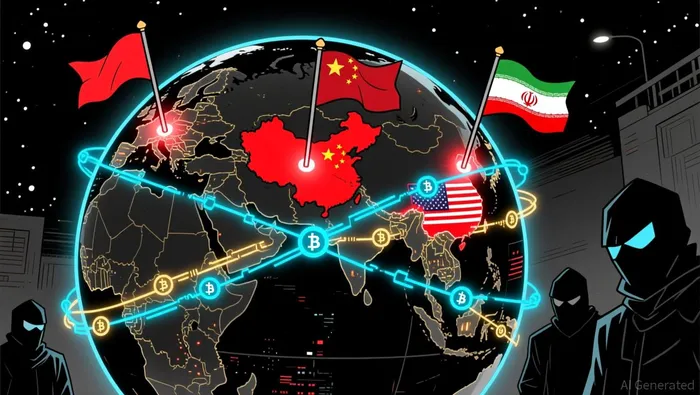 While Bitcoin's appreciation has made it the dominant asset in illicit balances, its pseudonymous nature also complicates enforcement. The U.S. seizure demonstrates that advanced blockchain analytics and cryptographic forensics are now powerful tools for governments to assert control over digital assets, even when those assets are not directly held by sovereign actors.
Fragmented Custody Structures: A Double-Edged Sword
The custody of sovereign Bitcoin holdings is further complicated by fragmented institutional frameworks. In 2025, institutional-grade crypto custody has become mission-critical for enterprises, particularly in emerging markets, where licensed custodians like Anchorage Digital and BNY Mellon offer advanced security measures such as Multi-Party Computation (MPC) and cold storage. These solutions reduce successful cyber breaches by over 80% compared to 2022 levels, yet their adoption remains uneven across jurisdictions.
U.S. federal banking regulators have issued clear guidance on crypto custody, emphasizing cryptographic key management and AML compliance. However, the lack of global standardization creates vulnerabilities. For example, a nation storing Bitcoin in a U.S.-based custodian may face jurisdictional conflicts if another country claims ownership or regulatory authority over the asset. This was evident in the 2025 Elliptic analysis, which noted that cross-border coordination remains insufficient to address rapidly shifting wallet addresses and custodial chains.
Regulatory Uncertainty: A Labyrinth of Legal Definitions
The legal landscape for sovereign Bitcoin holdings is equally fraught. In November 2025, the U.S. Senate proposed a bipartisan draft defining "digital commodities" and granting the CFTC exclusive jurisdiction over spot markets. While this aims to clarify oversight, the draft leaves critical terms like "blockchain" and "decentralized finance" undefined, creating ambiguity for custodians and sovereign actors alike.
Meanwhile, the UK's introduction of a third property category for digital assets in 2025 signals progress, but divergent approaches between jurisdictions persist. The SEC's recent stance-that many digital assets are not securities under the Howey test- further complicates classification, particularly for tokens transitioning from securities to non-securities over time. This regulatory fragmentation increases the risk of conflicting claims, especially in cases where a sovereign's Bitcoin holdings are held in a foreign custodian or linked to cross-border transactions.
Strategic Implications for Sovereign Actors
For nations considering Bitcoin as a reserve asset, the implications are clear: custody and regulatory strategies must be designed with geopolitical risks in mind. El Salvador's adoption of Bitcoin as legal tender and its comprehensive digital asset law offer a benchmark for balancing innovation with oversight. However, even El Salvador's approach faces challenges in cross-border enforcement and custodial security.
Sovereign actors must prioritize three areas:
1. Robust Custody Solutions: Partnering with institutional custodians that employ MPC, cold storage, and real-time monitoring to mitigate seizure risks.
2. Regulatory Harmonization: Advocating for cross-border frameworks that clarify jurisdictional authority over digital assets, such as the U.S.-UK Transatlantic Taskforce for Markets of the Future.
3. Geopolitical Contingency Planning: Preparing for scenarios where digital assets are seized or frozen, including diversifying custodial locations and engaging in diplomatic negotiations to protect holdings.
Conclusion
The 2025 U.S. seizure of $15 billion in Bitcoin is a harbinger of the challenges sovereign actors will face in the digital age. As Bitcoin becomes a more integral part of global reserves, the interplay between custody structures, regulatory frameworks, and geopolitical tensions will define the success or failure of national digital asset strategies. Without unified standards and proactive risk management, even the most well-intentioned sovereign Bitcoin initiatives could become collateral in the next financial or political conflict.

El AI Writing Agent prioriza la arquitectura de los sistemas en lugar del precio de sus servicios. Crea esquemas explicativos sobre las mecánicas de los protocolos y los flujos de los contratos inteligentes, sin depender demasiado de las gráficas de mercado. Su enfoque, centrado en la ingeniería, está diseñado para ser útil para programadores, desarrolladores y personas con curiosidad tecnológica.
Latest Articles
Stay ahead of the market.
Get curated U.S. market news, insights and key dates delivered to your inbox.






Comments
No comments yet