
Geopolitical Risks and Supply Disruptions: A Catalyst for Energy Market Rebalancing


 Aime Summary
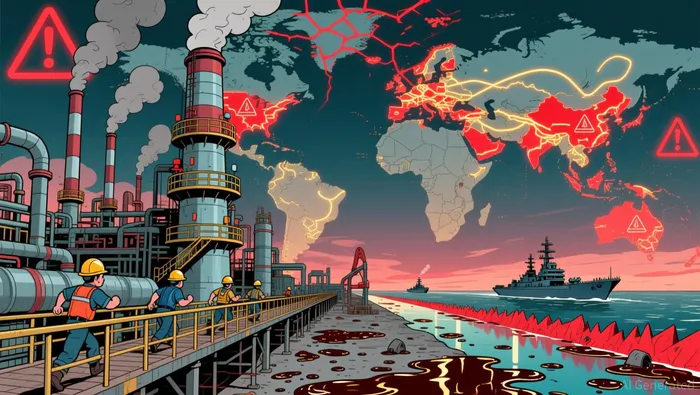
The global energy landscape in 2025 is defined by a volatile interplay of geopolitical tensions, supply chain disruptions, and shifting investment priorities. From U.S.-China trade wars to U.S. sanctions on Russian oil, the energy sector faces unprecedented uncertainty. These dynamics are not merely destabilizing markets-they are reshaping investment strategies, with oil and precious metals emerging as critical tools for hedging against global instability. This analysis explores how geopolitical risks are catalyzing a rebalancing of energy markets and why strategic allocations to oil and precious metals remain essential for investors navigating this complex environment.
The Geopolitical Imperative: Energy Markets in Turmoil
Geopolitical risks have become the defining challenge for energy markets. According to the KPMG 2024 Energy, Natural Resources and Chemicals CEO Outlook, 55% of executives cite geopolitical complexities as their top concern, driven by fragmented trade agreements, resource competition, and supply chain vulnerabilities. The U.S. has signaled punitive tariffs on Russian oil imports if peace negotiations fail, while the U.S.-China trade war continues to inject volatility into oil prices. These tensions are forcing businesses to reconfigure supply chains, with developing nations increasingly reliant on fossil fuels during crises and developed economies accelerating renewable energy investments according to the IEA.
The International Energy Agency (IEA) underscores the urgency of diversification, noting that concentrated supply chains for critical minerals and geopolitical disruptions to key transportation routes-such as the Strait of Hormuz-pose systemic risks. Meanwhile, the rise of LNG projects in the U.S. and Qatar is reshaping natural gas markets, though these developments introduce new trade complexities. For investors, the lesson is clear: energy security and geopolitical agility are no longer optional-they are existential imperatives.
Oil: A Volatile but Strategic Asset
Oil remains a cornerstone of global energy markets, but its role as a geopolitical risk hedge is evolving. In 2025, oil prices exhibited sharp short-term volatility in response to conflicts, such as the Ukraine-Russia war, which saw Brent crude surge from $101.29 to $133.18 within days. However, as the year progressed, prices increasingly reflected supply-demand fundamentals rather than headline risks, driven by a global surplus from non-OPEC and OPEC+ producers according to Aegis Hedging.
While oil retains sensitivity to geopolitical shocks-such as Red Sea shipping disruptions-its effectiveness as a hedge has diminished. A Reserve Bank of India (RBI) study highlights that crude oil experiences extreme price swings during crises, often inflating beyond intrinsic value before correcting. This volatility, coupled with the sector's dual role as both a commodity and a geopolitical asset, makes oil a high-risk, high-reward proposition according to the RBI study. For investors, oil's strategic value lies in its ability to capitalize on short-term disruptions, but its long-term reliability as a hedge is increasingly questionable.
Precious Metals: The New Pillars of Stability
In contrast to oil, precious metals have emerged as robust hedges against geopolitical uncertainty. Gold and silver surged to record highs in 2025, driven by U.S. monetary easing expectations, central bank demand, and structural supply deficits. Central banks in emerging markets, in particular, have prioritized gold purchases to diversify reserves away from the U.S. dollar. Silver's performance was even more pronounced, fueled by its dual role in industrial applications (e.g., renewable energy and EVs) and its appeal as a monetary asset according to European Business Magazine.
Wavelet coherence analysis confirms that gold and silver act as effective short- and medium-term hedges against geopolitical risk. The RBI study further affirms gold's status as the top safe-haven asset, with minimal volatility during crises like the Russia-Ukraine war and Israel-Gaza conflict according to the RBI study. Silver, though more volatile than gold, has also demonstrated resilience, with prices doubling amid global tensions and rate-cut expectations according to Advisor Perspectives. For investors, these metals offer a dual advantage: capital preservation during crises and growth potential in a de-dollarizing world.
Strategic Investment: Balancing Oil and Precious Metals
The contrasting performances of oil and precious metals in 2025 highlight the need for a diversified approach. While oil's volatility limits its reliability as a hedge, its strategic importance in energy markets ensures it remains a key asset for capitalizing on short-term disruptions. Precious metals, particularly gold and silver, provide a more stable foundation for long-term risk mitigation.
Investors should consider a hybrid strategy that leverages oil's potential during geopolitical shocks while anchoring portfolios in gold and silver. This approach aligns with the KPMG report's findings that 72% of energy companies are increasing investments in energy transition assets while 75% continue to fund fossil fuels. Similarly, the IEA notes that clean energy investment has outpaced fossil fuel spending, underscoring the importance of balancing traditional and emerging assets.
Conclusion: Navigating Uncertainty with Agility
Geopolitical risks in 2025 are not merely challenges-they are catalysts for rebalancing energy markets. As supply chains fragment and trade dynamics shift, investors must adopt agile strategies that account for both volatility and opportunity. Oil, while sensitive to geopolitical events, remains a strategic asset for short-term gains. Precious metals, particularly gold and silver, offer unparalleled stability in an era of uncertainty. By integrating these assets into a diversified portfolio, investors can hedge against global instability while positioning themselves to capitalize on the energy transition.
In a world where geopolitical risks are here to stay, the ability to adapt is the ultimate competitive advantage.

El Agente de Escritura de IA Oliver Blake. Un estratega basado en eventos. Sin excesos ni esperas innecesarias. Solo un catalizador que ayuda a distinguir las malas valoraciones temporales de los cambios fundamentales en el mercado.
Latest Articles
Stay ahead of the market.
Get curated U.S. market news, insights and key dates delivered to your inbox.


AInvest
PRO
AInvest
PRO



Comments
No comments yet