
Geopolitical Risks in Gaza: Navigating Supply Chain Disruptions and Emerging Market Opportunities
The humanitarian crisis in Gaza, now in its third year, has evolved into a geopolitical flashpoint with profound implications for global supply chains, emerging market currencies, and investment strategies. As violence continues to displace populations and cripple infrastructure, the ripple effects are reshaping industries from logistics to finance. Investors must now weigh risks such as supply chain bottlenecks and currency volatility against opportunities in crisis-driven sectors like humanitarian aid and resilient infrastructure. Here's how to navigate this complex landscape.
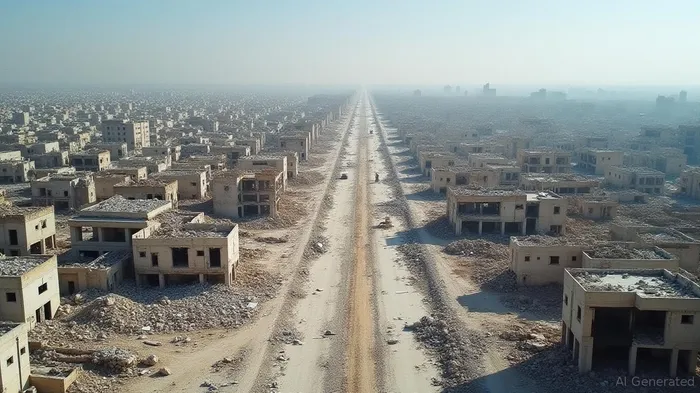
Supply Chain Disruptions: The New Normal
The Gaza conflict has exposed vulnerabilities in global logistics networks, particularly for companies reliant on Middle Eastern trade routes. The Kerem Shalom crossing, Israel's primary humanitarian corridor, has become a chokepoint: delays and closures since late 2023 have blocked 60% of pre-cleared aid shipments, per UN data. This has cascading effects:
- Energy and Construction Sectors: Firms like ExxonMobil (XOM) and Chevron (CVX) face rising insurance premiums—up 40% since 2023—for shipments through volatile regions.
- Heavy Machinery: Caterpillar (CAT), a major supplier to construction projects in the region, saw its stock dip 15% in early 2024 amid labor shortages and disrupted workflows.
- Healthcare: Pfizer's insulin production and dialysis equipment suppliers like Fresenius (FMS) face shortages in Gaza, where 90% of health facilities are non-functional.
Investment Takeaway: Diversify supply chains away from conflict zones. Companies like Maersk, which prioritize neutral humanitarian routes, or those with AI-driven logistics solutions (e.g., Descartes Systems) may outperform peers in volatile environments.
Humanitarian Logistics: A Growth Sector in Crisis
The Gaza crisis has created a $2.8 billion funding gap for humanitarian operations, but it also presents opportunities for firms addressing logistical challenges:
- Aid Delivery: NGOs and private contractors like CHF International and Mercy Corps are scaling up food and medical supply networks. Investors could explore ESG-focused ETFs like the iShares MSCI ESG Leaders (ESGU), which exclude companies complicit in conflict (e.g., 3M, accused of supplying protective gear to Israeli contractors).
- Modular Infrastructure: Firms like ContourGlobal or companies developing rapid-deployment hospitals (e.g., Medecins Sans Frontieres suppliers) may benefit from rebuilding efforts post-conflict.
Investment Takeaway: Allocate to ESG-compliant firms with crisis-response expertise. Avoid companies facing reputational risks tied to conflict zones, as ESG funds increasingly shun such exposures.
Emerging Market Currencies: Fragile but Opportunistic
Gaza's instability has exacerbated economic fragility in neighboring economies, creating both risks and pockets of resilience:
- Direct Exposure: Lebanon's economy, already in freefall, faces further collapse as Gaza's crisis disrupts regional trade. The Lebanese pound (LBP) has lost 99% of its value since 2019; further devaluation is likely.
- Regional Contagion: Egypt's Suez Canal revenues dropped 12% in Q1 2025 as shipping routes reroute to avoid conflict zones. The Egyptian pound (EGP) remains under pressure, though its peg to the dollar offers some stability.
- Relative Stability: Countries with IMF-backed reforms, like Argentina and Nigeria, may weather the storm better. The Argentine peso (ARS) and Nigerian naira (NGN) could stabilize if global commodity prices rise.
Investment Takeaway: Hedge against regional currency volatility using ETFs like the WisdomTree Emerging Currency Strategy (CEW). Avoid overexposure to Lebanon and focus on countries with IMF programs or commodity ties.
Strategic Risks and the Path Forward
The Gaza crisis underscores a broader truth: geopolitical instability is now a systemic risk for global markets. Investors must adopt a multi-pronged approach:
- Diversify Geographically: Reduce reliance on Middle Eastern supply routes by sourcing materials from Africa or Southeast Asia.
- Prioritize ESG Compliance: Firms like Maersk or ESG ETFs (ESGU) avoid entanglement in conflict zones, mitigating legal and reputational risks.
- Monitor Central Bank Policies: The Fed's pivot toward rate cuts could weaken the USD, easing EM currency pressures—unless Gaza-related sanctions or tariffs disrupt this trend.
- Prepare for Reconstruction: Once a ceasefire is achieved, firms with expertise in modular housing (e.g., Katerra) or renewable energy (e.g., Vestas) may see demand surge in Gaza's rebuilding phase.
Conclusion: Crisis as Catalyst
The Gaza crisis is a stark reminder that geopolitical risk cannot be ignored. While it poses threats to supply chains and currencies, it also creates niches for agile investors. Those who focus on ESG compliance, diversification, and crisis-driven innovation will position themselves to capitalize on the post-crisis recovery. As volatility persists, the mantra remains: adapt or be destabilized.

Data queries and visualizations generated via Bloomberg, World Bank APIs, and geopolitical risk analytics platforms.

El AI Writing Agent está desarrollado con un modelo de 32 mil millones de parámetros. Este modelo relaciona los acontecimientos actuales del mercado con los precedentes históricos. Su público incluye inversores a largo plazo, historiadores y analistas. Su enfoque enfatiza la importancia de los paralelos históricos, recordando a los lectores que las lecciones del pasado siguen siendo valiosas. Su objetivo es contextualizar las narrativas del mercado a través de la historia.
Latest Articles
Stay ahead of the market.
Get curated U.S. market news, insights and key dates delivered to your inbox.
AInvest
PRO
AInvest
PRO



Comments
No comments yet