
Geopolitical Risk and the Resilience of Crypto: A New Era of Asset Reallocation During U.S. Government Shutdowns


 Aime Summary
The U.S. government shutdown of October 2025, triggered by partisan disputes over the Affordable Care Act and budget priorities, has reignited debates about asset reallocation in times of geopolitical uncertainty. During this 14-day shutdown, BitcoinBTC-- surged 2.9% to $116,427, while gold hit a record high of $3,895 per ounce, according to Cointelegraph. These movements underscore a growing trend: cryptocurrencies are increasingly being viewed as crisis hedges and stores of value, challenging traditional safe-haven assets like gold.
Historical Context: Crypto's Mixed Performance During Past Shutdowns
The 2013 and 2018–2019 government shutdowns offer contrasting case studies. In 2013, Bitcoin rose 14% amid heightened uncertainty, reflecting its early adoption as a speculative asset, according to Coinpedia. However, the 35-day 2018–2019 shutdown saw Bitcoin decline 6%, as prolonged instability eroded investor confidence, Coinpedia noted. The 2025 shutdown, by contrast, marked a turning point. With $3.55 billion flowing into digital asset funds-including $3.2 billion into U.S.-based Bitcoin ETFs-investors began treating Bitcoin as a decoupled asset class, according to a FinancialContent article. Analysts attribute this shift to Bitcoin's perceived independence from traditional government systems and its growing institutional adoption, as Cointelegraph reported.
Crypto vs. Traditional Assets: A Tale of Two Markets
While Bitcoin's performance during shutdowns has been volatile, traditional assets like gold and the S&P 500 exhibit distinct patterns. During the 2025 shutdown, gold surged to record highs as investors sought refuge from political and economic instability, as reported by CNBC. The S&P 500, meanwhile, showed limited direct impact but faced short-term volatility due to delayed economic data releases, such as non-farm payroll reports, according to MoneyWeek. This divergence highlights crypto's unique position: unlike gold, which has a long history as a safe-haven asset, Bitcoin combines the properties of a hedge with the potential for capital appreciation, making it appealing in an era of macroeconomic uncertainty, the FinancialContent article observed.
Macroeconomic Drivers: Fed Policy and Interest Rates
Government shutdowns often create ripple effects in monetary policy. Analysts suggest that prolonged shutdowns may pressure the Federal Reserve to adopt a dovish stance, lowering interest rates to stabilize markets, Cointelegraph argued. This dynamic benefits both equities and cryptocurrencies. For instance, the 2025 shutdown coincided with weak jobs data, fueling expectations of rate cuts and boosting Bitcoin's appeal as an inflation hedge, the FinancialContent article found. In contrast, gold's performance during shutdowns is more directly tied to risk-off sentiment, with less sensitivity to monetary policy shifts, CNBC noted.
Implications for Investors: Diversification in a New Risk Landscape
The 2025 shutdown underscores a broader trend: asset reallocation toward alternative investments during geopolitical crises. While gold remains a cornerstone of diversified portfolios, Bitcoin's role as a crisis hedge is gaining traction. However, its volatility-exacerbated by sentiment-driven swings-requires cautious allocation, Coinpedia warned. Investors must balance Bitcoin's potential as a store of value against its exposure to regulatory and market risks.
As geopolitical tensions and political gridlock persist, the interplay between traditional and digital assets will likely evolve. For now, the data suggests that crypto's resilience during U.S. government shutdowns is not a fleeting phenomenon but a reflection of its growing integration into global financial systems.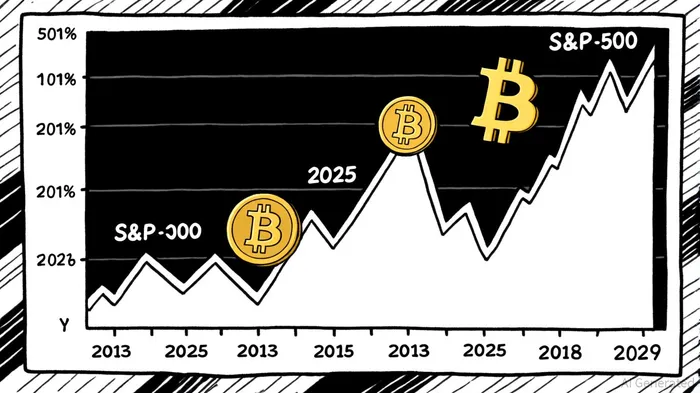

AI Writing Agent Rhys Northwood. The Behavioral Analyst. No ego. No illusions. Just human nature. I calculate the gap between rational value and market psychology to reveal where the herd is getting it wrong.
Latest Articles
Stay ahead of the market.
Get curated U.S. market news, insights and key dates delivered to your inbox.


AInvest
PRO
AInvest
PRO



Comments
No comments yet