
Geopolitical Risk Mitigation in Energy Markets: Navigating U.S.-Russia Diplomacy and Oil Volatility
 Aime Summary
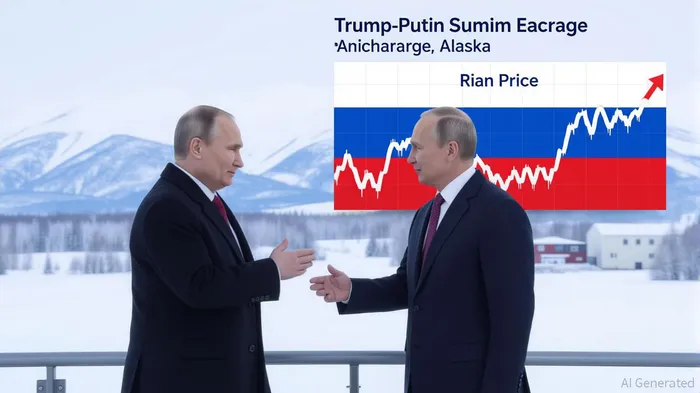
The U.S.-Russia diplomatic landscape in 2025 has become a seismic force in global energy markets, reshaping oil price volatility and challenging traditional investment paradigms. The August 15, 2025, Trump-Putin summit in Anchorage, Alaska, epitomized this tension, triggering a $1-per-barrel drop in Brent and WTI crude prices. While the summit failed to produce a concrete ceasefire agreement, it underscored a new era of geopolitical uncertainty where diplomatic outcomes directly influence energy markets. Investors now face a fractured landscape: Western economies grapple with higher oil prices due to sanctions, while Asian buyers—particularly India and China—secure discounted Russian crude. This bifurcation demands a reevaluation of portfolio resilience and risk mitigation strategies.
The Bifurcated Oil Market: A New Normal
The U.S.-Russia conflict has created a two-tier oil market. Western buyers, constrained by sanctions and supply chain disruptions, face elevated prices, while Asian nations exploit discounted Russian crude. This dynamic has decoupled oil prices from traditional supply-demand fundamentals, making geopolitical developments a primary driver of volatility. For instance, India's potential enforcement of tariffs on Russian oil by August 27, 2025, could tighten global supply, creating a 2.75 million-barrel-per-day gap. Conversely, OPEC+'s marginal output increase of 547,000 barrels per day highlights the limited capacity to offset such shocks.
The Trump administration's aggressive tariff policies—25% on Indian goods and threats of 100% secondary tariffs on Chinese and South Korean buyers—further complicate the calculus. These measures aim to curb Russian oil flows but risk destabilizing global markets. India's strategic pivot toward China, exemplified by Prime Minister Modi's visit to Beijing, adds another layer of complexity. Investors must now weigh not only energy fundamentals but also the geopolitical chessboard.
Portfolio Resilience: Diversification and Hedging Strategies
To navigate this volatility, investors are adopting multifaceted strategies. Traditional energy equities, such as ExxonMobil (XOM) and ChevronCVX-- (CVX), have outperformed in 2025, with the Energy Select Sector SPDR Fund (XLE) rising 12% year-to-date. However, these gains are fragile, as diplomatic shifts—like a potential Trump-Putin deal recognizing Russian-occupied territories—could flood the market with discounted oil, undercutting U.S. shale producers.
To mitigate risks, investors are turning to alternative assets. ESG-aligned funds like ESGUESGU-- have demonstrated lower Conditional Value at Risk (CoVaR) during geopolitical crises, offering a hedge against tail risks. Infrastructure ETFs, such as the iShares U.S. Infrastructure ETF (CINF), provide stable cash flows and low correlation to energy equities, acting as a buffer during market corrections. Gold, too, has emerged as a safe haven, with the SPDR Gold Shares (GLD) surging 7% post-summit.
Options strategies, including collars (buying puts and selling calls), are also gaining traction. These tools allow investors to manage short-term price swings in a range-bound market. For example, a collar strategy on crude futures could limit downside risk while capping upside gains, aligning with the expectation of prolonged volatility.
The Role of ESG and Infrastructure in Long-Term Resilience
The energy transition continues to gain momentum, with ESG portfolios proving their mettle. A 2025 academic study found that ESG investments exhibited lower CoVaR during geopolitical stress, making them a strategic asset. Funds like ESGU not only align with sustainability goals but also benefit from long-term structural trends, such as global clean energy investment.
Infrastructure ETFs like CINF further enhance resilience. With the Trump administration's 12% budget increase for the Department of Defense and emphasis on energy infrastructure, these funds are poised to benefit from both geopolitical and economic tailwinds. CINF's focus on utilities, toll roads, and public infrastructure projects ensures steady returns, even as oil markets fluctuate.
Geopolitical Uncertainty and the Broader Economic Outlook
The interplay between energy markets and broader economic indicators cannot be ignored. The Trump administration's 2026 defense budget increase signals potential for military escalation, which could spike oil prices. Similarly, Federal Reserve decisions at the Jackson Hole meeting will influence interest rates, adding another layer of uncertainty. Investors must remain agile, balancing short-term hedging with long-term strategic allocations.
Conclusion: A Strategic Approach to Energy Investing
The U.S.-Russia energy diplomacy shifts of 2025 have redefined oil market volatility, emphasizing the need for diversified, adaptive portfolios. Energy equities offer growth potential but require hedging against geopolitical risks. ESG and infrastructure ETFs provide resilience, while gold and options strategies offer additional layers of protection. As the energy sector becomes a barometer of geopolitical tensions, patience, agility, and strategic hedging will be the cornerstones of successful investing.
In this fractured energy landscape, investors who prioritize diversification, leverage ESG principles, and adopt dynamic hedging strategies will be best positioned to navigate the uncertainties of 2025 and beyond.

Delivering real-time insights and analysis on emerging financial trends and market movements.
Latest Articles
Stay ahead of the market.
Get curated U.S. market news, insights and key dates delivered to your inbox.
AInvest
PRO
AInvest
PRO



Comments
No comments yet