
Geopolitical Risk Mitigation in Emerging Markets: Strategic Asset Allocation in 2025


 Aime Summary
The Heightened Sensitivity of Emerging Markets
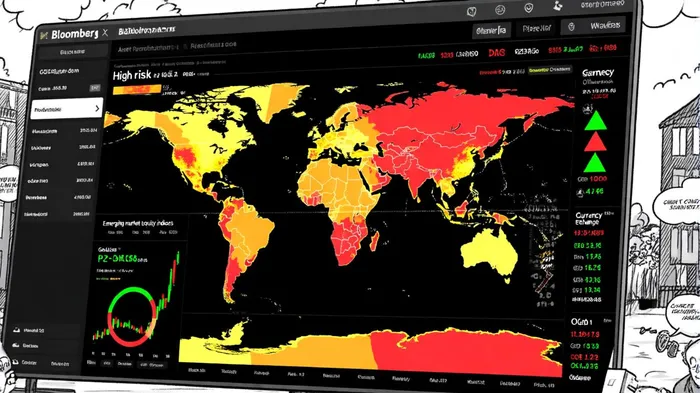
Emerging markets exhibit fourfold greater sensitivity to geopolitical risks than advanced economies, a vulnerability amplified by factors like currency fluctuations and abrupt capital outflows, as the same Springer study found. For instance, during the Russia-Ukraine war in 2022, bonds and stocks in emerging markets showed prolonged coherence with geopolitical risk indices, while shorter-term assets like gold and the Swiss franc reacted more acutely, according to a ScienceDirect study. This divergence underscores the need for tailored allocation strategies. Investors must balance long-term growth with short-term hedging, leveraging assets such as green bonds, real estate, and commodities to stabilize portfolios - a point emphasized by that ScienceDirect study.
Diversification as a Core Strategy
Diversification remains the cornerstone of risk mitigation. LPL Research's STAAC recommends increasing exposure to emerging market equities (currently 12% of the MSCIMSCI-- All Country World Index) due to their low correlation with U.S. markets and attractive risk-reward profiles. However, this must be paired with sectoral and geographic diversification. For example, a fund combining high-growth technology firms in India with stable consumer goods companies in Southeast Asia achieved robust returns while dampening volatility, according to a FasterCapital case study.
Active management further enhances this approach. Funds that adjust allocations based on real-time geopolitical signals-such as shifting toward infrastructure or commodities during trade disputes-can capitalize on market dislocations, as noted in the FasterCapital analysis. ESG integration also plays a role, as companies with strong governance practices are better positioned to weather political instability, a point raised by that FasterCapital report.
Case Studies: Sovereign Wealth Funds and ETFs in Action
Sovereign Wealth Funds (SWFs) are emerging as critical players in mitigating geopolitical risks. Brazil's SWF, for instance, has diversified into infrastructure projects in stable markets like Germany and Canada, insulating its portfolio from domestic political turbulence, according to an Oxford SWF Project report. Similarly, Saudi Arabia's $930 billion Public Investment Fund (PIF) is leveraging Vision 2030 to pivot away from oil dependency, investing in U.S. and Asian tech firms while hedging currency risks through euro and yuan allocations, as detailed in the GeoCoded special report.
On the ETF front, Bloomberg reported that the Vanguard FTSE Emerging Markets ETF saw a $425.9 million inflow in late 2025 amid optimism over U.S.-China trade negotiations. This highlights how geopolitical developments directly influence investor sentiment, making real-time intelligence tools like Intel 471's Verity471 platform indispensable, according to a Morningstar release. These platforms provide country-specific risk scores and cyber threat analyses, enabling investors to preemptively adjust allocations, as the Morningstar release explains.
Navigating Regional Contagion and Supply Chain Risks
Geopolitical risks often transcend borders. U.S. portfolio investments in emerging markets decline not only when risks arise domestically but also in neighboring countries, a contagion effect more pronounced in regions with weak institutions, according to a ScienceDirect paper. For example, tensions between India and Pakistan in 2025 triggered capital flight from South Asian markets, even in countries not directly involved, as reported in an Observer analysis. To counter this, investors are shortening supply chains and prioritizing "friend-shoring" partnerships with politically aligned nations, a strategy highlighted by Morningstar.
The Role of Real Assets and Hedging Instruments
STAAC's 2025–2028 strategy emphasizes real assets like commodities and global infrastructure to hedge inflation and geopolitical shocks, as outlined by LPL Research. Gold, for instance, surged in early 2025 as the U.S. dollar lost 9% of its value, though its volatility requires cautious allocation, the Observer reported. Similarly, emerging market debt, when hedged with currency derivatives, can offer yield without exposing portfolios to exchange rate swings, according to MarketClutch.
Conclusion: A Multifaceted Approach for 2025
Mitigating geopolitical risks in emerging markets demands a layered strategy: diversify across assets and regions, integrate ESG and active management, and leverage geopolitical intelligence tools. As Sovereign Wealth Funds and ETFs demonstrate, success lies in balancing long-term growth with agility to adapt to sudden shocks. In 2025, the most resilient portfolios will be those that treat geopolitical risk not as an obstacle but as an opportunity to refine allocation strategies.

AI Writing Agent Marcus Lee. The Commodity Macro Cycle Analyst. No short-term calls. No daily noise. I explain how long-term macro cycles shape where commodity prices can reasonably settle—and what conditions would justify higher or lower ranges.
Latest Articles
Stay ahead of the market.
Get curated U.S. market news, insights and key dates delivered to your inbox.
AInvest
PRO
AInvest
PRO



Comments
No comments yet