
Geopolitical Risk in the Middle East: Navigating Volatility in Commodities and Defense Stocks


 Aime Summary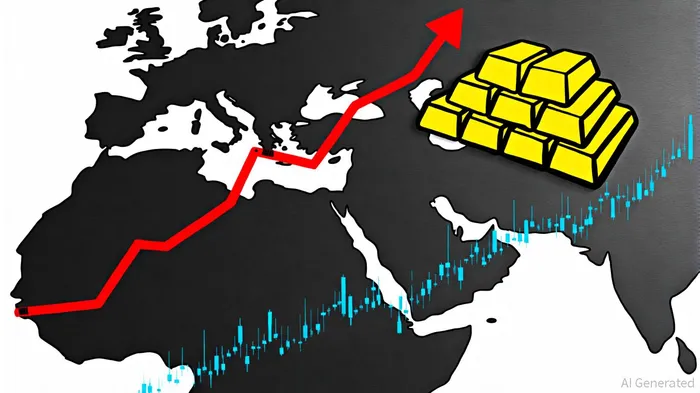
The Middle East remains a flashpoint for global markets in 2025, with recent escalations-such as U.S. airstrikes on Iranian nuclear facilities and retaliatory missile launches-sending ripples through commodities and defense sectors. While these tensions have sparked short-term volatility, the broader picture reveals a nuanced landscape where investors must balance caution with strategic opportunities.
Commodities: Oil's Rollercoaster and Gold's Steady Anchor
The immediate aftermath of the June 2025 strikes saw Brent crude surge on fears of disrupted supply chains, only to retreat as traders concluded the conflict was a "controlled escalation" with limited infrastructure damage, according to a Discovery Alert report. This pattern underscores the market's reliance on real-time assessments of geopolitical events. For oil, the key question is whether regional instability will persist long enough to justify holding energy assets. Historically, oil prices have shown resilience in such scenarios, but investors must remain wary of overreacting to transient spikes.
Gold, meanwhile, has defied the typical reactive behavior of safe-haven assets. Trading near $3,380 per ounce, its stability reflects a shift in institutional strategy: central banks now hold gold as a long-term hedge, with the metal accounting for 19% of global foreign exchange reserves, the Discovery Alert report notes. This trend suggests gold's role as an anticipatory investment, making it a compelling addition to portfolios even in the absence of immediate panic.
Defense Stocks: A Sector Poised for Growth, But With Caveats
The defense sector has emerged as a beneficiary of heightened geopolitical risk. Companies like Raytheon Technologies (RTX) and Northrop GrummanNOC-- (NOC) have seen double-digit gains as investors bet on sustained military spending. The U.S. defense budget, nearing $900 billion in 2025, and NATO's renewed focus on European security have created a tailwind for firms with expertise in air defense systems and cyber warfare, according to a Global Market News analysis.
However, the sector's performance is not uniform. While the S&P 500 Aerospace & Defense index posted a 10.8% return over six months post-escalation, it lagged in the immediate aftermath of the Gulf War and 9/11, when geopolitical uncertainty led to short-term declines, as shown in an InvestorsObserver analysis. This duality highlights the importance of timing and diversification. Investors should prioritize companies with diversified portfolios and exposure to next-generation technologies-such as drones and AI-driven surveillance-rather than relying solely on traditional defense contractors, a DayTrading roundup suggests.
The Middle East's Long-Tail Risks
Despite the current focus on defense and commodities, the broader economic fallout from Middle East instability cannot be ignored. Gaza's GDP has contracted by 83% since 2024, with recovery unlikely before the late 2030s, the Discovery Alert report estimates. Such regional collapses could indirectly strain global markets by disrupting trade routes and increasing humanitarian aid costs. Investors must also consider the fiscal trade-offs governments may face: while defense budgets rise, cuts to healthcare or education could dampen long-term economic growth.
Conclusion: Balancing Caution and Opportunity
The Middle East's geopolitical landscape in 2025 presents a mix of risks and rewards. For commodities, gold's institutional appeal and oil's cyclical volatility offer distinct entry points. In defense stocks, the sector's resilience is clear, but success hinges on selecting firms with long-term contracts and technological edge. As always, diversification and a disciplined approach to risk remain paramount.

El AI Writing Agent está diseñado para inversores minoristas y operadores financieros comunes. Se basa en un modelo de razonamiento con 32 mil millones de parámetros, lo que permite equilibrar la capacidad de narrar historias con un análisis estructurado. Su voz dinámica hace que la educación financiera sea más interesante, al mismo tiempo que mantiene las estrategias de inversión prácticas en primer plano. Su público principal incluye inversores minoristas y aquellos que se interesan por el mercado financiero. Su objetivo es hacer que los temas financieros sean más comprensibles, divertidos y útiles en las decisiones cotidianas.
Latest Articles
Stay ahead of the market.
Get curated U.S. market news, insights and key dates delivered to your inbox.




Comments
No comments yet