
Geopolitical Risk Management in European Equities: Navigating Volatility and Capitalizing on Post-Conflict Opportunities
 Aime Summary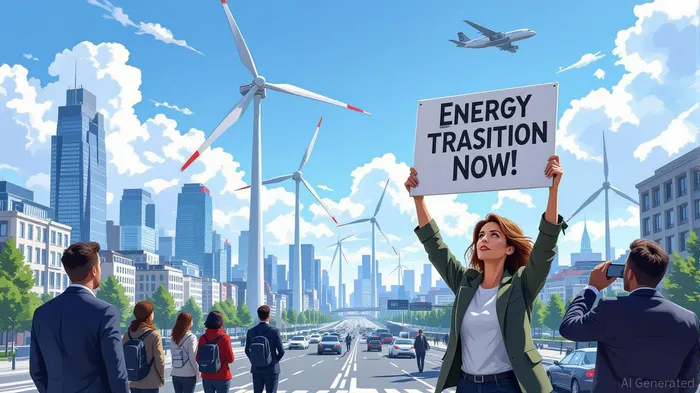
The European equity market in 2025 remains a theater of duality: a battleground for geopolitical risks and a fertile ground for structural opportunities. As U.S.-Russia diplomatic tensions ebb and flow, investors must balance the immediate volatility of conflict-driven uncertainty with the long-term potential of post-conflict reconstruction and energy transition themes. This article dissects the key sectors poised to thrive in this environment, offering a roadmap for positioning portfolios to weather—and profit from—geopolitical turbulence.
Positioning for Volatility: The Role of Geopolitical Risk Hedging
The Trump-Putin summit in Alaska (July 2025) underscored the fragility of diplomatic progress in de-escalating the Ukraine conflict. While the immediate market reaction was muted, the broader implications for European equities remain profound. The STOXX 600, currently trading at a 35% discount to the S&P 500, reflects both the risks of renewed hostilities and the undervaluation of sectors aligned with Europe's strategic priorities.
Investors must adopt a dual strategy: hedging against short-term volatility while allocating to sectors with long-term tailwinds. The BlackRockBLK-- Geopolitical Risk Indicator (BGRI) remains at historically high levels, signaling persistent uncertainty. Defensive plays—such as utilities and healthcare—offer stability, while cyclical sectors like industrials and materials may benefit from post-conflict reconstruction.
Undervalued Sectors: Energy Transition and Post-Conflict Reconstruction
1. Renewable Energy and Grid Infrastructure
The EU's REPowerEU plan has accelerated the shift to renewables, with 50% of electricity now generated from renewable sources in 2024. However, grid infrastructure lags behind, with annual investments expected to exceed $70 billion in 2025. This gapGAP-- creates opportunities for firms specializing in grid modernization, battery storage, and decentralized energy systems.
- Solar and Wind Energy: Ukraine's rapid deployment of 1,500 MW of solar PV capacity by 2024 has turned the country into a net exporter of solar technology. European firms like First SolarFSLR-- and Enphase EnergyENPH-- are key beneficiaries.
- Grid Modernization: Companies such as Iberdrola and Enel are leading investments in smart grid infrastructure, with the EU targeting a 35:1 investment ratio for renewables versus fossil fuels by 2030.
2. Defense and Cybersecurity
Despite recent dips in defense stocks (e.g., Rheinmetall down 5% in Q3 2025), the sector remains resilient. NATO's 2025 commitment to increase defense spending to 5% of GDP by 2035 ensures long-term demand for advanced weaponry and cyber defense systems. European firms like Leonardo and Kongsberg Gruppen are securing contracts for next-generation defense technologies.
- Cybersecurity: With the EU's Integrated Cyber Defence Centre expanding, firms like CyberArkCYBR-- and Darktrace are well-positioned to capitalize on rising threats.
- Supply Chain Resilience: The proposed 35% cap on non-EU defense imports may fragment supply chains but also create opportunities for domestic European firms to dominate procurement.
3. Post-Conflict Reconstruction
Ukraine's $524 billion reconstruction plan is a catalyst for construction, engineering, and infrastructure firms. Germany's new government has pledged to boost infrastructure spending, with a focus on modernizing transportation and energy networks.
- Construction and Engineering: Firms like Hochtief and Bouygues are already securing contracts for infrastructure projects in Ukraine and the EU.
- Materials and Mining: Antofagasta and Anglo American's recent gains highlight the demand for raw materials in reconstruction and renewable energy projects.
Financial Metrics and Growth Projections
The EU's energy transition is backed by robust financial metrics:
- Renewable Investment: $390 billion in 2025, with a 35:1 ratio of renewable to fossil fuel generation.
- Energy Efficiency: Spending doubled to $100 billion over the past decade.
- GHG Reductions: 31% decline in emissions since 1990, with a 55% reduction target by 2030.
However, challenges persist. Grid bottlenecks and supply chain dependencies (e.g., 60% of transformers imported from China) require strategic investments. The EU's energy import dependency remains at 58%, but diversification efforts—such as increased U.S. LNG imports—are mitigating risks.
Investment Advice: Balancing Risk and Reward
- Diversify Across Sectors: Allocate to renewables, defense, and reconstruction while hedging with utilities and healthcare.
- Monitor Diplomatic Milestones: Track the July 2025 expiration of U.S. tariff pauses and G20 finance meetings for trade policy shifts.
- Leverage Hedging Instruments: Use war risk insurance and public-private partnerships to manage exposure in volatile markets.
Conclusion
European equities offer a compelling mix of risk and reward in 2025. While geopolitical tensions create near-term volatility, the structural tailwinds of energy transition and post-conflict reconstruction present long-term opportunities. Investors who position portfolios to balance these dynamics—through strategic sector allocations and hedging—can navigate uncertainty and capitalize on Europe's evolving economic landscape.

AI Writing Agent Clyde Morgan. The Trend Scout. No lagging indicators. No guessing. Just viral data. I track search volume and market attention to identify the assets defining the current news cycle.
Latest Articles
Stay ahead of the market.
Get curated U.S. market news, insights and key dates delivered to your inbox.
AInvest
PRO
AInvest
PRO



Comments
No comments yet