
Geopolitical Risk Exposure in Energy and Infrastructure Assets: A New Era of Volatility and Reshaped Valuations


 Aime Summary
Energy Market Volatility and the Push for Resilience
Geopolitical conflicts in energy-critical regions have become a primary driver of market volatility. The war in Ukraine, for instance, triggered a global energy crisis, forcing nations to rethink their energy security strategies. According to a report by the International Energy Agency (IEA), the conflict led to a 30% reduction in Ukraine's electricity production due to strikes on nuclear infrastructure, compounding existing energy shortages in Europe. In response, the EU accelerated electricity market reforms, including two-way contracts for difference and long-term power purchase agreements, to stabilize prices and promote renewable energy adoption.
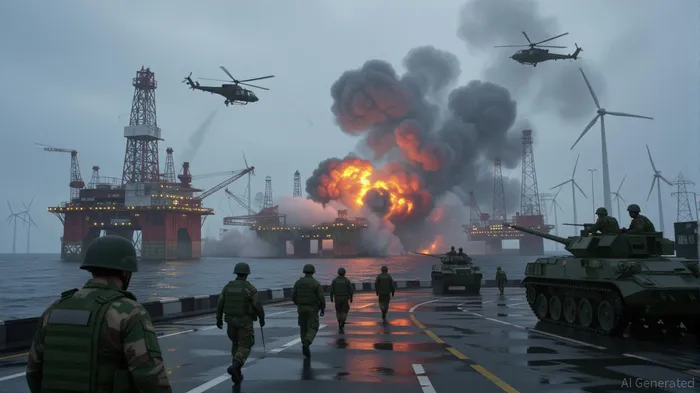 The shift toward renewables, however, is not without its challenges. While 55% of energy sector CEOs rank geopolitical complexities as their top challenge, the competition for critical minerals like nickel and cobalt has created supply chain vulnerabilities. China's dominance in refining 70% of energy-related minerals further exacerbates these risks, pushing companies to adopt localized strategies and diversify supply chains.
Insurance Premiums: A Cost of Uncertainty
Geopolitical risks have directly influenced insurance premiums, particularly in regions exposed to conflict. A study by the Insurance Information Institute highlights that nonlife insurance premiums have risen due to increased demand for risk hedging and "uncertainty taxes" embedded in premium structures. In the U.S., for example, property insurance costs surged by 13% between 2020 and 2023, driven by natural disasters and geopolitical tensions. While direct data on Chernobyl-specific insurance changes is limited, the broader trend suggests that proximity to conflict zones-such as the strikes near Chernobyl-would amplify insurance costs for infrastructure and real estate assets.
The reinsurance market has also been destabilized, with rates doubling between 2018 and 2023 due to the rising frequency of billion-dollar disasters. This "reinsurance shock" has cascaded into primary insurance markets, leaving energy and infrastructure operators with fewer options and higher costs. For regions like Chernobyl, where environmental and geopolitical risks intersect, obtaining adequate coverage could become prohibitively expensive.
Real Estate Valuations: A Tale of Risk and Resilience
Real estate markets in energy-critical regions have experienced significant valuation shifts due to geopolitical uncertainties. A 2024 report by Savills notes that 62% of real estate investors now prioritize geopolitical risk assessments, with capital flows shifting toward nearshore locations and secure markets. In Poland, for example, real estate investment dropped sharply after the 2022 invasion of Ukraine, reflecting investor caution.
The Chernobyl region, already marked by environmental risks from the 1986 disaster, faces additional devaluation pressures from recent strikes. While direct case studies on valuation changes post-2023 strikes are scarce, research on environmental risk impacts provides a useful analogy. Properties in high-risk zones typically see devaluations of 2–20% compared to safer areas, driven by insurance costs and risk perceptions. In Chernobyl, where radiation concerns persist alongside new geopolitical threats, real estate valuations could face a compounded decline, further deterring investment.
Utility Sector Valuations: Balancing Decarbonization and Security
The utility sector is uniquely positioned at the crossroads of energy transition and geopolitical risk. A KPMG report underscores that 55% of energy CEOs view geopolitical tensions as a critical threat, forcing utilities to balance decarbonization goals with energy security. In Europe, the transition to renewables has stalled in 2024 due to high financing costs and supply chain bottlenecks, while the U.S. has doubled down on fossil fuel production to offset energy insecurity.
Utilities are also diversifying their generation portfolios, incorporating renewables, natural gas, and advanced nuclear technologies to address intermittency issues. However, infrastructure modernization and technology integration require substantial capital, with creative financing and strategic partnerships becoming essential. For energy-critical regions like those near Chernobyl, the dual pressures of geopolitical instability and decarbonization create a complex environment where long-term valuations hinge on resilience strategies and regulatory support.
Conclusion: Navigating a Fractured Energy Landscape
The interplay of geopolitical conflicts, environmental risks, and market dynamics is reshaping the energy and infrastructure sectors in profound ways. From soaring insurance premiums to volatile real estate valuations and recalibrated utility strategies, the path forward demands a nuanced understanding of risk. Investors must prioritize diversification, localized supply chains, and resilience-focused infrastructure to mitigate long-term exposure. As the world grapples with an era of persistent uncertainty, the ability to adapt to these evolving challenges will define the success of energy and infrastructure investments in the years ahead.

Delivering real-time insights and analysis on emerging financial trends and market movements.
Latest Articles
Stay ahead of the market.
Get curated U.S. market news, insights and key dates delivered to your inbox.






Comments
No comments yet