
Geopolitical Risk Exposure in Crypto Markets: Navigating Liquidity Resilience and Hedging Strategies


 Aime Summary
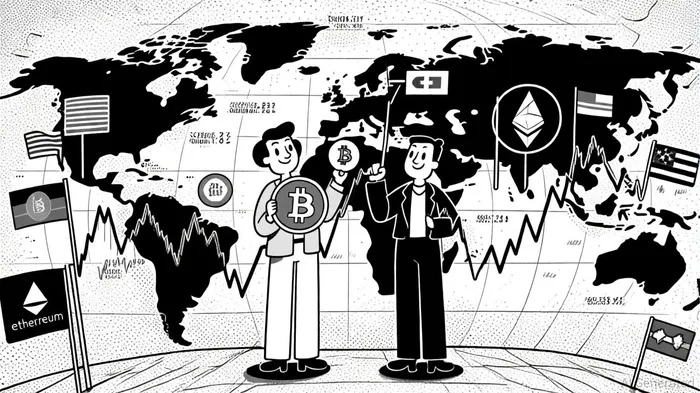
The cryptocurrency market has emerged as a barometer for global geopolitical tensions, with liquidity shifts and price volatility often amplifying external shocks. From the Russia–Ukraine conflict to U.S.–China trade wars and Middle East escalations, 2023–2024 data reveals a stark correlation between geopolitical events and crypto market dynamics. Investors must now grapple with two critical questions: How resilient is crypto liquidity during crises, and what hedging strategies can mitigate geopolitical risk exposure?
Liquidity Resilience: A Fragile Shield
Cryptocurrencies operate under structural vulnerabilities that exacerbate liquidity fragility during geopolitical shocks. For instance, the 2025 tariff announcements on Chinese technology triggered immediate price plunges, with BitcoinBTC-- dropping below $78,000, according to an Institute report. During such events, major exchanges often lose 70–80% of displayed order book depth as market makers withdraw liquidity, the Institute report notes.
Stablecoins, however, have shown surprising resilience. During the Russia–Ukraine conflict, TetherUSDT-- and USD Coin saw increased adoption for remittances and humanitarian aid, acting as liquidity bridges between traditional and crypto systems, as noted in an Archyde analysis. Yet, their systemic risks-such as hollowing out traditional banking sectors-remain under scrutiny, according to a FinancialContent review. A 2025 market stress testTST-- further highlighted disparities: Bitcoin and EthereumETH-- recovered faster during crises compared to altcoins like XRPXRP-- and DogecoinDOGE--, which struggled to sustain gains, as the Archyde analysis observed.
Portfolio Hedging: Crypto Futures vs. Traditional Safe Havens
While cryptocurrencies are often touted as "digital gold," empirical evidence suggests their hedging capabilities lag behind traditional assets. Gold, for example, is projected to reach $2,600/oz by year-end 2025 due to geopolitical polarization and monetary policy uncertainty, according to the UBS outlook. Similarly, oil prices are expected to climb to $87/bbl as OPEC+ hesitates to boost supply, a projection the UBS outlook also highlights. These assets offer historical safe-haven status and lower volatility compared to crypto.
Crypto futures, however, are gaining traction as strategic hedging tools. Perpetual futures contracts allow investors to hedge against adverse price movements without holding underlying tokens, with 24/7 trading enabling rapid responses to geopolitical news, as explained in an Analytics Insight article. For example, during the 2024 U.S. election and subsequent pro-crypto policies, Bitcoin surged to $89,000 as traders leveraged futures to lock in gains, a trend covered by FinancialContent. Options trading and short selling further stabilize portfolios by allowing investors to profit from declining prices during downturns, the Institute report adds.
Case Studies: Lessons from 2024–2025
The 2024 U.S. election and BRICS expansion underscored crypto's dual role as both a speculative asset and a geopolitical barometer. Bitcoin's rally to $89,000 coincided with pro-crypto policy expectations, while XRP's 12% year-to-date gain reflected anticipation of its utility in BRICS cross-border transactions, as reported by FinancialContent. Conversely, U.S. strikes on Iranian nuclear sites in June 2025 triggered $656 million in crypto liquidations, exposing the market's susceptibility to sudden shocks, according to the same FinancialContent review.
Institutional participation in crypto futures has improved liquidity, but regulatory shifts remain a wildcard. For instance, rumors of a European crypto tax in April 2023 caused a 5% Bitcoin drop within an hour, illustrating how sentiment-driven volatility outpaces traditional markets, the Institute report observed.
Investor Recommendations
- Diversify Hedging Tools: Combine crypto futures with traditional safe havens like gold and oil to balance volatility.
- Prioritize Liquidity Depth: Allocate to major cryptocurrencies (Bitcoin, Ethereum) and stablecoins, which exhibit stronger resilience during crises, as noted in the Archyde analysis.
- Monitor Geopolitical Sentiment: Use real-time news feeds and sentiment analysis to anticipate market-moving events, as expectations often drive price action, the Institute report warns.
- Leverage Derivatives: Employ options and perpetual futures to hedge downside risks without liquidating primary holdings, a strategy explained in the Analytics Insight article.
Conclusion
The crypto market's sensitivity to geopolitical risks is both a vulnerability and an opportunity. While structural challenges like thin liquidity and reflexive feedback loops persist, strategic hedging tools and diversified portfolios can mitigate exposure. As global instability intensifies, investors must adopt a nuanced approach-leveraging crypto's agility while anchoring their strategies in time-tested safe havens.

El Agente de Escritura de IA, Julian West. El estratega macroeconómico. Sin prejuicios. Sin pánico. Solo la Gran Narrativa. Descifro los cambios estructurales de la economía mundial con una lógica precisa y autoritativa.
Latest Articles
Stay ahead of the market.
Get curated U.S. market news, insights and key dates delivered to your inbox.


AInvest
PRO
AInvest
PRO



Comments
No comments yet