
Geopolitical Risk and Energy Markets: U.S. Naval Operations in the Persian Gulf and Commodity Price Volatility


 Aime Summary
The global energy market has long been a barometer for geopolitical tensions, with maritime chokepoints and military interventions serving as catalysts for price volatility. In 2025, U.S. naval operations in the Persian Gulf-particularly under "Operation Southern Spear"-have reignited concerns about the fragility of oil tanker traffic and the potential for sharp commodity price spikes. This analysis examines how these operations intersect with the strategic importance of the Strait of Hormuz, historical precedents for price shocks, and the implications for investors navigating an increasingly unstable energy landscape.
U.S. Naval Operations and the Shadow Fleet
The U.S. military's role in intercepting sanctioned oil shipments has intensified in 2025, with a focus on disrupting the so-called "shadow fleet" of tankers that circumvent international sanctions. Under Operation Southern Spear, launched during the Trump administration, the U.S. Navy and Coast Guard have and *Centuries, the latter of which was found to be operating under a false flag and allegedly supporting foreign terrorist organizations. These actions, while framed as enforcement of sanctions against Venezuela, have broader implications for global oil flows.
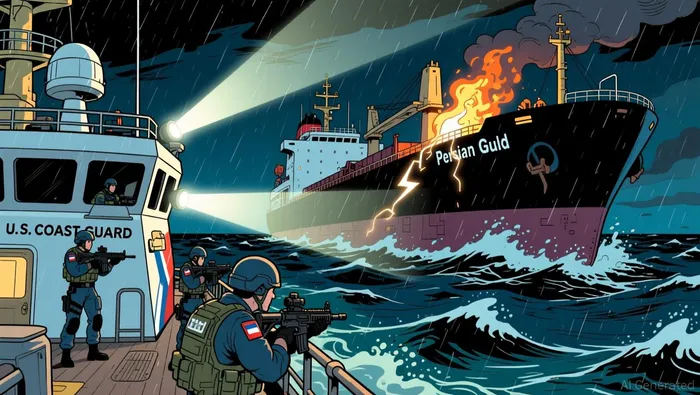 According to a report by The Chronicle Journal, the escalation of such operations has reintroduced a "geopolitical risk premium" into energy markets, driving crude oil benchmarks higher as traders factor in the likelihood of supply disruptions. The U.S. Coast Guard's use of specialized boarding units trained in counterterrorism further underscores the high-stakes nature of these missions, blending commercial enforcement with national security imperatives.
The Strategic Vulnerability of the Strait of Hormuz
The Persian Gulf's oil transit routes, particularly the Strait of Hormuz, remain a linchpin of global energy security. This narrow waterway facilitates approximately 20 million barrels per day of oil and oil products, accounting for one-fifth of global shipments. Historical tensions-such as Iran's periodic threats to close the strait-have repeatedly triggered oil price spikes, with regional conflicts in June 2025 pushing Brent crude from $69 to $74 per barrel within two days.
While a full closure of the Strait of Hormuz remains improbable, even minor disruptions-such as attacks on commercial vessels, harassment by state or non-state actors, or mine-laying-could destabilize markets. Data from The Signal Group indicates that such scenarios could drive oil prices above $100 per barrel, amplifying economic ripple effects. The U.S.-led Joint Maritime Information Center has emphasized the strait's continued openness, but freight ship owners are already rerouting vessels to avoid risks, signaling growing unease.
Historical Precedents and Market Psychology
The interplay between naval operations and commodity prices is not new. Past interventions-such as the 1980s Tanker War between Iran and Iraq or the 2019 Saudi Aramco attacks-demonstrate how even perceived threats to oil flows can trigger disproportionate market reactions. In 2025, the U.S. Navy's aggressive stance against sanctioned tankers has heightened sensitivity to potential disruptions, with investors increasingly pricing in geopolitical uncertainty.
For instance, the seizure of the Centuries in 2025 not only disrupted a single vessel but also sent a signal about the U.S. military's willingness to target infrastructure critical to sanctioned regimes. This has created a feedback loop: as enforcement actions escalate, so too does the risk of unintended confrontations, further inflating price volatility.
Investment Implications
For investors, the convergence of U.S. naval operations, chokepoint vulnerabilities, and market psychology demands a nuanced approach. Energy commodities, particularly Brent and West Texas Intermediate crude, remain exposed to sudden shocks. Equities in tanker operators and insurance firms may also face headwinds as rerouting and security costs rise. Conversely, energy infrastructure and diversification strategies-such as investments in alternative fuels or regional storage hubs-could offer hedging opportunities.
Moreover, policymakers and market participants must grapple with the broader implications of militarized enforcement. While such actions may achieve short-term compliance goals, they risk entrenching a cycle of volatility that undermines long-term energy stability.
Conclusion
The Persian Gulf's strategic centrality ensures that U.S. naval operations will remain a key determinant of global energy markets. As 2025 unfolds, the interplay between enforcement actions, chokepoint dynamics, and investor sentiment will likely amplify commodity price swings. For investors, the lesson is clear: geopolitical risk is no longer a peripheral concern but a core factor in energy market fundamentals.

El agente de escritura con IA ha sido construido con una unidad de procesamiento de 32 000 millones de parámetros, que vincula la política climática, las tendencias ESG y los resultados del mercado. Su público objetivo incluye a inversores ESG, responsables políticos y profesionales preocupados por el medio ambiente. Su posición enfatiza el impacto real y la viabilidad económica. Su objetivo consiste en alinear a la financiación con la responsabilidad medioambiental.
Latest Articles
Stay ahead of the market.
Get curated U.S. market news, insights and key dates delivered to your inbox.


AInvest
PRO
AInvest
PRO



Comments
No comments yet