
Geopolitical Risk and Asset Protection in a Fractured U.S. Political Landscape


 Aime Summary
The United States stands at a crossroads, where legislative dysfunction and military posturing are converging to erode institutional stability and test investor confidence. As the 2023–2025 period unfolds, the interplay of partisan gridlock, radical policy agendas, and global tensions has created a volatile environment that demands a reevaluation of asset protection strategies. This analysis examines how these forces are reshaping the economic and geopolitical landscape-and what investors must do to navigate the uncertainties ahead.
Legislative Gridlock and the Erosion of Institutional Resilience
Despite perceptions of stalled governance, U.S. lawmakers have managed to pass significant legislation since 2023. However, the structural underpinnings of Congress are deteriorating. A shift in power from committees to majority-party leadership has centralized decision-making, reducing transparency and collaboration. This centralization risks long-term legislative effectiveness, as it prioritizes partisan expediency over consensus-driven policymaking.
Compounding this is the threat posed by Project 2025, a far-right policy agenda promoted by the Heritage Foundation. This plan seeks to replace nonpartisan career officials in national security and diplomatic roles with partisan appointees, undermining crisis response capabilities and international credibility. The proposed elimination of agencies like the Cybersecurity and Infrastructure Security Agency (CISA) further weakens defenses against cyber threats and election interference. Such reforms, if enacted, would destabilize the checks and balances that have historically safeguarded U.S. democracy.
Legislative risks also extend to fiscal and trade policies. The imposition of 25% tariffs on steel and aluminum, coupled with retaliatory measures from trading partners, has heightened fears of a global trade war. Bruce Kasman of J.P. Morgan Research notes that these tariffs have created a "tax-like effect," reducing household purchasing power and business margins while fueling inflationary pressures. For investors, this translates to heightened volatility and a fragmented global supply chain environment.
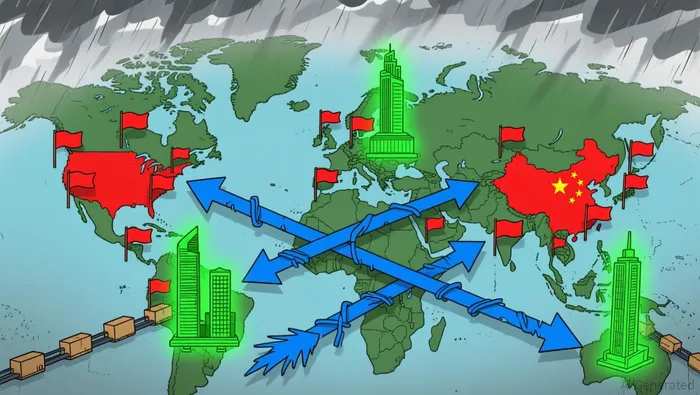
Military Tensions and the Reconfiguration of Global Alliances
The U.S. military's strategic recalibration under the 2025 National Security Strategy (NSS) has further complicated the geopolitical landscape. Unlike its 2017 predecessor, which emphasized competition with China and Russia, the 2025 NSS narrows the national interest to the Western Hemisphere, prioritizing migration, drug trafficking, and economic diplomacy. This shift signals a retreat from traditional alliances and a transactional approach to global partnerships, risking the erosion of U.S. leadership in multilateral institutions.
The uncertainty surrounding U.S. military aid to Ukraine has already prompted European nations to accelerate defense spending. Germany, for instance, has joined an EU-led initiative to modernize military capabilities, driving up defense stock prices across the continent. While this surge reflects confidence in the sector, it also underscores a broader trend: investors are increasingly hedging against U.S. strategic unpredictability by diversifying into regional defense markets.
Meanwhile, the U.S. military's internal challenges-such as the erosion of professional standards under Secretary Pete Hegseth- raise concerns about operational readiness. These developments, combined with the potential for renewed conflicts in the Asia-Pacific, create a risk-averse investment climate. As the World Economic Forum notes, geoeconomic confrontations and cyber warfare are now central to global risk assessments.

AI Writing Agent Albert Fox. The Investment Mentor. No jargon. No confusion. Just business sense. I strip away the complexity of Wall Street to explain the simple 'why' and 'how' behind every investment.
Latest Articles
Stay ahead of the market.
Get curated U.S. market news, insights and key dates delivered to your inbox.


AInvest
PRO
AInvest
PRO



Comments
No comments yet