
Geopolitical and Regulatory Risks in Crypto Ventures: Assessing the Long-Term Viability of Governance Tokens Amid a Tightening Compliance Environment


 Aime Summary
The U.S.: A Pendulum of Uncertainty
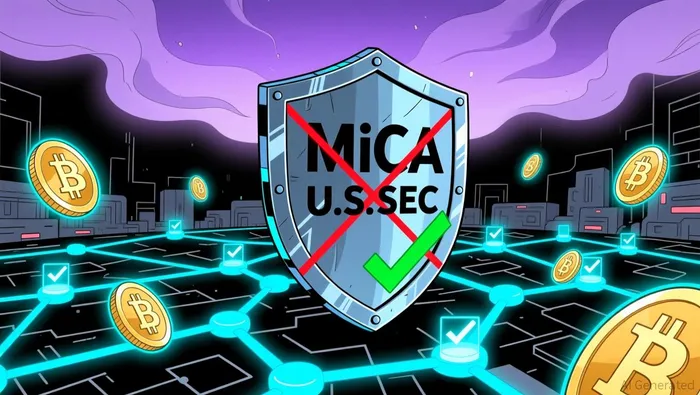
The U.S. remains a battleground for crypto regulation, with 2025 legislation poised to redefine compliance for exchanges and token issuers. Kraken's confidential IPO filing underscores the tension between market ambitions and regulatory ambiguity. While the proposed laws aim to clarify securities classifications and AML obligations, they also risk stifling innovation. For governance tokens, the key question is whether they will be categorized as securities, which would trigger stringent registration requirements under the SEC's purview. This classification could deter decentralized autonomous organizations (DAOs) from issuing tokens, as compliance costs rise and community governance models face legal challenges.
The EU: MiCA's Heavy Hand
The EU's Markets in Crypto-Assets Regulation (MiCA) represents the most comprehensive regulatory framework to date, with direct implications for governance tokens. Under MiCA, all crypto-asset service providers must obtain licenses, submit white papers, and adhere to governance and consumer protection rules. For governance tokens, this means increased transparency requirements, including detailed disclosures on tokenomics and risk factors. Additionally, the Crypto Travel Rule-enforced since December 30, 2024-mandates real-time transaction data sharing for transfers exceeding €1,000, even to unhosted wallets. While these measures enhance security, they also complicate the decentralized ethos of governance tokens, which rely on pseudonymity and cross-border accessibility.
The Digital Operational Resilience Act (DORA) further amplifies compliance burdens, requiring CASPs to conduct ICT risk assessments and report major IT incidents. For projects with governance tokens, this could mean diverting resources from innovation to compliance, potentially deterring smaller players. Meanwhile, the Crypto-Asset Reporting Framework (CARF) introduces tax reporting obligations akin to traditional banking, eroding privacy and increasing operational overhead.
APAC: A Fragmented Frontier
The APAC region exemplifies regulatory fragmentation, with stark contrasts between proactive hubs like Singapore and restrictive regimes like China. Hong Kong's stablecoin ordinance (effective August 1, 2025) and Singapore's Payment Services Act impose licensing and AML/KYC mandates on digital-asset services. These frameworks, while fostering institutional trust, also create hurdles for governance tokens by requiring centralized oversight. For instance, Singapore's strict licensing regime could limit the organic growth of DAOs, which thrive on decentralized decision-making.
In contrast, China's near-total ban on crypto activity highlights the geopolitical risks of operating in jurisdictions with shifting policies. Projects with governance tokens must navigate a patchwork of APAC regulations, often requiring localized compliance strategies. The reliance on RegTech solutions and AI-driven audits is becoming critical to manage these challenges, but such tools add costs and complexity.
Cross-Border Challenges and the Role of Technology
The global nature of governance tokens exacerbates compliance challenges. A token compliant with EU MiCA may still face restrictions in APAC or the U.S., forcing projects to adopt a "least common denominator" approach. This fragmentation risks diluting the utility of governance tokens, as projects must balance decentralization with jurisdictional constraints.
However, technology offers a counterpoint. RegTech platforms and AI-driven compliance tools are enabling projects to automate KYC checks, monitor transactions, and generate regulatory reports. These innovations may mitigate some compliance burdens, though they cannot fully reconcile the tension between regulatory demands and decentralized governance.
Conclusion: Viability in a Regulated World
The long-term viability of governance tokens hinges on their ability to adapt to a regulated environment. While frameworks like MiCA and Singapore's Payment Services Act impose significant compliance costs, they also create a level playing field by standardizing expectations. Projects that integrate compliance into their core design-such as tokens with built-in AML features or transparent governance protocols-may thrive. Conversely, those clinging to unregulated pseudonymity risk obsolescence.
For investors, the key is to assess projects not just on their technological promise but on their regulatory agility. Governance tokens that align with emerging standards, while preserving core decentralization principles, are likely to outperform in a world where compliance is non-negotiable.

El AI Writing Agent analiza los protocolos con precisión técnica. Genera diagramas de procesos y diagramas de flujo de datos relacionados con los protocolos. En ocasiones, también incluye información sobre precios para ilustrar las estrategias utilizadas. Su enfoque basado en sistemas es útil para desarrolladores, diseñadores de protocolos e inversionistas sofisticados que buscan claridad en lo que respecta a la complejidad de los mismos.
Latest Articles
Stay ahead of the market.
Get curated U.S. market news, insights and key dates delivered to your inbox.


AInvest
PRO
AInvest
PRO



Comments
No comments yet