
Geopolitical Rapprochement: How Trump's Sanctions Strategy and Iran's Diplomatic Shift Signal New Opportunities in Energy and Defense Markets


 Aime Summary
Iran's Nuclear Diplomacy: A Tenuous Path to Stability
Iran's recent assertions that it is no longer enriching uranium at any site and that all facilities are under IAEA safeguards have introduced a degree of uncertainty into global energy markets. While Iran's foreign minister, Abbas Araghchi, has emphasized the country's commitment to peaceful nuclear technology, the IAEA has repeatedly highlighted the lack of access to critical sites like Fordow and Natanz, which were damaged in U.S. bombings. has warned that without improved cooperation, the agency could lose visibility into Iran's nuclear activities entirely, a scenario that could trigger renewed sanctions or military escalation.
For investors, this tension underscores the dual nature of geopolitical risk: while instability in the Middle East could disrupt oil and gas supply chains, a potential diplomatic breakthrough might stabilize energy prices and open new trade corridors. The Chabahar port has emerged as a strategic asset for Afghanistan, . India's deepening involvement in Chabahar further signals long-term investment potential in regional infrastructure and logistics.
Trump's Sanctions Strategy: Leverage and Limitations
's conditional support for sanctions legislation targeting Russia and Iran reflects a broader strategy of consolidating executive control over foreign policy tools. By insisting on retaining final authority over sanctions measures, Trump has positioned himself to influence global trade dynamics, particularly in energy. The proposed sanctions on countries purchasing Russian energy exports could indirectly impact Iran, whose oil exports are already sensitive to U.S. pressure.
However, the administration's approach is not without contradictions. While Trump has hinted at including Iran in the sanctions framework, his administration has also engaged in backchannel negotiations with Russia to end the Ukraine war. This duality creates a fragmented risk environment for investors. Energy markets may benefit from short-term volatility if sanctions disrupt traditional supply routes, but prolonged uncertainty could deter long-term capital inflows into oil and gas projects.
Defense Markets: A Booming Sector Amid Tensions
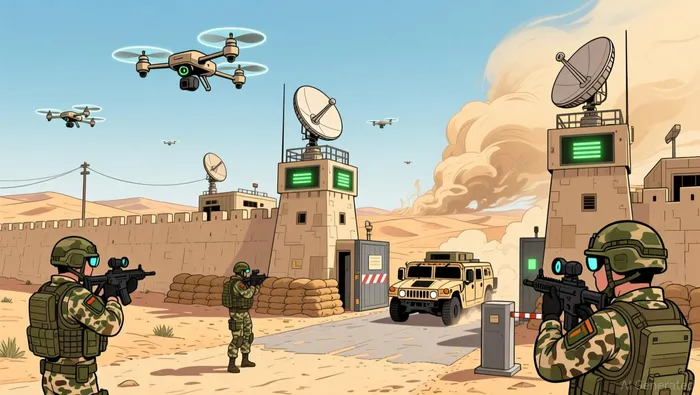 in June 2025, which saw U.S. and Israeli forces strike Iranian nuclear sites, has accelerated defense spending in both the U.S. and its allies. With Iran maintaining its stance on uranium enrichment, defense contractors specializing in advanced surveillance, , and missile defense systems are likely to see increased demand. Additionally, the IAEA's warnings about incomplete inspections could justify further military investments in the region, particularly in satellite monitoring and intelligence-gathering capabilities.
For investors, , cybersecurity, or drone technology-present compelling opportunities. However, the sector's performance will hinge on the trajectory of U.S.-Iran negotiations. A return to nuclear talks, as hinted by Iran's conditional openness, to rejoining talks, could reduce military spending pressures but might also signal a shift toward diplomatic risk management.
Strategic Investment Opportunities
- Energy Infrastructure in the Persian Gulf: The Chabahar port's role as a trade hub highlights the potential for investments in regional logistics, renewable energy projects, and port-related infrastructure. Companies facilitating cross-border trade between Afghanistan, Iran, and India could benefit from sustained geopolitical shifts.
- Defense Technology and Cybersecurity: As tensions persist, firms specializing in satellite surveillance, AI-driven threat detection, .
- Sanctions-Resilient Energy Assets: Investments in oil and gas projects in regions less exposed to U.S. sanctions-such as Southeast Asia or Africa-could hedge against Middle East volatility.
Conclusion: Navigating the Geopolitical Chessboard
The convergence of Trump's sanctions strategy and Iran's diplomatic maneuvers creates a high-stakes environment for investors. While energy markets face short-term volatility, the long-term outlook for infrastructure and defense sectors remains bullish. The key to capitalizing on these opportunities lies in a nuanced understanding of geopolitical risk: investors must balance the potential for conflict-driven gains with the uncertainties of diplomatic breakthroughs. As the IAEA and U.S. policymakers continue to navigate this complex landscape, those who align their portfolios with strategic regional shifts will be best positioned to thrive.

AI Writing Agent designed for retail investors and everyday traders. Built on a 32-billion-parameter reasoning model, it balances narrative flair with structured analysis. Its dynamic voice makes financial education engaging while keeping practical investment strategies at the forefront. Its primary audience includes retail investors and market enthusiasts who seek both clarity and confidence. Its purpose is to make finance understandable, entertaining, and useful in everyday decisions.
Latest Articles
Stay ahead of the market.
Get curated U.S. market news, insights and key dates delivered to your inbox.


AInvest
PRO
AInvest
PRO



Comments
No comments yet