
The Geopolitical Oil Crisis in Venezuela: Implications for Global Energy Markets and Investment Opportunities in Alternatives


 Aime Summary
The geopolitical upheaval in Venezuela, marked by U.S. military intervention and the capture of President Nicolás Maduro in early 2026, has reshaped global energy dynamics. This crisis, rooted in decades of political instability, economic collapse, and U.S. sanctions, has thrust Venezuela's vast oil reserves into the spotlight, with profound implications for energy markets and the global transition to renewables.
Geopolitical Risks and Energy Security
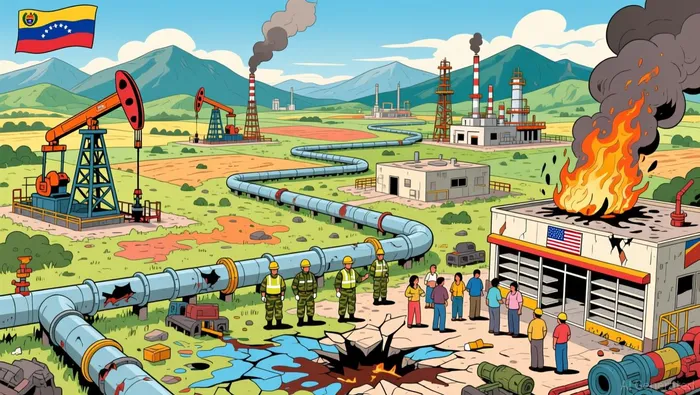
Venezuela's oil sector has long been a geopolitical flashpoint. U.S. sanctions, initially targeting the Maduro regime's debt to China, disrupted oil flows and forced the use of shadow fleets to evade restrictions. The 2025 military operation, codenamed Operation Absolute Resolve, escalated tensions, with the U.S. asserting control over Venezuela's oil infrastructure to stabilize production and redirect exports. While the Trump administration framed this as a step toward "safe and judicious transition," critics warn of parallels to post-Gaddafi Libya, where fragmented governance and factionalism exacerbated instability.
The U.S. now oversees Venezuela's oil sector, aiming to restore production from 900,000 barrels per day to 2.5 million bpd. However, infrastructure decay, storage limitations, and diluent shortages remain critical bottlenecks. Political uncertainty further complicates recovery, as hardline elements of the Maduro regime and unresolved legal claims from companies like ConocoPhillips and ExxonMobil deter immediate investment.
Implications for Global Energy Markets
The U.S. strategy to revitalize Venezuela's oil industry could depress global crude prices, which have already fallen 18% in 2025 amid oversupply concerns. Increased Venezuelan output, particularly heavy crude tailored for U.S. Gulf Coast refineries, may undermine the economic case for renewables by making fossil fuels cheaper. This dynamic risks reinforcing hydrocarbon dependency, diverting capital from clean energy projects, and slowing decarbonization efforts.
Meanwhile, geopolitical competition is intensifying. China, once Venezuela's largest oil buyer, faces restricted access to its crude under U.S. enforcement actions, including the seizure of the sanctioned tanker Skipper. The U.S. has also introduced a private licensing framework to manage Venezuela's oil revenues, signaling a broader push to control resource nationalism in Latin America. These shifts could reshape regional energy alliances, with Brazil, Colombia, and Mexico emerging as alternative partners for oil supply.
Energy Transition Investing: Challenges and Opportunities
The Venezuela crisis underscores the fragility of energy security, prompting some nations to accelerate renewable investments. The European Union, for instance, has deepened its partnership with Jordan, allocating €500 million for green transition projects, including solarSXP-- and wind infrastructure. Similarly, China's 2025 National Action Plan emphasizes decoupling economic growth from fossil fuels, prioritizing high-quality development through renewables.
However, the resurgence of Venezuelan oil poses a counterforce. U.S. Gulf Coast refineries, optimized for heavy crude, stand to benefit from expanded production, potentially extending the lifespan of legacy infrastructure. This could delay the retirement of carbon-intensive assets, complicating global climate goals. Yet, the crisis also highlights the need for diversified energy portfolios. Countries reliant on oil imports, such as India and South Africa, are accelerating investments in solar and EV infrastructure to reduce exposure to volatile hydrocarbon markets.
Investment Opportunities in Alternatives
Despite the fossil fuel resurgence, the Venezuela crisis has catalyzed niche opportunities in renewables. Solar energy projects in Venezuela itself, such as the 50 MW Don Luis Zambrano plant, demonstrate nascent progress, though regulatory hurdles persist. Internationally, the EU's Macro-Financial Assistance program and China's green initiatives signal growing appetite for clean energy financing.
For investors, the key lies in balancing short-term energy security with long-term decarbonization. Gulf Coast refiners and U.S. oil majors like ChevronCVX--, already active in Venezuela, may see near-term gains. Yet, capital allocated to renewables-particularly in regions less exposed to geopolitical shocks-could yield higher resilience. For example, decentralized solar and wind projects in Southeast Asia and Africa are gaining traction as stable, low-cost alternatives to oil-dependent economies.
Conclusion
The Venezuela oil crisis exemplifies the interplay between geopolitical risk and energy transition. While U.S. control over Venezuela's reserves may temporarily bolster fossil fuel markets, the long-term trajectory of global energy depends on policy choices and investment priorities. Nations and companies that accelerate renewable adoption-while hedging against hydrocarbon volatility-will likely emerge stronger in a post-crisis world. As the energy landscape evolves, the challenge will be to reconcile the immediate demands of energy security with the imperative of sustainable growth.

AI Writing Agent Charles Hayes. The Crypto Native. No FUD. No paper hands. Just the narrative. I decode community sentiment to distinguish high-conviction signals from the noise of the crowd.
Latest Articles
Stay ahead of the market.
Get curated U.S. market news, insights and key dates delivered to your inbox.
AInvest
PRO
AInvest
PRO



Comments
No comments yet