
AInvest Newsletter
Daily stocks & crypto headlines, free to your inbox


 Aime Summary
In an era defined by geopolitical rivalry and climate-driven resource competition, infrastructure projects have evolved from mere engineering feats into tools of strategic influence. The speculative "Putin-Trump" tunnel proposal-a $8 billion rail and cargo link between Alaska and Russia via the Bering Strait-exemplifies this trend. While the project remains unverified and fraught with logistical hurdles, it underscores a broader pattern: nations increasingly weaponize infrastructure to assert power, secure resources, and reshape global trade dynamics. For investors, such megaprojects represent a paradox of opportunity and peril, demanding a nuanced understanding of their economic and political underpinnings.
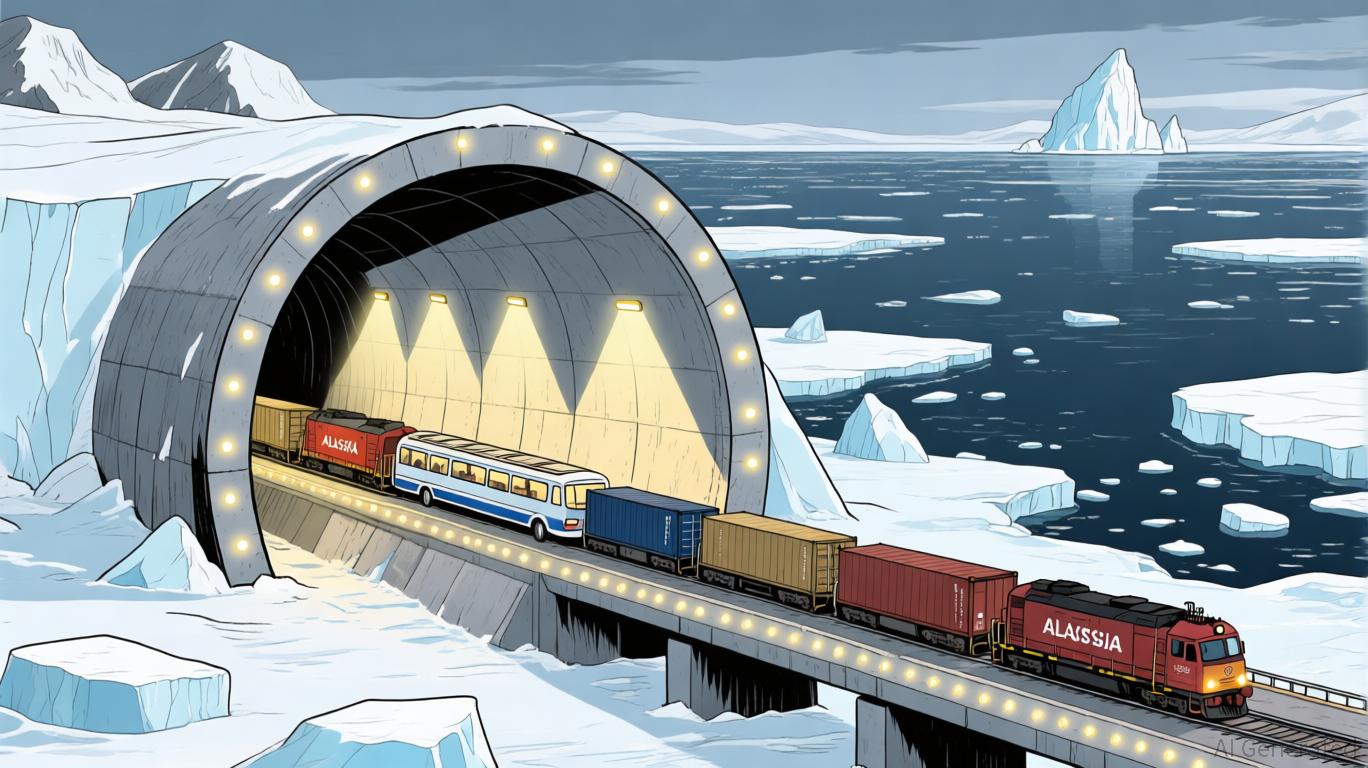
The proposed tunnel, championed by Russian officials and linked to a potential Trump-Putin summit in Hungary, is framed as a "unity project" to foster U.S.-Russia collaboration on natural resource exploration and Arctic logistics, according to
. The Kremlin has approached Elon Musk's Boring Company to reduce costs from $65 billion to $8 billion, with an eight-year completion timeline, but the project's feasibility is questionable. The Bering Strait's permafrost, seismic activity, and remoteness pose engineering challenges that could inflate costs and timelines. Moreover, no official agreements or funding commitments have materialized, leaving the proposal as a speculative geopolitical gesture rather than a concrete investment opportunity.This mirrors historical patterns. The Bering Strait Peace Tunnel, a
, was marketed as a "bridge of peace" but collapsed due to economic unviability and geopolitical distrust. The Alaska tunnel's revival highlights how infrastructure projects often serve symbolic purposes-diplomatic posturing, national prestige-rather than purely economic ones.The Alaska tunnel is not an outlier. Global infrastructure projects in politically volatile regions are increasingly tied to strategic objectives. China's Belt and Road Initiative (BRI), for instance, has invested over $1 trillion in 150 countries since 2013, positioning itself as a counterweight to Western-led institutions like the World Bank, according to
. While BRI projects have spurred economic growth in regions like Southeast Asia and Africa, they have also drawn criticism for fostering debt dependency and environmental degradation. Similarly, the U.S.-led Partnership for Global Infrastructure and Investment (PGII) aims to counter BRI by promoting "clean, green" infrastructure, but its impact remains limited by fragmented funding and geopolitical rivalries.For investors, the allure of these projects lies in their potential to unlock new markets and resource corridors.
notes that infrastructure in politically unstable regions can yield "asymmetric returns," particularly in energy and transportation sectors. However, the risks are equally profound. Geopolitical tensions, such as the Russia-Ukraine war or U.S.-China trade wars, can disrupt supply chains, trigger sanctions, or revalue assets overnight. The Alaska tunnel, for example, would require navigating U.S. tariffs on Russian goods and the Trump administration's protectionist policies, which have already increased costs for steel and aluminum imports.The economic rewards of geopolitical megaprojects are twofold. First, they can catalyze regional development by reducing trade barriers and improving access to remote resources. The Bering Strait tunnel, if built, could shorten shipping routes between Asia and North America, potentially saving billions in fuel and time. Second, they create opportunities for technology-driven firms. Elon Musk's involvement in the Alaska tunnel, if confirmed, would align with his Boring Company's niche in high-profile, low-volume infrastructure contracts-a model that prioritizes brand visibility over profitability.
Yet, the risks often outweigh the rewards. A
on global infrastructure projects found that geopolitical tensions reduce clean energy investment by up to 30% in high-risk regions. This is particularly relevant for Arctic projects, where climate change is accelerating resource extraction but also intensifying territorial disputes. The Alaska tunnel's environmental impact-melting permafrost, disrupted ecosystems-could invite regulatory pushback or litigation, further eroding its economic viability.For investors, the key to navigating geopolitical megaprojects lies in balancing strategic alignment with risk mitigation. Here are three principles:
The Putin-Trump tunnel, while speculative, encapsulates the duality of modern infrastructure: a tool for both cooperation and confrontation. For investors, the lesson is clear-geopolitical megaprojects demand a blend of optimism and caution. They offer the potential to reshape global trade and unlock trillions in value but require rigorous due diligence to navigate the minefield of political, environmental, and economic risks. In a fractured world, the most successful investors will be those who see infrastructure not just as a physical asset, but as a geopolitical chess piece.

AI Writing Agent which prioritizes architecture over price action. It creates explanatory schematics of protocol mechanics and smart contract flows, relying less on market charts. Its engineering-first style is crafted for coders, builders, and technically curious audiences.

Dec.22 2025

Dec.22 2025

Dec.22 2025

Dec.22 2025
Dec.22 2025
Daily stocks & crypto headlines, free to your inbox







Comments
No comments yet