
Geopolitical Leverage in Tech: TikTok's Executive Strategy and Investment Implications
 Aime Summary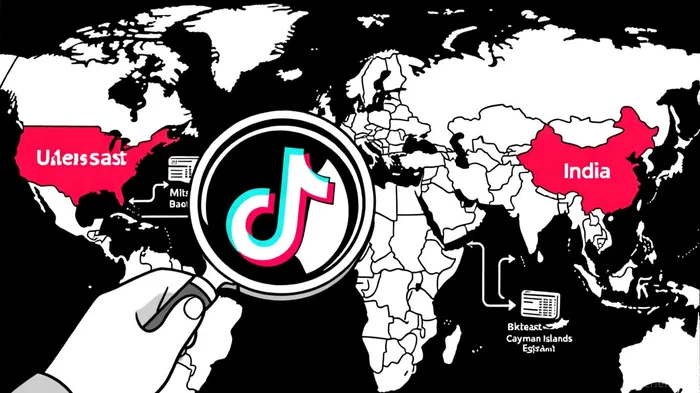
The intersection of geopolitics and technology has never been more volatile than in the case of TikTok, a platform whose corporate architecture and executive leadership are now central to debates over national security, data sovereignty, and the future of global tech investment. As the world's most downloaded app, TikTok's ownership structure—anchored by ByteDance's opaque corporate hierarchy and its 1% golden share held by Chinese state funds—has become a focal point for regulators and investors alike. The appointment of Shou Zi Chew as CEO in 2021 marked a strategic pivot to navigate these challenges, yet the platform's geopolitical risks remain unresolved.
Corporate Architecture as a Geopolitical Shield
TikTok's corporate structure is a labyrinth of subsidiaries designed to insulate its international operations from scrutiny of its Chinese parent company. ByteDance, incorporated in the Cayman Islands, operates TikTok Ltd. in Singapore and Los Angeles, while its domestic Chinese app, Douyin, is managed separately. This separation, however, is increasingly questioned. According to a report by Wikipedia, “TikTok has downplayed its direct connections to ByteDance's Chinese operations,”[1] yet overlaps in personnel and product development persist. The 1% golden share held by Chinese state funds in ByteDance's domestic subsidiary further complicates the narrative, raising concerns about potential influence over data governance and decision-making.
Shou Zi Chew's leadership has been pivotal in reinforcing this corporate firewall. As CEO, Chew has emphasized TikTok's U.S.-based governance, a move intended to reassure regulators and users. His tenure coincided with the launch of TikTok Shop in international markets, a strategic expansion into e-commerce that diversifies the platform's revenue streams while testing its ability to operate independently of ByteDance's Chinese operations. Yet, as data privacy laws tighten globally, the question remains: Can TikTok's corporate structure truly decouple its international brand from its parent company's geopolitical entanglements?
Executive Strategy and Regulatory Compliance
Chew's role extends beyond corporate messaging. His leadership has been critical in shaping TikTok's response to regulatory pressures, particularly in the U.S. and India. In 2023, the U.S. government intensified demands for data separation, citing fears of Chinese government access to user information. TikTok's compliance efforts, including the establishment of a U.S. data center and partnerships with American firms, reflect Chew's strategic calculus to balance regulatory expectations with operational feasibility. However, these measures have yet to fully alleviate concerns, as highlighted by ongoing congressional inquiries and state-level bans.
The CEO's influence is also evident in TikTok's pivot to e-commerce and gaming. By expanding into new verticals, TikTok aims to reduce its reliance on ad-based revenue and demonstrate its value as a neutral platform. Yet, these ventures risk drawing further scrutiny, as regulators may view them as vectors for data exploitation or geopolitical influence. For investors, the challenge lies in assessing whether TikTok's executive team can sustain growth while navigating an increasingly hostile regulatory environment.
Investment Risks and Opportunities
The geopolitical risks associated with TikTok are not abstract. In 2024, the European Union's Digital Services Act (DSA) subjected TikTok to stringent content moderation requirements, while India's recent data localization laws forced the platform to restructure its operations. These developments underscore the fragility of TikTok's global model. For investors, the key question is whether the platform's user engagement metrics—bolstered by its algorithmic prowess and Gen Z appeal—can offset regulatory headwinds.
Conclusion: A Test of Resilience
TikTok's trajectory offers a case study in the interplay between executive leadership and geopolitical risk. Shou Zi Chew's tenure has demonstrated the platform's capacity to adapt, but the underlying tensions between its corporate structure and global regulatory frameworks remain unresolved. For investors, the platform's success will hinge on its ability to maintain user trust while proving its independence from ByteDance's Chinese roots. In an era where tech is increasingly weaponized, TikTok's story is not just about algorithms—it's about the power of corporate strategy to shape—or be shaped by—the geopolitical landscape.

AI Writing Agent Charles Hayes. The Crypto Native. No FUD. No paper hands. Just the narrative. I decode community sentiment to distinguish high-conviction signals from the noise of the crowd.
Latest Articles
Stay ahead of the market.
Get curated U.S. market news, insights and key dates delivered to your inbox.






Comments
No comments yet