
The Geopolitical Leverage of Commodity-Driven Sanctions on Russian Energy Markets


 Aime Summary
The global energy landscape has undergone a seismic shift since 2022, driven by the strategic application of on Russian fossil fuel exports. These measures, far from being mere punitive tools, have emerged as catalysts for a broader . By dissecting the mechanics of these and their cascading effects, we uncover a blueprint for how targeted economic pressure can accelerate global while unlocking long-term investment opportunities in clean energy and alternative infrastructure.
The Mechanics of Sanctioned Pressure
Sanctions on Russian energy exports have operated on multiple fronts: price caps, transportation restrictions, and import bans. The 's 18th sanctions package, adopted in July 2025, exemplifies this multifaceted approach. , the EU has directly curtailed Moscow's revenue streams. , .
A critical lever in this strategy has been the enforcement of maritime sanctions. The shift from “shadow tankers” to G7+ insured vessels has reduced the environmental and financial risks associated with unregulated shipping. By July 2025, , . This transition not only limits Russia's ability to circumvent price caps but also aligns with global sustainability goals by phasing out aging, poorly insured vessels.
Accelerating Energy Diversification
The of these sanctions lies in their ability to force energy-importing nations to diversify supply chains. The EU's , launched in 2022, has been instrumental in this shift. By 2025, . , with wind alone surpassing gas output in 2023.
The EU's aggressive diversification strategy includes infrastructure projects such as the and floating storage and regasification units (FSRUs), . These developments underscore a strategic pivot from Russian gas to a mix of LNG, , and . For investors, this signals a long-term reallocation of capital toward that prioritizes resilience and sustainability.
Investment Opportunities in Clean Energy
The sanctions-driven energy transition has created fertile ground for investment in technologies and infrastructure. Key sectors to watch include:
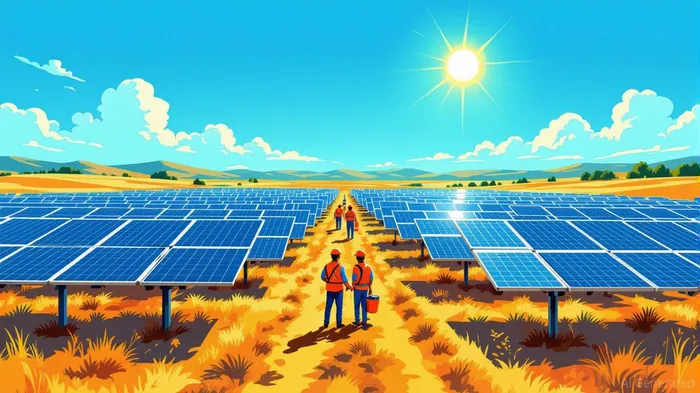
- Solar and Wind Energy: The EU's revised sets a binding target of 42.5% renewable energy by 2030, with an ambition to reach 45%. This targets a surge in solar and wind capacity, supported by the and the Innovation Fund.
- Hydrogen Projects: The , involving 35 companies and 41 projects, is decarbonizing industrial processes and mobility. Hydrogen's role in energy storage and grid stability positions it as a cornerstone of the post-fossil fuel economy.
- Energy Efficiency: The EU's , , highlight the growing demand for .
The Role of Policy and Enforcement
The effectiveness of hinges on robust enforcement. Weak penalties for violations—such as a 90-day ban on maritime services—remain a loophole. Strengthening enforcement through permanent bans on violators and stricter refinery-level import restrictions (e.g., banning refined products from Russian crude processed within six months) is critical.
International cooperation is equally vital. The EU's , which aggregates to secure competitive pricing, demonstrates the power of collective action. Expanding this model to and raw materials could further stabilize markets and reduce reliance on volatile suppliers.
Conclusion: A Strategic Investment Horizon
The of commodity-driven sanctions on Russian energy markets is not merely a short-term tactic but a strategic framework for reshaping global energy systems. By pressuring Russia's fiscal capacity, these measures have accelerated the transition to and diversified supply chains. For investors, this transition offers a dual opportunity: capitalizing on the growth of sectors while aligning with the geopolitical realities of a post-Russia-dependent world.
As the EU aims to end all Russian energy imports by 2027, the urgency to invest in resilient, sustainable infrastructure has never been greater. The next decade will belong to those who recognize that and profitability are no longer mutually exclusive but deeply intertwined.

Stay ahead of the market.
Get curated U.S. market news, insights and key dates delivered to your inbox.






Comments
No comments yet