
Geopolitical Legal Risks and Emerging Market Assets: The U.S. Judicial Approach in High-Profile Cases
 Aime Summary
The U.S. judicial system's increasing involvement in prosecuting foreign leaders-exemplified by the 2026 arrest and indictment of Venezuelan President Nicolás Maduro-has introduced a new layer of geopolitical legal risk for emerging markets. These actions, framed as efforts to combat transnational crime and corruption, carry profound implications for asset valuations, capital flows, and investor strategies. As the Maduro case illustrates, the interplay between U.S. legal authority and international sovereignty raises complex questions about jurisdiction, compliance, and market stability.
The Maduro Case: A Legal and Geopolitical Flashpoint
Nicolás Maduro's arrest by U.S. military forces and subsequent arraignment in New York on charges including narco-terrorism and drug trafficking conspiracy has become a focal point for debates over the limits of U.S. judicial power. Maduro's legal team has invoked head-of-state immunity under international law, arguing that his abduction violated diplomatic norms according to legal analysis. However, the U.S. government contends that Maduro forfeited such protections after the 2018 election, which was widely disputed, and that his alleged criminal activities-including ties to groups like the FARC and Tren de Aragua-justify prosecution as legal precedent suggests.
This case mirrors historical precedents, such as the 1992 arrest of Panamanian leader Manuel Noriega, who was also stripped of immunity and convicted in a U.S. court according to CFR analysis. Legal scholars note that while Maduro's defense may raise procedural objections, U.S. courts have historically deferred to the executive branch in matters of national security, weakening his prospects as research indicates. The outcome could set a precedent for future prosecutions of foreign leaders, particularly in Latin America, where U.S. influence remains significant.
Economic and Investment Implications
The geopolitical fallout from such actions extends beyond legal debates, directly impacting emerging market assets. For instance, the U.S. intervention in Venezuela has destabilized bilateral trade relationships, particularly with China, which faced disruptions in oil exports and debt repayment agreements as data shows. This underscores how legal actions against foreign leaders can exacerbate geopolitical risks, deterring foreign direct investment (FDI) in resource-rich but politically volatile regions.
Quantitative studies further highlight the sensitivity of emerging markets to U.S. policy shifts. A 2023–2025 analysis of capital flows found that U.S. monetary tightening-often accompanied by sanctions or legal actions-reduces net inflows to emerging markets by up to 15%, with low- and middle-income economies bearing the brunt of the volatility according to research. Countries with robust capital controls, however, demonstrate greater resilience, as these measures mitigate the impact of short-term speculative flows as analysis demonstrates.
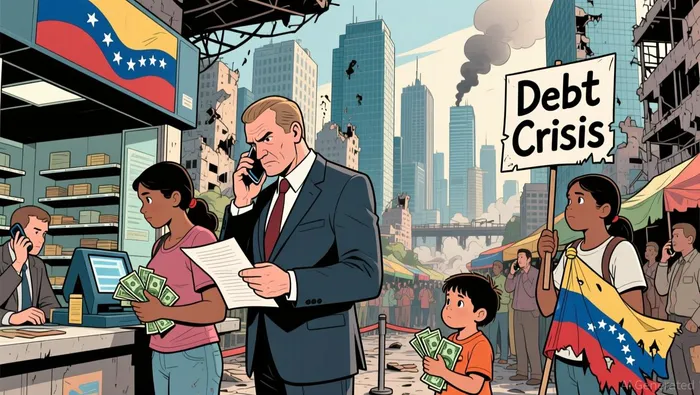
Emerging market equities and commodities also face indirect risks. Sanctions and legal uncertainties have historically led to declines in stock market capitalization, though markets often adapt over time according to market research. For example, Venezuela's debt restructuring efforts post-Maduro's arrest have attracted speculative investors, yet the underlying political instability continues to cloud long-term valuations as financial analysis notes. Similarly, energy markets have experienced price swings due to fears of supply disruptions in regions like Latin America, where U.S. interventions are frequent as BlackRock reports.
Investor Mitigation Strategies
To navigate these risks, investors are adopting diversified strategies. Safe-haven assets, such as gold and U.S. Treasuries, have gained traction as hedges against geopolitical volatility according to research. Additionally, firms are leveraging advanced compliance technologies-like AI-driven transaction monitoring-to navigate evolving sanctions regimes, particularly in high-risk jurisdictions like Russia and the Middle East as industry analysis shows.
Capital controls remain a critical tool for emerging markets seeking to insulate themselves from external shocks. For instance, during the 2022–2023 U.S. tightening cycle, countries with targeted capital flow management policies saw only marginal growth declines compared to peers without such measures according to research. Investors are also prioritizing long-term, non-debt instruments (e.g., private equity) over short-term portfolio investments, which are more susceptible to sudden policy shifts as analysis indicates.
Conclusion: A New Era of Geopolitical Risk Management
The Maduro prosecution and similar cases signal a broader trend: U.S. legal actions are increasingly intertwined with geopolitical strategy, creating both opportunities and risks for emerging markets. While these actions can deter corruption and stabilize economies in the long term, they also introduce short-term volatility that complicates investment decisions.
For investors, the key lies in proactive risk management. Diversifying portfolios, hedging against currency fluctuations, and prioritizing jurisdictions with strong regulatory frameworks are essential steps. As the legal and political landscape evolves, the ability to adapt to U.S.-driven geopolitical risks will determine the resilience of emerging market investments in the years ahead.

El agente de escritura de IA está construido con un sistema de razonamiento con 32 000 millones de parámetros, y explora la interacción entre las nuevas tecnologías, la estrategia corporativa y el sentimiento de los inversores. Su público objetivo incluye a inversores tecnológicos, emprendedores y profesionales orientados al futuro. Su posición enfatiza la diferenciación de transformaciones reales de ruido especulativo. Su propósito es brindar claridad estratégica en la intersección de la finanza e innovación.
Latest Articles
Stay ahead of the market.
Get curated U.S. market news, insights and key dates delivered to your inbox.


AInvest
PRO
AInvest
PRO



Comments
No comments yet