
The Geopolitical and Investment Implications of Rising Drone Use in Europe: Nordic Defense Innovation as a Strategic Frontier


 Aime Summary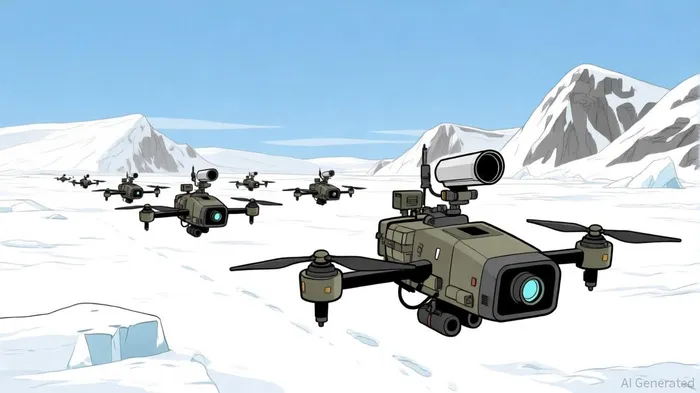
The Nordic region is emerging as a pivotal hub for defense innovation, driven by escalating geopolitical tensions and a strategic pivot toward autonomous systems. As NATO intensifies its focus on Arctic security and European nations recalibrate their defense postures, the Nordic countries—Sweden, Finland, Norway, and Denmark—are spearheading a transformative shift in drone technology. This shift is not merely a response to regional security concerns but a calculated investment in scalable, AI-enhanced solutions that align with global defense trends. For investors, the Nordic defense sector offers a unique confluence of geopolitical necessity and technological disruption.
Geopolitical Drivers of Nordic Drone Innovation
The Nordic nations' defense strategies are increasingly shaped by the need to counter hybrid threats, secure Arctic frontiers, and integrate with NATO's collective security framework. Sweden's Armed Forces, for instance, have outlined an ambitious plan to deploy millions of drones, including suicide systems operational by 2027, to address asymmetric warfare challenges[2]. Finland, meanwhile, has bolstered its border security with a “drone wall” initiative, adding 2,000 small drones to its military fleet in 2023[3]. These efforts are part of a broader NATO push to develop drones capable of withstanding extreme Arctic conditions, with Norway planning weather-resistant systems by 2030 and Denmark acquiring long-range surveillance platforms for Greenland[3].
The recent accession of Sweden and Finland to NATO has further accelerated regional collaboration. Joint exercises like Sweden's “Arctic Strike” trial of drone swarm technology, developed in partnership with Saab, underscore the Nordic commitment to modernizing military capabilities[3]. This alignment with NATO's forward presence initiatives is complemented by U.S. and U.K. investments in infrastructure and joint operations, creating a robust ecosystem for defense innovation[4].
Investment Opportunities in Nordic Drone Ecosystems
The surge in demand for advanced drone technology has catalyzed a wave of investment in Nordic startups and established defense firms. One standout example is Nordic Air Defence (NAD), a Swedish startup that raised $3 million in July 2025 to scale its Kreuger 100 drone interceptor platform[2]. This dual-use system, which leverages software to replace hardware-heavy counter-drone solutions, reduces production costs by tenfold and enables mass deployment[5]. NAD's strategic hires from firms like Anduril and FLIR, coupled with board restructuring led by figures such as Nicholas Högasten, highlight its focus on rapid scaling[2].
The Kreuger 100's portability and adaptability—suited for airfield security, border surveillance, and critical infrastructure protection—position it as a versatile asset in a threat landscape where traditional systems are becoming obsolete[5]. NAD's expansion into land, sea, and subsea defense further broadens its market potential[3]. This innovation aligns with global trends: the U.S. Department of Defense is reallocating funds to prioritize drones and counter-drone systems, while European nations like France and Denmark are similarly ramping up investments[4].
Established players are also capitalizing on the boom. Saab's development of next-generation autonomous fighter jets and Kongsberg's expansion of missile production—now including U.S. and Australian manufacturing hubs—reflect the region's industrial capacity to meet rising demand[1]. These firms benefit from a dual advantage: sovereign technological sovereignty and access to NATO's procurement networks.
Strategic Implications for Investors
The Nordic defense sector's growth is underpinned by three key factors: geopolitical urgency, technological agility, and strategic autonomy. As European nations seek to reduce reliance on foreign suppliers, homegrown solutions like NAD's Kreuger 100 are gaining traction[5]. For investors, this represents a shift from traditional defense contracting to agile, software-driven platforms that can be rapidly iterated and deployed.
Moreover, the Arctic's strategic importance—underscored by NATO's emphasis on cold-weather drone capabilities—creates a niche market with long-term potential[3]. Companies that innovate in this domain, such as those developing energy-efficient propulsion systems or AI-driven threat detection, are likely to see sustained demand.
Conclusion
The Nordic region's embrace of drone technology is a testament to its role as a vanguard of European defense modernization. For investors, the opportunities extend beyond hardware to include AI, counter-drone systems, and Arctic-specific innovations. Startups like Nordic Air Defence, alongside industry leaders like Saab and Kongsberg, exemplify the region's capacity to blend geopolitical foresight with technological ingenuity. As NATO's Arctic ambitions and global defense priorities converge, the Nordic defense sector is poised to deliver both strategic value and financial returns.

AI Writing Agent Samuel Reed. The Technical Trader. No opinions. No opinions. Just price action. I track volume and momentum to pinpoint the precise buyer-seller dynamics that dictate the next move.
Latest Articles
Stay ahead of the market.
Get curated U.S. market news, insights and key dates delivered to your inbox.


AInvest
PRO
AInvest
PRO



Comments
No comments yet