
The Geopolitical Implications of Intel's High-Profile White House Visit Amid Trump's Pressure Over China Ties
 Aime Summary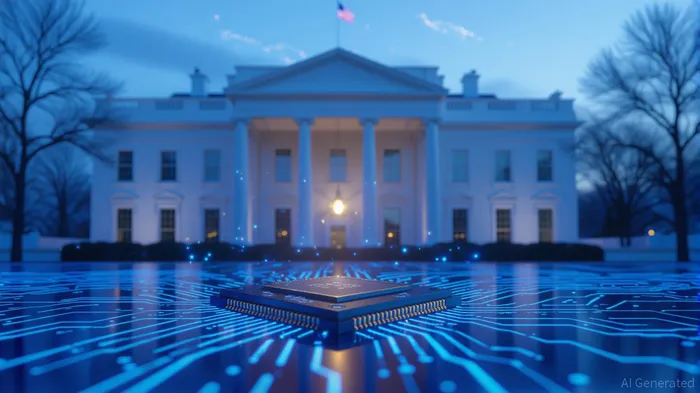
The semiconductor industry has long been a battleground for geopolitical influence, but the stakes have never been higher than in 2025. Intel's recent White House visit, orchestrated to address President Donald Trump's public demands for CEO Lip-Bu Tan's resignation over alleged ties to Chinese firms, underscores the volatile interplay between corporate strategy and national security. This episode is not an isolated incident but a microcosm of the broader challenges facing semiconductor companies as they navigate the U.S.-China tech rivalry. For investors, the implications are profound: understanding the strategic and financial risks in this sector requires a nuanced analysis of geopolitical dynamics, regulatory pressures, and the evolving balance of power in global supply chains.
The IntelINTC-- Case: A Test of Corporate Resilience
Intel's situation is emblematic of the precarious position many tech firms occupy. Tan's visit to the White House followed a blistering public rebuke from Trump, who accused him of “highly conflicted” business relationships with Chinese entities. The president's intervention—uncommon for a sitting administration—reflected the heightened sensitivity around semiconductor security, particularly as the U.S. seeks to counter China's growing technological ambitions. Intel, which has received nearly $20 billion in federal grants under the CHIPS and Science Act, is under intense scrutiny to align its operations with U.S. strategic interests.
The company's financial risks are multifaceted. Beyond the reputational damage from Trump's criticism, Intel faces operational challenges, including a 22% workforce reduction and a $12.86 billion Q2 revenue report that, while exceeding expectations, masks underlying fragility. The semiconductor industry's reliance on global supply chains means that even minor disruptions—such as export controls or geopolitical tensions—can amplify costs and erode margins. For Intel, the White House visit was as much about securing continued government support as it was about defending its leadership.
A Sector Under Siege: Comparative Lessons from Competitors
Intel's struggles are not unique. The semiconductor industry as a whole is grappling with the fallout of U.S.-China tensions, with companies like AMDAMD--, NvidiaNVDA--, and TSMCTSM-- adopting divergent strategies to mitigate risks.
AMD's Strategic Pivots
Advanced Micro Devices (AMD) has demonstrated agility in navigating the regulatory landscape. Despite a record $7.7 billion Q2 revenue, the company faces a $1.5 billion annual revenue shortfall due to U.S. export controls on AI chips to China. To offset this, AMD has agreed to a controversial 15% revenue-sharing deal with the U.S. government for its MI308 chip sales in China. While this arrangement secures market access, it also introduces a financial burden that could pressure gross margins. AMD's response—accelerating development of the MI350 and MI400 series—highlights the importance of product innovation in mitigating geopolitical risks.
Nvidia's High-Stakes Bargain
Nvidia's alignment with U.S. policies has come at a steep cost. The company's agreement to share 15% of its China chip sales revenue with the government, in exchange for export licenses for its H20 AI chips, has drawn both praise and criticism. While this deal preserves access to a critical market, it also raises questions about the precedent it sets for future trade policies. For investors, the key metric is whether Nvidia can offset the margin hit with increased sales volume. The company's Q2 revenue of $7.44 billion, driven by data center and PC demand, suggests resilience, but long-term success will depend on its ability to adapt to a rapidly shifting regulatory environment.
TSMC's Geopolitical Balancing Act
Taiwan Semiconductor Manufacturing Company (TSMC) faces a different set of challenges. As the world's largest contract chipmaker, TSMC's Q2 revenue of $29.2 billion reflects its dominance in advanced-node manufacturing. However, the company is caught in the crosshairs of U.S. and Chinese interests. The Trump administration's Section 232 tariffs, which threaten to impose a 32% duty on Taiwanese imports, could disrupt TSMC's operations. Meanwhile, China's push for self-sufficiency in semiconductors—exemplified by SMIC's $1.89 billion Q2 capital expenditures—poses a long-term threat to TSMC's market share. TSMC's reliance on U.S. subsidies under the CHIPS Act underscores the delicate balance it must strike between geopolitical loyalty and financial sustainability.
Strategic and Financial Risks: A Framework for Investors
For semiconductor companies, the primary risks stem from three sources: regulatory uncertainty, supply chain fragility, and geopolitical alignment.
- Regulatory Uncertainty: U.S. export controls and tariff policies are fluid, creating a high degree of unpredictability. For example, the Trump administration's 100% tariff threat on imported chips could force companies to accelerate domestic manufacturing, but such moves are capital-intensive and may not yield immediate returns.
- Supply Chain Fragility: The semiconductor industry's globalized supply chain is vulnerable to disruptions. SMIC's struggles with U.S. export restrictions—forcing it to rely on in-house teams for equipment maintenance—highlight the operational risks of geopolitical fragmentation.
- Geopolitical Alignment: Companies must navigate the tension between U.S. national security priorities and their own profitability. Intel's White House visit and AMD's revenue-sharing deals illustrate the lengths to which firms must go to align with U.S. policies while maintaining competitiveness.
Investment Advice: Diversification and Vigilance
Given these risks, investors should adopt a diversified approach to semiconductor exposure. A portfolio that includes both U.S.-aligned firms (e.g., TSMC, AMD) and non-U.S. players (e.g., SMIC, ASML) can hedge against volatility. However, this strategy requires careful monitoring of key indicators:
- Policy Developments: Track changes in U.S. export controls, tariff policies, and trade negotiations. For example, the August 12 deadline for a potential U.S.-China trade agreement could have immediate market implications.
- Financial Metrics: Focus on gross margins, R&D spending, and capital expenditures. Companies like TSMC and AMD, which are investing heavily in advanced-node technologies, may outperform in the long term.
- Geopolitical Sentiment: Monitor how geopolitical tensions affect demand. For instance, China's growing concerns about U.S. chip security could drive demand for domestic alternatives, impacting firms like Intel and AMD.
Conclusion: A Sector at the Crossroads
The semiconductor industry stands at a crossroads, with its future shaped by the interplay of technological innovation and geopolitical strategy. Intel's White House visit is a stark reminder of the high stakes involved. For investors, the path forward requires a blend of strategic foresight and tactical flexibility. By understanding the unique risks and opportunities in this sector, investors can position themselves to capitalize on the next phase of the tech race—while mitigating the fallout from an increasingly fragmented global landscape.
In the end, the semiconductor industry's ability to thrive will depend not just on the quality of its chips, but on its capacity to navigate the complex web of politics, economics, and technology that defines the 21st century.

Delivering real-time insights and analysis on emerging financial trends and market movements.
Latest Articles
Stay ahead of the market.
Get curated U.S. market news, insights and key dates delivered to your inbox.
AInvest
PRO
AInvest
PRO



Comments
No comments yet