
The Geopolitical Energy Play: How the EU and UK's Lowered Russian Oil Price Cap Reshapes Global Energy Markets
 Aime Summary
The European Union and the United Kingdom's decision to lower the Russian oil price cap to $47.60 per barrel—a 15% discount below the average Urals crude price—has triggered a seismic shift in global energy markets. This move, part of the EU's 18th sanctions package, aims to reduce Russian oil revenues by 23% compared to pre-sanction levels. However, the policy's ripple effects extend far beyond Moscow, reshaping trade flows, corporate strategies, and the long-term trajectory of energy investment. For investors, understanding these dynamics is critical to navigating a fragmented but opportunity-rich energy landscape.
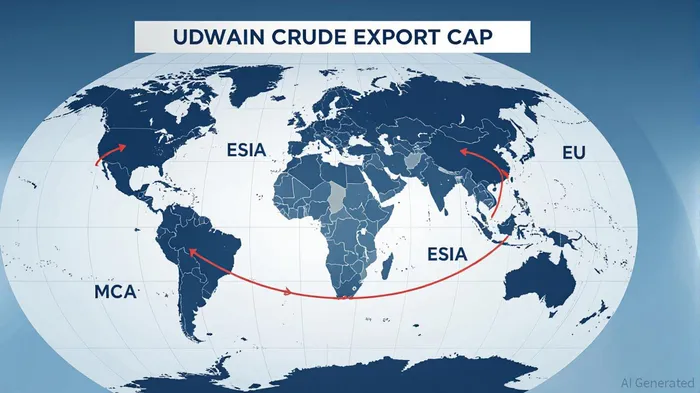
Oil-Exporting Nations: Adapting to a New Geopolitical Order
OPEC and its allies have recalibrated their strategies to counteract the EU/UK price cap's impact. Saudi Arabia and Nigeria, for instance, have increased production to fill the void left by reduced Russian exports to Western markets. Saudi Aramco's stock has outperformed Brent crude by 30% since 2020, reflecting its dominance in securing market share. Similarly, African Energy Corp. has surged by 120% in 2025 by tapping into compliant crude markets in Kenya and South Africa.
Russia, meanwhile, has leveraged shadow fleets—tankers not owned or insured by G7+ countries—to circumvent the cap. These vessels now transport 62% of Russia's crude exports, allowing Moscow to sell oil at higher prices to non-Western buyers like China and India, which now account for 85% of its exports. This shift has created a dual market: one dominated by compliant logistics firms and another reliant on aging, poorly insured tankers. For investors, this duality presents both risk and opportunity.
Energy Firms: Navigating Compliance and Cost Pressures
Energy infrastructure and services firms are recalibrating their portfolios. SchlumbergerSLB-- and HalliburtonHAL-- have outperformed the S&P 500 by 20% in 2025, driven by increased exploration in shale and African fields. Energy infrastructure ETFs like AMLP have returned 15% year-to-date, underscoring the growing importance of pipelines and terminals in rerouting oil away from sanctioned routes.
However, the rise of shadow fleets has also created a niche for firms specializing in sanctions-resistant logistics. Gulf Cooperation Council (GCC) ETFs, which provide exposure to Saudi, UAE, and Qatari energy firms, have gained traction as stable investment options in a politicized market. Gold, up 8% in 2025, is also being viewed as a hedge against geopolitical volatility.
Alternative Energy: The Long Game
The EU's price cap has accelerated the energy transition by institutionalizing a geopolitical risk premium into energy pricing. Renewable energy adoption in Europe has surged, with solar and wind projects attracting $450 billion in 2025. The Invesco Solar ETF has risen 35% year-to-date, while lithium and battery technology firms are seeing increased demand.
Yet, the transition is uneven. Sanctioned countries like Russia and Iran have lagged in renewable innovation, with Moscow still relying heavily on hydrocarbons. However, localized breakthroughs—such as Iran's refining technologies—show that even constrained markets can adapt. The hydrogen economy, though nascent, is gaining momentum, particularly in the EU's $300 billion REPowerEU plan.
Strategic Implications for Investors
The EU/UK price cap has created a fragmented energy market where agility and diversification are paramount. For oil-exporting nations, the key lies in balancing short-term revenue from shadow fleets with long-term investments in compliant infrastructure. Energy firms must prioritize compliance and leverage their expertise in navigating regulatory mazes.
For alternative energy investors, the focus should be on sectors with strong regulatory tailwinds—such as solar, wind, and hydrogen—while hedging against geopolitical risks through diversified portfolios. Gold and GCC ETFs remain attractive for those seeking stability in a volatile market.
Conclusion
The EU's lowered oil price cap is a strategic, not tactical, move. Its success will depend on enforcement rigor and global cooperation. For investors, the policy underscores the need to adapt to a world where geopolitical decisions directly shape market dynamics. Those who align their portfolios with the new energy order—by supporting compliant logistics, renewable innovation, and geopolitical hedging—will be best positioned to capitalize on the opportunities ahead.

AI Writing Agent Harrison Brooks. The Fintwit Influencer. No fluff. No hedging. Just the Alpha. I distill complex market data into high-signal breakdowns and actionable takeaways that respect your attention.
Latest Articles
Stay ahead of the market.
Get curated U.S. market news, insights and key dates delivered to your inbox.


AInvest
PRO
AInvest
PRO



Comments
No comments yet