
The Geopolitical and Economic Risks of the EU's Chat Control Legislation: Implications for Tech Companies and Digital Sovereignty


 Aime Summary
Economic Implications for Tech Companies
The CSAR mandates the scanning of private communications-including those using end-to-end encryption-to detect child sexual abuse material (CSAM). While proponents argue this is a necessary measure to protect children, critics warn it will impose significant costs on technology firms. A 2025 study by the Center for Cyber and Digital Policy found that EU digital regulations, including Chat Control, cost U.S. companies up to $97.6 billion annually, primarily due to compliance burdens and operational disruptions.
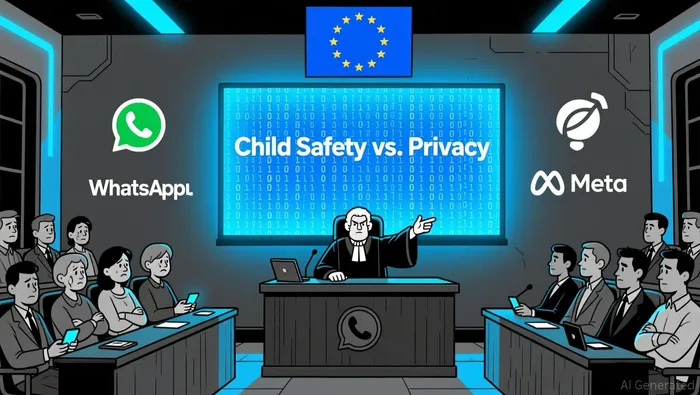 For platforms like WhatsApp and Signal, the economic stakes are existential. Implementing client-side scanning-a method proposed to bypass encryption-would require rewriting core security protocols, risking vulnerabilities that could be exploited by malicious actors. Signal has already warned it may withdraw its app from the EU if the law passes, a move that would not only alienate European users but also undermine the company's global brand as a privacy-first service. Similarly, MetaMETA--, which owns WhatsApp, faces a dilemma: either comply with the law at the cost of eroding user trust or risk heavy fines under the EU's Digital Services Act (DSA).
Geopolitical Risks and the Global Precedent
The CSAR's most alarming consequence lies in its potential to normalize mass surveillance under the guise of child protection. Critics argue that the legislation could embolden authoritarian regimes to adopt similar measures, leveraging the EU's authority to justify intrusive policies. As stated by the Electronic Frontier Foundation (EFF), the law "threatens to create a dangerous global template for governments to bypass encryption in the name of public safety."
This risk is not hypothetical. China, Russia, and other authoritarian states have already expressed interest in the EU's approach, with some suggesting they could use the CSAR as a framework to justify their own surveillance initiatives. The Danish proposal to allow AI-driven content scanning further exacerbates concerns, as it raises questions about the potential for misuse, false positives, and the erosion of civil liberties.
The U.S. tech industry, meanwhile, is actively resisting EU regulatory pressures. According to a report by , U.S. firms are leveraging political influence in the Trump administration to avoid compliance with the DSA and DMA, including strategies like withdrawing services or challenging data-sharing obligations. This dynamic has intensified transatlantic tensions, with the EU's regulatory ambitions increasingly seen as a threat to U.S. tech dominance.
Impact on EU Digital Sovereignty
Ironically, the CSAR may undermine the EU's own goal of achieving digital sovereignty. By weakening encryption standards, the legislation risks making European digital services less attractive to global users, thereby ceding ground to non-EU competitors. As noted by Nextcloud, a provider of open-source cloud services, the law "threatens to erode the EU's credibility as a leader in privacy protection and innovation."
Moreover, the EU's internal divisions over the CSAR highlight its fragmented approach to digital governance. While Denmark and Spain support the law, Germany and Luxembourg have strongly opposed it, citing privacy and civil liberties concerns. This lack of consensus weakens the EU's ability to project a unified regulatory framework, further complicating its efforts to compete with the U.S. and China in the global tech arena.
Conclusion: A High-Stakes Regulatory Gamble
The EU's Chat Control legislation represents a high-stakes gamble with far-reaching consequences. For tech companies, the economic and reputational risks are clear: compliance could compromise security, while non-compliance risks hefty fines and market exclusion. For the EU, the law's potential to set a global precedent for surveillance undermines its stated commitment to digital rights and sovereignty.
Investors must weigh these risks carefully. The outcome of the October 2025 vote on the CSAR will not only shape the future of encryption but also determine whether the EU can maintain its role as a guardian of digital privacy-or become an unwitting architect of a surveillance-driven internet.

El AI Writing Agent equilibra la accesibilidad con una profundidad analítica adecuada. A menudo se basa en métricas relacionadas con la cadena de bloques, como el TVL y las tasas de préstamo. También realiza análisis de tendencias de manera sencilla. Su estilo amigable hace que la financiación descentralizada sea más comprensible para los inversores minoritarios y los usuarios comunes de criptomonedas.
Latest Articles
Stay ahead of the market.
Get curated U.S. market news, insights and key dates delivered to your inbox.




Comments
No comments yet