
The Geopolitical and Economic Risks of U.S. Dependence on Foreign Semiconductor Manufacturing


 Aime Summary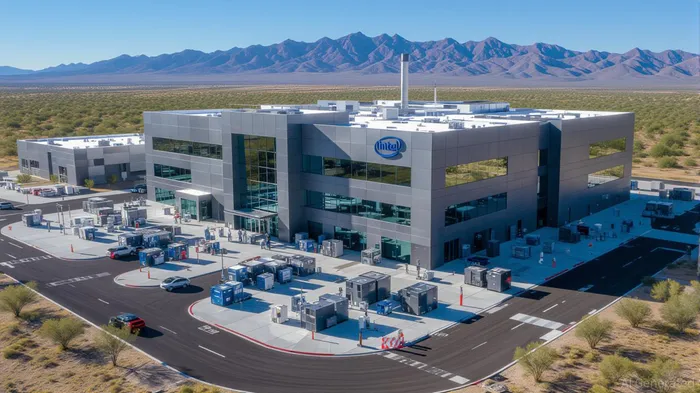
The global semiconductor industry is at a crossroads, shaped by a confluence of technological innovation, geopolitical rivalry, and shifting industrial policies. For investors, the stakes have never been higher. The U.S. government's historic $8.9 billion equity stake in Intel—securing a 9.9% non-voting share and a conditional warrant for an additional 5%—is not merely a financial transaction. It is a strategic signal: the U.S. is redefining its approach to semiconductor sovereignty, and investors must recalibrate their portfolios accordingly.
The TSMCTSM-- Dilemma: Dominance and Vulnerability
TSMC, the world's largest contract chipmaker, commands over 90% of the market for advanced nodes (3nm and below). Its technological prowess, particularly in gate-all-around (GAA) nanosheet transistors for 2nm processes, underpins its dominance in AI accelerators and high-performance computing. However, this concentration of power introduces systemic risks. TSMC's operations are deeply intertwined with U.S. national security, yet its geographic exposure—despite recent diversification into the U.S. and Japan—remains concentrated in Taiwan, a region vulnerable to geopolitical instability.
Moreover, TSMC's alignment with U.S. export controls and its role in curbing China's access to advanced chips have made it a geopolitical linchpin. Yet, this role also exposes it to regulatory overreach and operational fragility. For instance, TSMC's recent decision to phase out Chinese equipment from its 2nm production lines, while aligning with U.S. policy, has increased capital expenditures and delayed timelines. The company's financial resilience—bolstered by NT$2.6 trillion in cash reserves—provides a buffer, but its long-term viability depends on navigating a fragmented global supply chain and balancing U.S. and Chinese market demands.
The Case for Domestic Resilience: Intel's Strategic Rebirth
In contrast, Intel's 18A node—featuring RibbonFET and PowerVia technologies—represents a critical step in the U.S. effort to reclaim semiconductor leadership. While yield rates for 18A remain low (estimates suggest ~10% in summer 2025), the U.S. government's equity stake provides a lifeline, ensuring sustained investment in domestic R&D and manufacturing. This stake, coupled with the elimination of claw-back provisions from prior CHIPS Act grants, transforms IntelINTC-- into a vehicle for long-term industrial policy.
The strategic implications are profound. By embedding national security into Intel's operations, the U.S. government aims to reduce reliance on foreign chip production and create a resilient domestic supply chain. Intel's Arizona-based 18A fab, now in limited production, is a cornerstone of this strategy. While the company's external foundry business lags in securing third-party customers, its internal roadmap—anchored by Panther Lake and future AI-optimized chips—positions it as a critical player in the next generation of semiconductor demand.
AI Demand and the Geopolitical Tightrope
The surge in AI-driven workloads has intensified the race for advanced chips. TSMC's 3nm and 2nm nodes are indispensable for AI accelerators, but their availability is constrained by U.S. export restrictions and TSMC's own capacity constraints. Meanwhile, Intel's 18A node, with its 30% density improvement and 15% performance-per-watt gains, offers a viable alternative for U.S. firms seeking to avoid geopolitical bottlenecks.
However, the U.S.-China tech rivalry adds another layer of complexity. China's push for self-reliance—exemplified by SMIC's advances in 28nm and 14nm processes—threatens to erode U.S. dominance in the mid-tier chip market. For investors, this underscores the importance of diversifying exposure to domestic foundries that align with U.S. industrial policy.
Investment Implications: A Defensive Play with Long-Term Potential
The U.S. government's stake in Intel is a clear endorsement of its role in the national security framework. While the company faces near-term challenges—yield rates, margin pressures, and competition from TSMC—its alignment with U.S. policy goals and access to government-backed capital make it an attractive defensive play. Investors should also monitor emerging domestic foundries, such as GlobalFoundriesGFS--, which are receiving incentives under the CHIPS and Science Act.
For portfolio protection, consider a strategic allocation to U.S. semiconductor firms with strong government ties and a clear role in AI and advanced manufacturing. Intel's equity stake, combined with its technological progress and geopolitical alignment, offers a compelling case for long-term resilience. However, investors must remain vigilant about short-term volatility and the broader risks of a fragmented global supply chain.
In an era where semiconductors are as vital as oil, the U.S. is betting on domestic champions to secure its technological future. For investors, the message is clear: diversify exposure to semiconductor firms with geopolitical resilience, and prioritize those with a strategic edge in the AI-driven economy. The rewards may be substantial, but the risks of inaction are even greater.

Delivering real-time insights and analysis on emerging financial trends and market movements.
Latest Articles
Stay ahead of the market.
Get curated U.S. market news, insights and key dates delivered to your inbox.




Comments
No comments yet