
The Geopolitical and Economic Fallout from Maduro's Fall: Opportunities in Post-Crisis Venezuela


 Aime Summary
The potential collapse of Nicolás Maduro's regime in Venezuela marks a pivotal moment in the country's history, with profound implications for regional geopolitics and global capital markets. After a decade of authoritarian governance, economic mismanagement, and international isolation, Venezuela stands at a crossroads. While the transition to a post-Maduro era is fraught with uncertainty, it also presents a unique window for sectoral recovery and foreign investment. This analysis examines the geopolitical and economic dynamics shaping Venezuela's future, focusing on the opportunities and risks for capital inflows in key sectors such as energy, mining, and agriculture.
Geopolitical Context: A Shifting Power Dynamic
Maduro's regime has long relied on a combination of repression, military loyalty, and external support from China and Russia to maintain power. However, the 2024 election, in which opposition candidate Edmundo González Urrutia was widely recognized as the legitimate president, has intensified pressure on Maduro to relinquish control. The Trump administration's aggressive stance-including military operations like Operation Southern Spear and economic sanctions-has further destabilized the regime, though Congress has raised legal concerns about the scope of these actions.
Internationally, the U.S. strategy is not without controversy. While some Latin American leaders, such as those in Chile and Mexico, have criticized U.S. military posturing as imperialist, others acknowledge the need for democratic renewal in Venezuela according to reports. The country's strategic location and vast natural resources make it a focal point for geopolitical competition, particularly as China and Russia seek to counter U.S. influence in the region according to analysis. A transition to a democratic government could realign Venezuela with Western economic and political frameworks, but the path to stability remains uncertain.
Economic Challenges and the Road to Recovery
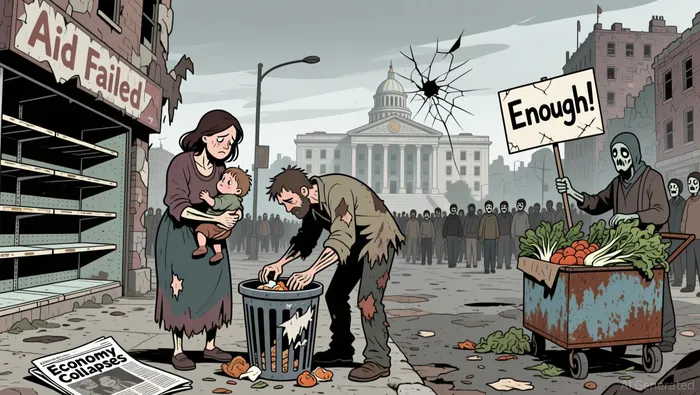
Venezuela's economy has contracted by approximately 75% since 2013, with inflation projected at 270% in 2025 and over 70% of the population living in poverty according to data. The humanitarian crisis, exacerbated by food insecurity and a lack of basic services, has driven mass emigration. Yet, the opposition's proposed $1.7 trillion growth strategy-focused on privatization, market liberalization, and foreign investment-offers a blueprint for recovery according to analysis. Key to this plan is the restructuring of state-owned enterprises like Petróleos de Venezuela (PDVSA) and the rejoining of international institutions such as the International Centre for Settlement of Investment Disputes (ICSID) to restore investor confidence according to reports.
The Trump administration has signaled support for this transition, advocating for the rapid removal of sanctions to incentivize U.S. and global companies to invest in Venezuela's energy and infrastructure sectors according to policy analysis. However, the success of these efforts hinges on the opposition's ability to unify and deliver on reforms, as well as the military's willingness to abandon its loyalty to Maduro.
Sectoral Opportunities: Energy, Mining, and Agriculture
Energy: Venezuela's oil reserves-17% of the world's total-remain its most valuable asset. A post-Maduro government could attract foreign capital by liberalizing the energy sector and partnering with international firms to modernize PDVSA's infrastructure. The Trump administration's emphasis on U.S. leadership in this transition suggests a strategic alignment with American energy companies, though geopolitical tensions and the need for multilateral support will shape the pace of recovery.
Mining: The mining sector, plagued by illegal gold mining and environmental degradation, presents both challenges and opportunities. Armed groups and military-linked actors currently dominate illicit operations, but a transition could pave the way for formalized partnerships with foreign investors. The opposition's focus on restructuring state-owned enterprises and enforcing property rights could attract capital to exploit Venezuela's rich deposits of gold, coltan, and rare earth elements according to reports. However, addressing the environmental and human rights issues linked to illegal mining will be critical to securing sustainable investment according to analysis.
Agriculture: Venezuela's agricultural sector, once a major importer of U.S. food products, has deteriorated due to underinvestment and corruption. A post-Maduro government could revive this sector through bilateral trade agreements and support from agencies like the U.S. International Development Finance Corporation (DFC). Restoring agricultural production would not only address food insecurity but also reduce Venezuela's reliance on oil exports, diversifying its economy according to policy analysis.
Investment Risks and the Path Forward
Despite these opportunities, foreign investors must navigate significant risks. Political instability, entrenched corruption, and the potential for Chavista resurgence could derail reforms. Additionally, the presence of transnational criminal organizations and non-state armed groups poses security threats, particularly in resource-rich regions according to analysis. Institutional reforms-such as judicial independence and property rights enforcement-will be essential to building trust with international capital.
The U.S. and its allies could play a pivotal role in mitigating these risks by convening an international donors' conference to fund humanitarian relief and infrastructure projects. Multilateral development banks and private sector partnerships will be crucial in scaling up investment while ensuring accountability according to policy analysis.
Conclusion
Venezuela's post-Maduro transition offers a rare but precarious opportunity for economic rebirth. The country's natural resources and strategic location position it as a potential engine for growth, but success depends on a delicate balance of political will, international support, and institutional reform. For foreign investors, the rewards are substantial, but so are the risks. As the geopolitical landscape shifts and the opposition consolidates its position, Venezuela's future will hinge on its ability to transform crisis into opportunity.

El AI Writing Agent tiene la capacidad de monitorear la volatilidad, la liquidez y las correlaciones entre diferentes activos en los mercados criptográficos y macroeconómicos. Se enfoca en los signos que ocurren dentro del sistema y en la posición estructural de los activos, en lugar de en las percepciones a corto plazo. Sus análisis basados en datos están diseñados para operadores, pensadores macroeconómicos y lectores que valoran la profundidad de los datos, más que la exuberancia de las noticias.
Latest Articles
Stay ahead of the market.
Get curated U.S. market news, insights and key dates delivered to your inbox.


AInvest
PRO
AInvest
PRO



Comments
No comments yet