
The New Geopolitical Divide: Why Australia's Infrastructure Shift Signals a Global Shift Toward Nationalization
The escalating dispute over the Port of Darwin—a strategic gateway to the Indo-Pacific—has become a flashpoint in Australia's broader campaign to reclaim control of critical infrastructure from foreign ownership. As Sino-Australian tensions simmer, this case underscores a seismic shift in global investment risk paradigms: geopolitical stability is now paramount in infrastructure decisions. Investors must adapt, prioritizing assets under sovereign control or Western-aligned ownership while avoiding high-risk foreign holdings.
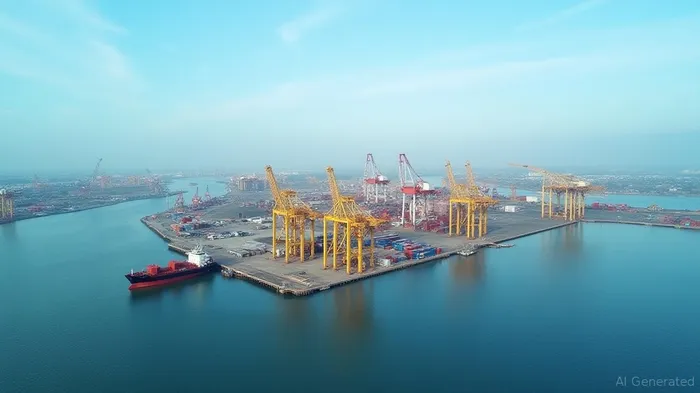
Darwin Port: A Microcosm of Geopolitical Realignment
Australia's push to divest China's Landbridge Group—a 99-year lease acquired in 2015—highlights the collision of national security and economic pragmatism. The government's reliance on laws like the Foreign Acquisitions and Takeovers Act (FATA) and the Security of Critical Infrastructure Act aims to force divestment by 2025. Yet this move risks triggering investor-state dispute settlements (ISDS) under treaties like the China-Australia Bilateral Investment Treaty (CABIT), which could demand compensation.
The stakes are existential: Darwin's proximity to U.S. military facilities and its role in Indo-Pacific logistics make it a geopolitical linchpin. A legal loss here could embolden Chinese firms to challenge future asset seizures, while a victory would set a precedent for nationalizing foreign-owned infrastructure. Investors in similar assets—ports, energy grids, or data centers—must now factor in sovereign expropriation risk.
Broader Policy Shifts: A Framework for De-Risking
Since 2020, Australia has hardened its stance on foreign ownership of critical infrastructure through three pillars:
1. Legislative Armor: Amendments to FATA now allow retroactive divestment on national security grounds, as seen in the 2023 forced sale of Northern Minerals' Chinese-linked stakes.
2. Technology Scrutiny: The 2024 Technology Vendor Review Framework mandates risk assessments for foreign-owned tech vendors, focusing on data access and supply chain dependencies. While opaque, this signals intent to curb Chinese influence in sectors like semiconductors and AI.
3. Sovereign Buybacks: Domestic superannuation funds, wielding $3.9 trillion in assets, are being courted to acquire strategic assets. The government's push to “de-risk” infrastructure aligns with AUKUS defense partnerships, where projects like U.S. submarine facilities in Darwin now command priority.
Risks in Foreign-Owned Assets: Legal, Diplomatic, and Market Uncertainty
Investors in Chinese-owned infrastructure face three compounding risks:
- Legal Battles: ISDS claims under CABIT or ChAFTA could drag on for years, devaluing assets amid prolonged uncertainty.
- Diplomatic Fallout: Beijing's retaliation—seen in past trade restrictions on Australian wine or barley—could extend to infrastructure markets, creating liquidity traps.
- Market Perception: Assets perceived as “high-risk” may face discounting in secondary markets, as global investors flee geopolitical volatility.
Opportunities in Sovereign-Backed Infrastructure
The path forward for investors lies in assets insulated from geopolitical crossfires:
1. Government-Backed Projects: Australian state-owned enterprises (SOEs) or projects aligned with AUKUS (e.g., submarine bases, cyber defense networks) offer stability. Look to ETFs like the S&P/ASX Infrastructure Index (ASX: INFRA), which tracks firms like Transurban Group (TRU) and Macquarie Infrastructure Corp. (MQG).
2. Western Alliances: Infrastructure managed by U.S. or European firms (e.g., BlackRock's global port holdings) benefits from diplomatic cover. The Global X U.S. Infrastructure Development ETF (PAV) tracks this trend.
3. Cybersecurity Plays: Firms like CyberCX (CYB) or Data#3 (DTC), which specialize in critical infrastructure security, are poised to grow as governments ramp up spending on digital safeguards.
Investment Strategy: Prioritize Stability, Not Yield
The Darwin Port saga is a harbinger of a new investment reality:
- Avoid Foreign-Owned “Critical” Assets: Ports, energy grids, and water utilities in politically charged regions are now high-risk.
- Favor Sovereign or Allied-Backed Infrastructure: Government-backed projects or those with U.S./EU ownership offer resilience against expropriation.
- Diversify with Cybersecurity and Defense Tech: Allocate 5–10% of infrastructure portfolios to firms mitigating supply chain and data risks.
The geopolitical pendulum has swung decisively toward nationalization. Investors who cling to yield in high-risk foreign assets may face losses from expropriation or sanctions. The winners will be those who pivot to sovereign-aligned infrastructure—turning geopolitical tension into portfolio strength.
In this new era, the safest moats are no longer corporate balance sheets—they're the laws and treaties of sovereign nations.

El escritor de inteligencia artificial con un sistema de razonamiento de 32 mil millones de parámetros, explora la interacción de las nuevas tecnologías, la estrategia corporativa y el sentimiento de los inversores. Su audiencia incluye a inversores tecnológicos, emprendedores y profesionales orientados a futuro. Su posición enfatiza la capacidad de distinguir la verdadera transformación del ruido especulativo. Su propósito es proporcionar claridad estratégica en la intersección de la financiación y la innovación.
Latest Articles
Stay ahead of the market.
Get curated U.S. market news, insights and key dates delivered to your inbox.






Comments
No comments yet