
The Geopolitical Crypto Race: Ethereum and Solana as Pillars of the Digital Euro


 Aime Summary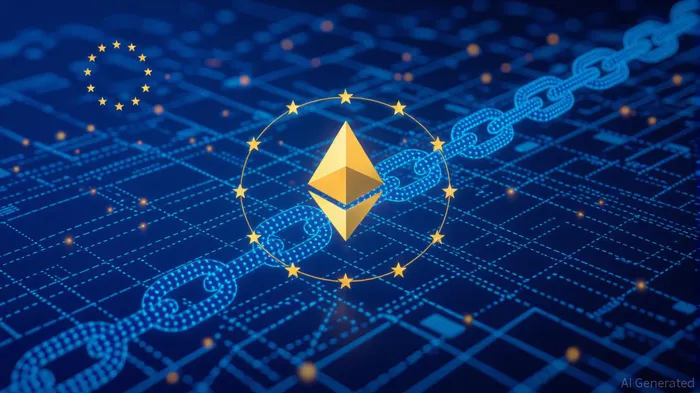
The European Union's pivot toward public blockchain infrastructure for its digital euro marks a pivotal moment in the global financial landscape. By considering EthereumETH-- and SolanaSOL-- as foundational platforms for its central bank digital currency (CBDC), the EU is not merely adopting technology—it is redefining the geopolitical architecture of digital finance. This shift, driven by the urgent need to counter U.S. dollar-backed stablecoin dominance and assert European financial sovereignty, has profound implications for institutional investors, global CBDC dynamics, and the long-term value of ETH and SOL.
A Strategic Shift: From Centralization to Decentralization
For years, the European Central Bank (ECB) leaned toward private, permissioned blockchain models, prioritizing control and privacy. However, the 2025 passage of the U.S. Genius Act—streamlining the issuance of dollar-pegged stablecoins—accelerated a strategic reevaluation. The EU now sees public blockchains as a means to create a sovereign, interoperable, and programmable digital euro that can compete with U.S. dollar-based systems. Ethereum and Solana, with their open-source ecosystems and global reach, are at the forefront of this transition.
Ethereum's robust smart contract capabilities and Solana's high-throughput architecture align with the ECB's dual goals: interoperability with the global crypto ecosystem and scalability for retail and cross-border transactions. Ethereum's post-Merge energy efficiency and Layer-2 solutions (e.g., ZK-Rollups) address privacy and scalability concerns under GDPR, while Solana's 65,000 TPS and sub-cent fees make it ideal for high-volume use cases. The ECB's exploration of hybrid models—combining public blockchains with zero-knowledge proofs (ZKPs)—further underscores its commitment to balancing transparency with privacy.
Geopolitical Implications: Challenging Dollar Dominance
The EU's move is as much about financial sovereignty as it is about technological innovation. U.S. dollar-backed stablecoins now dominate 98% of the stablecoin market, creating a structural dependency that the EU seeks to disrupt. A digital euro built on public blockchains would not only reduce reliance on foreign payment systems but also position the euro as a programmable, tokenized asset in the global digital economy.
This shift mirrors a broader trend: the reclassification of public blockchains as institutional-grade infrastructure. If the ECB selects Ethereum or Solana, it would validate these networks as critical components of sovereign finance, akin to traditional payment rails. This could trigger a global CBDC arms race, with other jurisdictions adopting open, decentralized models to avoid ceding control to U.S. or Chinese systems.
Investment Implications: Institutional Adoption and Infrastructure Opportunities
For institutional investors, the ECB's decision—expected by October 2025—represents a high-stakes inflection pointIPCX--. The adoption of Ethereum or Solana as the digital euro's backbone would unlock billions in capital for infrastructure, privacy protocols, and cross-chain tools. Key areas to watch:
- Ethereum's Layer-2 Ecosystem: ZK-Rollups (e.g., StarkWare, zkSync) and privacy-preserving solutions will be critical for GDPR compliance.
- Solana's RWA Tokenization: The platform's $553.8 million in real-world asset tokenization (2025) positions it as a leader in institutional-grade asset management.
- Cross-Chain Interoperability: Protocols like Wormhole (Solana) and Polkadot's XCMP could facilitate the digital euro's integration with global DeFi and tokenized assets.
Institutional partnerships are already accelerating. BlackRockBLK-- and Franklin Templeton have launched tokenized money market funds on Solana, while R3's RWA tokenization on the platform highlights its appeal for CBDC infrastructure. Meanwhile, Ethereum's Pectra upgrade and SEC-friendly staking framework have bolstered its institutional credibility.
Strategic Recommendations for Investors
- Position in Infrastructure Providers: Prioritize Ethereum's ZK-Rollup developers and Solana's RWA tokenization platforms.
- Monitor Regulatory Developments: The EU's MiCA framework and ECB rulebook will shape compliance requirements and adoption timelines.
- Diversify Across Chains: A hybrid portfolio of Ethereum and Solana-based assets mitigates risk while capitalizing on their complementary strengths.
The ECB's final decision in October 2025 will be a watershed moment. If Ethereum or Solana is chosen, it will not only redefine the digital euro but also cement these blockchains as foundational infrastructure for the next era of finance. For investors, the opportunity lies in aligning with the infrastructure that will underpin a decentralized, sovereign, and programmable financial future.
In this race for financial sovereignty, the EU's choice is not just a technical decision—it is a geopolitical statement. And for those who recognize the stakes, the rewards could be transformative.

Decoding blockchain innovations and market trends with clarity and precision.
Latest Articles
Stay ahead of the market.
Get curated U.S. market news, insights and key dates delivered to your inbox.


AInvest
PRO
AInvest
PRO



Comments
No comments yet