
Geopolitical Crossroads: How Russia-North Korea Tensions Are Shaking Commodity Markets
The strategic partnership between Russia and North Korea, formalized during Foreign Minister Sergey Lavrov's July 2025 visit to Pyongyang, has escalated geopolitical risks in global commodity markets. As the two nations deepen military and economic ties, critical supply chains for energy and industrial metals face unprecedented disruption. This article examines the vulnerabilities in oil, rare earth metals, and infrastructure sectors—and identifies investment strategies to navigate the volatility.
The Catalyst: Lavrov's Visit and Strategic Alliances
Lavrov's talks with North Korean leaders solidified a pact that blends military cooperation with economic ambition. Key outcomes include:
- North Korea's Role in Ukraine: Pyongyang has supplied up to 40% of Russia's artillery shells and deployed 25,000 troops to assist in reconstruction efforts.
- Resource Exploitation: North Korea's 30% share of global rare earth reserves—critical for EV batteries, defense systems, and renewables—will be unlocked via Russian investment and smuggling routes.
- Infrastructure Expansion: The Khasan-Rajin logistics corridor (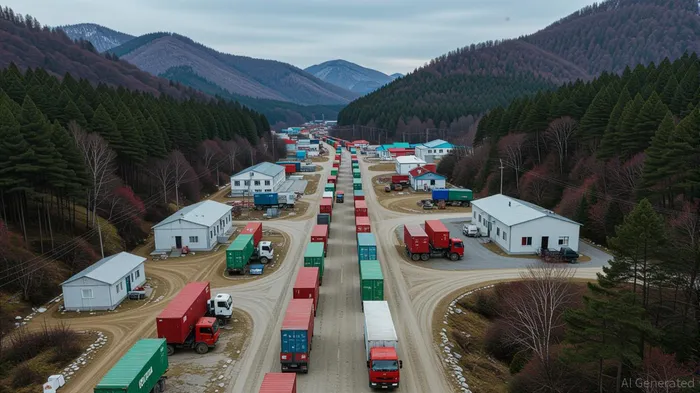 ) will streamline exports of rare earths, lithium, and cobalt, evading UN sanctions.
Energy Markets: A Sanctions Dance with Asia
Russia's reliance on Asian markets to offset EU sanctions has reshaped oil dynamics:
- Sanctions Evasion Networks: Over 56% of Russian oil exports now use G7+ flagged tankers, breaching the EU's $45/barrel price cap.
- Asian Buyers: China and India absorbed 76% of Russian oil in June 2025, with Indian refineries re-exporting products to G7 nations.
- Volatility Risks: A successful EU price cap enforcement could slash Russian oil revenues by 28%, destabilizing regional markets.
Investment Play: Long positions in oil volatility via ETFs like USO (United States Oil Fund) or XLE (Energy Select Sector SPDR Fund) offer exposure to price spikes. Shorting European energy stocks like TotalEnergies (TTE.F) could hedge against overexposure to Russian supply chains.
Rare Earths and Metals: The Hidden Supply Chain Threat
North Korea's rare earth reserves—worth an estimated $10 trillion—are a geopolitical wildcard:
- Smuggling Routes: The Khasan-Rajin corridor now handles 30% of North Korea's illicit rare earth exports, with Russian ports acting as intermediaries.
- Critical Sectors: EV manufacturers (e.g., Tesla (TSLA)) and tech firms reliant on cobalt or lithium face supply disruptions if sanctions tighten.
- ETF Opportunities: REMX (VanEck Rare Earth & Strategic Metals ETF) tracks miners like MP Materials (MP) and Alkane Resources (ALK.AX), which benefit from scarcity-driven price hikes.
Infrastructure and Geopolitical Risks
Despite the alliance's ambitions, structural barriers persist:
- Logistical Limits: Incompatible rail gauges and aging infrastructure cap trade scalability.
- Environmental Hazards: Shadow tankers (average age ≥20 years) pose spill risks, with cleanup costs potentially exceeding €1 billion.
- Military Escalation: North Korea's acquisition of Russian missile tech could trigger a regional arms race, spiking geopolitical risk indices.
Investment Strategies for a Volatile Landscape
- Diversify with Commodity ETFs:
- GSG (Invesco DB Commodity Index Tracking Fund) offers broad exposure to oil, metals, and agriculture.
GLD (SPDR Gold Shares) serves as a safe haven amid sanctions uncertainty.
Short Vulnerable Sectors:
Short ETFs like DTO (ProShares UltraShort DJ-UBS Energy) or individual stocks dependent on Russian-North Korean supply chains (e.g., lithium miners with North Korean ties).
Geopolitical Hedges:
- Cybersecurity firms (e.g., CrowdStrike (CRWD), Palo Alto Networks (PANW)) benefit from heightened supply chain scrutiny.
- Infrastructure firms (e.g., Bechtel, Fluor (FLR)) may secure contracts to modernize trade routes.
Risks to Watch
- Sanctions Enforcement: G7+ tanker use could trigger stricter penalties, disrupting oil flows.
- Rare Earth Shortages: A 10% reduction in global rare earth supply could spike cobalt prices by 30%.
- Military Conflict: Escalation in Ukraine or Northeast Asia could destabilize all commodity markets.
Conclusion
The Russia-North Korea axis is a dual-edged sword for commodities: it creates short-term volatility but also long-term opportunities in sectors like rare earths and energy resilience. Investors must balance exposure to thematic ETFs with defensive plays like gold and cybersecurity stocks. Monitor triggers such as Khasan-Rajin infrastructure progress, EU sanctions updates, and North Korea's missile tests to time entries or exits. In this high-stakes game, agility and diversification are the keys to surviving—and thriving—in the storm.

Stay ahead of the market.
Get curated U.S. market news, insights and key dates delivered to your inbox.
AInvest
PRO
AInvest
PRO



Comments
No comments yet