
Geopolitical Crossroads: How U.S.-Russia Diplomacy Reshapes Energy Markets and Investment Strategies


 Aime Summary
The U.S.-Russia diplomatic thaw of 2025, epitomized by the Alaska Summit, has sent ripples through global energy markets, recalibrating trade dynamics and investment priorities. As oil prices stabilize and Arctic energy projects re-emerge, investors must navigate a landscape where geopolitical risk and resource competition are inextricably linked. This article dissects the long-term implications of this evolving relationship and outlines strategic opportunities for those prepared to adapt.
The New Energy Equilibrium
The suspension of U.S. sanctions and tariffs on Russian oil buyers like India and China has temporarily stabilized global oil prices, with Brent crude dropping to $65.85 per barrel by late 2025. However, this stability is fragile. Russia's pivot to Asian markets—exemplified by India's $52.2 billion in Russian oil imports in 2024—has created a dual-edged sword: while it reduces Russia's reliance on Western markets, it also exposes global supply chains to volatility in the Indo-Pacific.
For investors, the key takeaway is to hedge against headline risk. Energy majors like ConocoPhillips (COP) and Kinder Morgan (KMI) are benefiting from infrastructure demand in a post-sanctions environment, but their valuations remain sensitive to geopolitical shifts.
Arctic Ambitions and Rare Earths
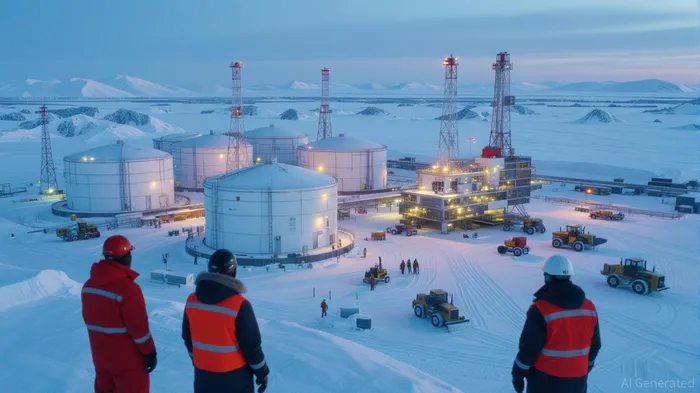
The Alaska Summit's focus on Arctic energy projects signals a strategic pivot toward resource security. Russia's Arctic LNG 2 project, once stalled by Western sanctions, is now a focal point for U.S.-Russia collaboration. Meanwhile, the U.S. and EU are racing to secure rare earth element (REE) supply chains, critical for electric vehicles and renewables.
Demand for REEs like neodymium and dysprosium is projected to grow over 300% by 2030. U.S.-based MP Materials (MP) and Australian Lynas Rare Earths (LYC.AX) are leading efforts to diversify away from Chinese dominance in processing. Investors should prioritize firms with vertical integration in refining, as processing capabilities are as vital as mining.
Geopolitical Risks and Defense Sector Opportunities
While U.S.-Russia diplomacy has eased immediate tensions, the EU's 18th sanctions package—imposing a $47.6 per barrel price cap on Russian crude—ensures sustained pressure on Moscow. This has accelerated Russia's military Keynesianism, channeling resources into its defense sector.
Defense budgets in the U.S., EU, and NATO allies are projected to rise by 8–12% in 2025, fueling demand for advanced weaponry and cyber capabilities. Companies like Lockheed Martin (LMT) and Raytheon (RTX) are well-positioned to capitalize on this trend.
Emerging Markets: A Tale of Two Trajectories
Emerging markets face divergent risks. India and Indonesia, with diversified trade relationships and strong fiscal positions, may outperform. Conversely, countries reliant on Russian energy or Western capital—such as Turkey and South Africa—could face volatility. Investors should prioritize economies with robust foreign exchange reserves and strategic partnerships with non-Western powers.
Strategic Investment Playbook
- Arctic Energy Infrastructure: Position in Arctic-focused energy firms and logistics providers.
- Rare Earths and Critical Minerals: Invest in vertically integrated REE processors to hedge against supply chain bottlenecks.
- Defense and Cybersecurity: Allocate capital to defense contractors and emerging tech firms in drone and cyber warfare.
- Diversified Emerging Market Exposure: Favor markets with low debt and diversified trade ties, avoiding overexposure to politically unstable regions.
Conclusion
The U.S.-Russia energy détente is a double-edged sword: it stabilizes markets in the short term but introduces long-term uncertainties. Investors must balance immediate gains in infrastructure and defense with strategic bets on Arctic and rare earths. As the energy transition accelerates, those who align their portfolios with geopolitical realities—and not just market trends—will emerge ahead.
In this new era, energy is both a commodity and a chess piece. The winners will be those who see the board clearly.

Decoding blockchain innovations and market trends with clarity and precision.
Latest Articles
Stay ahead of the market.
Get curated U.S. market news, insights and key dates delivered to your inbox.
AInvest
PRO
AInvest
PRO



Comments
No comments yet