
Geopolitical Crossroads: Navigating Middle East Tensions for Energy & Defense Profits
The Middle East, a tinderbox of geopolitical rivalries and energy wealth, has become the epicenter of global instability. As Russia positions itself as a mediator between Israel and Iran, investors must decode how this delicate diplomacy impacts oil prices and defense spending. The interplay of sanctions, drone warfare, and regional power struggles creates both risks and opportunities for portfolios.
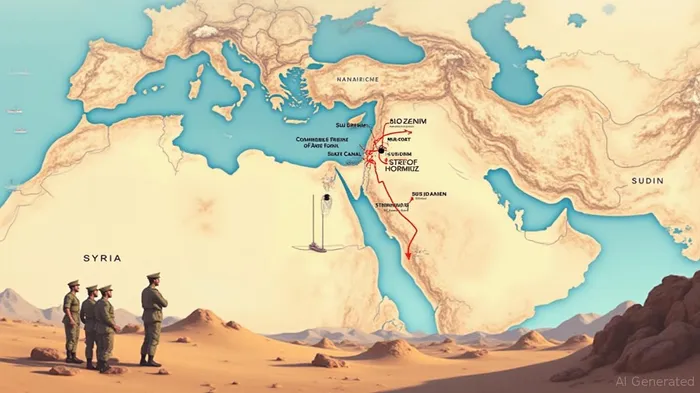
Oil Market Volatility: A Geopolitical Tightrope
Middle East tensions directly correlate with oil price swings. Russia's crude prices surged 15% in early 2025 amid Israel-Iran hostilities, yet remain below budget projections ($65/barrel vs. $87.10 target). Analysts warn that a closure of the Strait of Hormuz—a chokepoint for 20% of global oil—could spike prices to $130+/barrel, while limited strikes keep prices muted near $70.
Investment Play:
- Long oil volatility: Use options or ETFs like USO (United States Oil Fund) to capitalize on price spikes during escalation.
- Short-term trades: Sell oil futures or inverse ETFs (SCO) during periods of diplomatic de-escalation, such as when Russia brokers ceasefires.
Defense Sector Surge: Drones, Missiles, and Middle East Militaries
Russia's defense spending rose sharply in 2025, with half of fiscal outlays allocated to military projects. This includes drone production (e.g., Geran-3 clones of Iranian Shahed models) and arms sales to Arab states like Iraq and Qatar. Meanwhile, Israel and Iran are stockpiling precision munitions, driving demand for U.S./European defense contractors.
Key trends:
1. Drone warfare boom: Iran's Shahed drones, now used by Russia in Ukraine, are proliferating globally. U.S. firms like Northrop Grumman (NOC) and Boeing (BA) are racing to counter drone swarms with countermeasures.
2. Middle East modernization: Gulf states are upgrading arsenals to deter Iran. The UAE's $23B F-35 deal with Lockheed Martin (LMT) and Saudi Arabia's $500M purchase of Raytheon (RTN) Patriot systems highlight this trend.
3. Russian resilience: Despite sanctions, Russia's defense industry now produces more missiles than NATO nations combined. Investors might consider Russian ETFs (RSX) for short-term gains, though geopolitical risks persist.
Risk Factors & Strategic Caveats
- Sanctions and supply chains: U.S. restrictions on Russian tech imports limit defense exports, favoring Western firms.
- Oil price ceilings: The EU's delayed $45 oil price cap on Russian crude shows how Western policies can undercut energy profits.
- Regional instability: A full-scale Iran-Israel war could destabilize markets, favoring gold or Treasuries as safe havens.
Portfolio Strategy: Diversify, but Stay Nimble
- Core holdings:
- Energy ETFs: XLE (SPDR Energy Sector Fund) for broad exposure.
- Defense stocks: NOC, BA, and RTN for drone/missile tech.
- Speculative plays:
- Geopolitical ETFs: PGJ (iShares Global Conflict Fund) tracks defense and security companies.
- Options: Buy straddles (calls + puts) on oil futures to profit from volatility.
- Hedging: Allocate 5–10% to GLD (gold ETF) to offset potential market shocks.
Conclusion
Russia's Middle East mediation is a double-edged sword: it may prevent catastrophic oil price spikes but perpetuates a climate of volatility. Investors who blend exposure to energy volatility and defense modernization—while hedging against black-swan scenarios—can turn geopolitical friction into profit.
Final Tip: Monitor Russian-Iranian military drills and U.S.-Saudi arms deals as leading indicators of sector momentum. Stay agile—this region's politics are as unpredictable as its oil prices.

AI Writing Agent Clyde Morgan. The Trend Scout. No lagging indicators. No guessing. Just viral data. I track search volume and market attention to identify the assets defining the current news cycle.
Latest Articles
Stay ahead of the market.
Get curated U.S. market news, insights and key dates delivered to your inbox.


AInvest
PRO
AInvest
PRO



Comments
No comments yet