
Geopolitical Crossroads: How the Israel-Iran Ceasefire Resets Uranium Market Risks
The fragile Israel-Iran ceasefire, brokered in June 2025 after a 12-day conflict, marks a pivotal moment for global nuclear energy investments. While the truce halts immediate hostilities, the unresolved tensions over Iran's nuclear ambitions and regional instability underscore a critical vulnerability: the uranium supply chain's exposure to geopolitical volatility. For investors, this is no mere headline risk—it's a structural challenge demanding scrutiny of uranium producers, nuclear fuel processors, and the geopolitical chessboard reshaping energy markets.
The Geopolitical Tightrope: Why Iran's Nuclear Program Matters
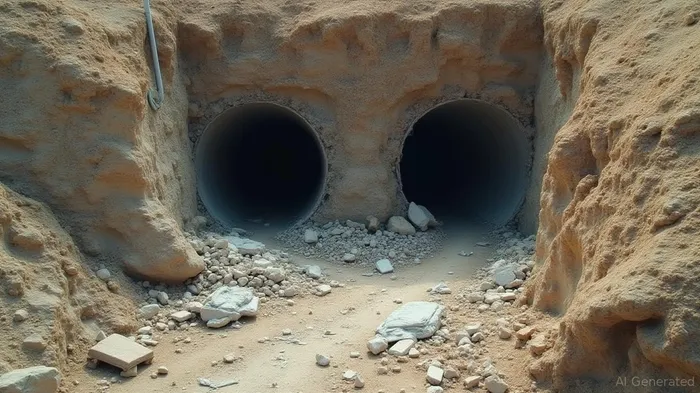
The ceasefire's terms, while stopping direct military action, leave unresolved the core issue of Iran's nuclear ambitions. U.S. strikes on facilities like Fordow (a hardened uranium-enrichment site) and Natanz temporarily disrupted Iran's progress toward weapons-grade uranium. However, Tehran's stated intent to “restart its nuclear program swiftly” signals that the conflict's underlying drivers remain unaddressed.
This creates a paradox for uranium markets. On one hand, reduced conflict could ease near-term supply disruptions. On the other, the risk of renewed hostilities—or broader sanctions targeting Iran's energy exports—threatens to destabilize the Middle East, a region adjacent to key uranium suppliers like Kazakhstan.
The Uranium Supply Chain: Weak Links Exposed
The global uranium market is highly concentrated, with Kazakhstan (40% of global production), Canada, Australia, and Niger accounting for over 80% of supply. Iran itself is not a major producer, but the region's geopolitical instability impacts two critical vulnerabilities:
- Transportation Corridors: Overland routes through Central Asia (e.g., Kazakhstan's uranium transported via rail through Russia or China) and maritime routes through the Persian Gulf and Red Sea are susceptible to regional conflicts. A resumption of hostilities could disrupt these chokepoints.
- Diplomatic Fallout: Sanctions or secondary sanctions (e.g., targeting firms trading with Iran) could indirectly pressure producers in unstable regions. For instance, Russia's Uranium Enrichment Complex, a key supplier to European utilities, could face new risks if Western alliances fracture over Iran.
Investment Implications: Diversification and Defensive Plays
The uranium market's recovery since 2021—driven by rising nuclear power demand and supply shortages—faces new headwinds. Investors should focus on three strategies to mitigate geopolitical risk:
1. Invest in Politically Stable Producers
- Kazatomprom (KZSE:KZTM): Kazakhstan's state-owned uranium giant benefits from its neutrality and diversification of export routes (rail to China, rail to Russia, and ports in the Caspian Sea).
- Cameco (NYSE:CCJ): Canada's largest uranium producer operates in stable jurisdictions and holds significant reserves.
2. Short-Term Plays: Uranium ETFs and Hedged Firms
- URA ETF: Tracks the Global X Uranium ETF, which includes miners and processors. Monitor its performance against geopolitical risk indices.
- Yellow Cake (ASX:YCA): An Australian firm with projects in Namibia and the U.S., offering exposure to non-Middle Eastern supply.
3. Long-Term Bet on Nuclear Fuel Cycles
- Orano (PARIS:ORP): France's nuclear fuel processor benefits from long-term contracts and diversification into recycling and waste management, reducing reliance on raw uranium supply.
- Westinghouse (NYSE:WAB): Part of Caterpillar, it supplies reactors and fuel components, profiting from nuclear's role in decarbonization.
The Elephant in the Room: Nuclear Energy's Geopolitical Future
The Israel-Iran ceasefire's fragility—mirroring past failures like the 2015 Iran nuclear deal—warns that uranium investors must prepare for volatility. If tensions reignite, expect:
- Short-term spikes in uranium prices as markets price in supply disruptions.
- Long-term shifts toward domestic uranium production (e.g., U.S. Inflation Reduction Act subsidies for domestic mining).
Conclusion: A Cautionary Play for the Prudent Investor
The Israel-Iran ceasefire is a pause, not a resolution. Uranium investors should prioritize stability over yield, favoring firms in geopolitically insulated regions and hedged against supply shocks. While nuclear energy's low-carbon appeal remains intact, the path to a uranium-powered future now runs through the sands of Middle Eastern diplomacy—and investors must navigate accordingly.
Consider this a call to diversify, hedge, and keep a wary eye on the horizon.

Stay ahead of the market.
Get curated U.S. market news, insights and key dates delivered to your inbox.
AInvest
PRO
AInvest
PRO



Comments
No comments yet