
Geopolitical Crossroads: Iran's Nuclear Standoff and the Energy Market's Volatile Future
The withdrawal of UN/IAEA inspectors from Iran in 2025 has thrust the Islamic Republic's nuclear ambitions into the global spotlight, with profound implications for energy markets. As regional tensions escalate—marked by Israeli-U.S. airstrikes on nuclear facilities and Iran's retaliatory threats—the path to sanctions relief remains blocked, leaving oil prices and geopolitical stability in a precarious balance. This analysis explores how the interplay of nuclear politics and sanctions could redefine energy market dynamics, creating both risks and opportunities for investors.
The Withdrawal of Inspectors: A Catalyst for Uncertainty
The departure of IAEA inspectors, compounded by Iran's legislative restrictions on IAEA access to nuclear sites, has eroded international oversight of Tehran's program. With the IAEA now unable to verify compliance, Iran's threat to withdraw from the Nuclear Non-Proliferation Treaty (NPT) grows increasingly credible. Such a move would remove legal constraints on its nuclear activities, potentially triggering a regional arms race and further destabilizing the Middle East.
The immediate consequence? Sanctions relief hinges on Iran's willingness to negotiate—a prospect now deeply uncertain. While the U.S. demands Iran halt uranium enrichment entirely, Tehran has framed its nuclear program as a sovereign right, rejecting U.S. conditions outright. This standoff leaves markets guessing: Will sanctions be reimposed, or will diplomacy somehow avert a crisis?
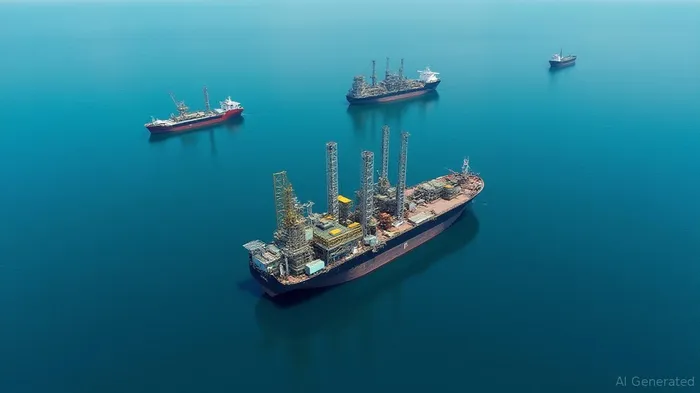
Sanctions Relief Stalemate and Oil Supply Risks
The energy market is caught in a binary scenario:
Scenario 1: Sanctions Reinstated
If negotiations collapse and pre-2015 sanctions return, Iran's oil exports—currently around 1.5 million barrels per day (bpd)—could plummet. This would tighten global supply, pushing Brent crude prices toward $90–$100 per barrel or higher. Geopolitical risks in the Strait of Hormuz, a critical oil transit route, would also intensify, further amplifying volatility.Scenario 2: Sanctions Lifted
Should a deal emerge, Iran could quickly ramp up production, potentially flooding markets with an additional 1–2 million bpd. This would weigh on prices, especially if OPEC+ fails to offset the surplus. A rapid oil price drop below $70/bbl is plausible, though unlikely to last if geopolitical tensions persist.
The market's current pricing reflects this ambiguity. Brent crude has oscillated between $70 and $85/bbl this year, with spikes coinciding with news of Iranian threats or U.S.-Israeli military action.
Investment Opportunities in a Volatile Landscape
Investors should position for both scenarios while hedging against prolonged uncertainty:
Equities: Energy Infrastructure and Defense
Companies with exposure to oil supply stability, such as U.S. shale producers (e.g., Pioneer Natural Resources, NOV), could benefit from sustained high prices under Scenario 1. Meanwhile, defense contractors like Raytheon (RTX) or BoeingBA-- (BA) may see demand rise if regional militarization accelerates.Commodities: Gold and Oil Futures
Gold (GLD) remains a hedge against geopolitical risk, while oil futures (USO) allow investors to bet on either side of the sanctions equation. Shorting oil ETFs could be viable if a sanctions relief deal materializes, but the risks of miscalculating timing are significant.ETFs: Leveraging Diversification
The Energy Select Sector SPDR Fund (XLE), which tracks U.S. energy equities, offers a diversified play on oil prices. Pairing it with inverse oil ETFs (DTO) could create a balanced portfolio in volatile markets.
Regional Dynamics and Long-Term Risks
Iran's internal political divisions—between pragmatic reformists and hardline factions—add another layer of unpredictability. A hardline resurgence could accelerate nuclear progress, further alienating global powers. Meanwhile, Russia's role in Iran's nuclear projects (e.g., Bushehr reactor) complicates Western efforts to isolate Tehran.
A worst-case scenario—Iran's NPT withdrawal—could unleash a cascade of proliferation in the Middle East, from Saudi Arabia to Turkey. Such a shift would permanently reshape energy geopolitics, favoring long-term investments in renewable energy (e.g., NextEra Energy, NEE) as a hedge against fossil fuel instability.
Conclusion: Navigating the Crossroads
The Iranian nuclear crisis is a masterclass in geopolitical risk, with oil markets caught in its crosshairs. Investors must remain agile, balancing exposure to energy equities with hedging tools. While short-term volatility is inevitable, the longer-term trajectory hinges on whether diplomacy or confrontation prevails. For now, the market's message is clear: prepare for turbulence, but stay ready to capitalize on clarity.
This analysis assumes no guarantee of outcomes and is for informational purposes only. Always consult a financial advisor before making investment decisions.

Stay ahead of the market.
Get curated U.S. market news, insights and key dates delivered to your inbox.


AInvest
PRO
AInvest
PRO



Comments
No comments yet