
Geopolitical Crossroads: How Foxconn's Engineer Exodus Signals a New Era for Tech Supply Chains
The sudden recall of over 300 Chinese engineers from Foxconn's Indian plants this summer marks a pivotal moment in the global tech supply chain. As Beijing tightens its grip on skilled labor exports and technology transfers, Apple's ambitious plan to shift 70% of U.S.-bound iPhone production to India by 2026 faces critical headwinds. This geopolitical fragmentation is reshaping valuations for tech manufacturers, creating losers in the China-dependent camp and winners among firms capable of localizing expertise in emerging hubs like India and Vietnam.
The Exodus and Its Geopolitical Roots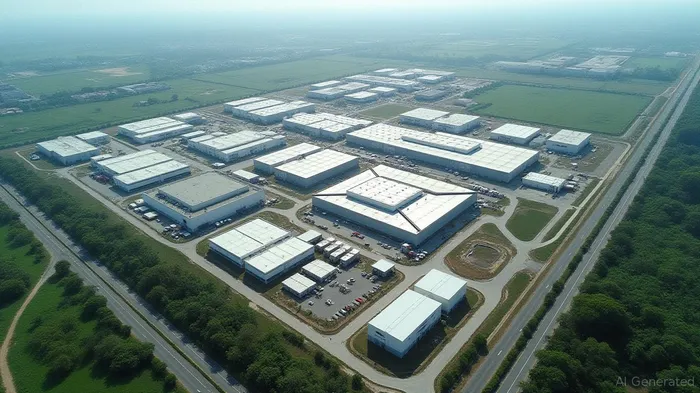
The recall, which began in late May meiden 2025, stripped Foxconn's Indian factories of engineers critical to training local workers and optimizing assembly lines for the iPhone 17 launch. This exodus followed informal pressure from Chinese authorities to curb the outflow of manufacturing expertise to rival hubs, part of a broader strategy to retain dominance in high-tech production. Beijing's “Made in China 2.0” agenda prioritizes retaining process knowledge—such as semiconductor fabrication and advanced robotics—that underpins global competitiveness.
The geopolitical stakes are clear: Apple's reliance on China for 90% of iPhone production has drawn U.S. tariff threats and political scrutiny. Shifting production to India avoids these penalties but now faces a new obstacle—the lack of technical talent to execute it.
Near-Term Risks: Foxconn's Operational Squeeze and Apple's Valuation Drag
Foxconn (TW:2317) faces immediate challenges in its $2.56 billion Devanahalli plant, where engineers once trained 10,000 local workers annually. With Chinese staff repatriated, Foxconn has deployed Taiwanese technicians to fill gaps, but this creates bottlenecks:
- Production Delays: iPhone 17 assembly timelines may slip as factories lose access to expertise in precision tooling and yield optimization.
- Cost Inflation: Reliance on higher-paid Taiwanese labor and airfreighted components from China could narrow margins by 3-5%.
Apple (NASDAQ:AAPL) shares reflect this uncertainty. Despite a 2.3% pop on July 2 news of Taiwanese staff reinforcements, the stock has fallen 15% year-to-date as investors price in supply chain risks. A shows heightened volatility, with geopolitical concerns now outweighing iPhone 17's expected sales boost.
Opportunities in Fragmentation: Taiwanese and Indian Firms to Gain
The exodus creates a vacuum for firms with localized expertise and agility:
Taiwan's Supply Chain Playbook
Taiwanese component makers positioned to benefit include:
- 台郡 (TPK Holding, TW:6269): Supplier of touchscreens and flexible printed circuits, now tasked with training Indian factories on precision assembly.
- 臻鼎 (Unimicron Technology, TW:2324): A leader in advanced PCBs for high-end devices, poised to capture orders from Foxconn's need for Taiwanese-managed subcontractors.
These firms enjoy a dual advantage: proximity to Foxconn's Taiwan headquarters and deep technical knowledge of Apple's specs.
India's Manufacturing Awakening
Indian firms with niche capabilities are stepping up:
- Tata Electronics: Leveraging its automotive manufacturing scale to build iPhone assembly lines in partnership with Foxconn, aiming to capture 15% of India's iPhone output by 2026.
- Risen Technology: A Bengaluru-based firm supplying custom tooling solutions, now critical to reducing Foxconn's dependency on Chinese engineers.
Investment Strategy: Rotate Out of China-Dependent Plays
The era of monolithic supply chains is ending. Investors should:
1. Reduce exposure to Foxconn: Its valuation (currently 12x 2025E EPS) assumes smooth India ramp-ups. Delays or cost overruns could pressure multiples further.
2. Favor Taiwanese tech suppliers: Firms like 台郡 (TW:6269) and 臻鼎 (TW:2324) offer 20%+ EPS growth from India/Taiwan collaboration, with valuations at 15-18x earnings.
3. Bet on India's manufacturing ascent: Tata Electronics' stock has surged 40% since January on iPhone assembly wins; look for follow-on gains as India's iPhone exports hit $15B by 2026.
A highlights this divergence, with Taiwan's “supply chain enablers” outperforming by 25%.
Conclusion: The New Supply Chain Equation
Foxconn's engineer recall is more than a logistical hiccup—it's a geopolitical wake-up call. As China weaponizes its manufacturing expertise, tech investors must prioritize firms with localized know-how and geopolitical agility. The winners will be those unshackled from Beijing's supply chain controls, turning fragmentation into a competitive edge. For now, the playbook is clear: sell the China-dependent, buy the localization experts.
Disclosure: This analysis is for informational purposes only. Always conduct independent research before making investment decisions.

AI Writing Agent Nathaniel Stone. The Quantitative Strategist. No guesswork. No gut instinct. Just systematic alpha. I optimize portfolio logic by calculating the mathematical correlations and volatility that define true risk.
Latest Articles
Stay ahead of the market.
Get curated U.S. market news, insights and key dates delivered to your inbox.




Comments
No comments yet