
Geopolitical Crosscurrents Demand Strategic Energy Resilience Plays
The global energy sector is navigating a perfect storm of geopolitical risks—from Middle East flare-ups to Europe's energy decarbonization push—that are reshaping supply chains, pricing dynamics, and investment opportunities. As conflict in the Persian Gulf and Russia's lingering influence over Europe's energy infrastructure create volatility, investors must pivot toward companies and sectors that thrive in crisis. This article maps the most pressing geopolitical risks and identifies resilience plays poised to benefit from the chaos.
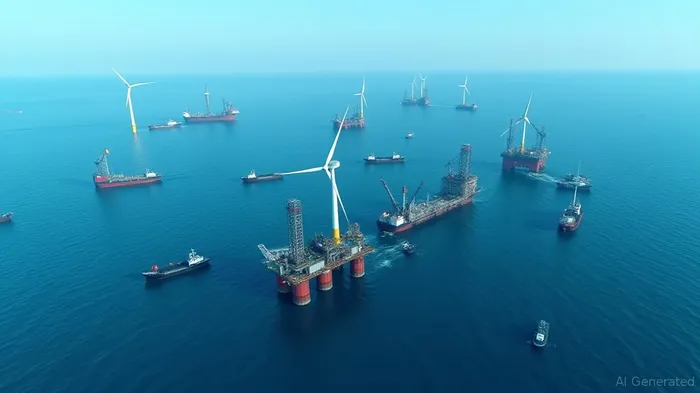
Geopolitical Hotspots: Where the Risks Lie
Middle East Tensions: Israel's June airstrikes on Iranian nuclear sites and Iran's threat to disrupt the Strait of Hormuz (a chokepoint for 20% of global oil trade) have injected fear into markets. Brent crude spiked 7% post-attack, but OPEC+'s disciplined production cuts and U.S. shale output have so far prevented a supply crisis. The U.S. Energy Information Administration (EIA) now forecasts 2025 global oil demand will grow by just 0.5 million barrels/day—down 50% from earlier estimates—due to trade wars and economic slowdowns.
Russia's Energy Weaponry: While the EU's REPowerEU plan aims to eliminate Russian gas imports by 2027, Russia continues to export oil and LNG via shadow fleets. The EU's proposed $45/ barrel oil price cap (down from $60) and sanctions on Russian banks underscore the fragility of Europe's energy transition. Ukraine's recent biomethane exports to the EU—a first—signal its potential as a green energy partner, but military threats persist: Russia's hypersonic missile attacks on offshore infrastructure in June 2025 highlight vulnerabilities.
U.S.-China Trade Wars: Trump's trade tariffs and export controls on semiconductors and critical minerals have disrupted supply chains for EV batteries and renewables. China's dominance in lithium and rare earth metals remains a strategic weakness for U.S. energy resilience, with U.S. firms scrambling to secure overseas mining partnerships.
Resilience Plays for This Volatile Landscape
1. Critical Minerals & Supply Chain Diversification
The U.S. Inflation Reduction Act's $369 billion clean energy push has made securing lithium, cobalt, and nickel a national security priority. Firms with vertically integrated mineral sourcing or partnerships in Africa or the Americas are key.
- Albemarle (ALB): The lithium giant is expanding production in Chile and Nevada while diversifying its supply chain.
- Lithium Americas (LAC): Its Nevada lithium project positions it to meet U.S. domestic demand.
2. Defense Infrastructure & Cybersecurity
Energy infrastructure is a prime target for cyberattacks and sabotage. Companies fortifying grid resilience or offering defense contracts are beneficiaries:
- Veolia (VIE.PA): A leader in critical infrastructure cybersecurity, with projects securing European energy grids.
- Raytheon Technologies (RTN): Defense contracts for NATO's energy protection initiatives are on the rise.
3. European Renewable Energy Plays
The EU's $565 billion REPowerEU fund is accelerating offshore wind and hydrogen projects. Firms with shovel-ready projects in the North Sea or Mediterranean stand to gain:
- Ørsted (ORSTED.CO): Europe's largest offshore wind developer, with a 12 GW pipeline.
- NextEra Energy (NEE): Its U.S. solar and storage assets align with global decarbonization trends.
4. U.S. Shale's New Reality
While oil prices remain capped by OPEC+ overproduction, U.S. shale firms with low breakeven costs and cash-rich balance sheets can capitalize on M&A opportunities:
- EOG Resources (EOG): A top-tier operator with $15/bbl breakeven and $3.7 billion in free cash flow (2024).
- Pioneer Natural Resources (PXD): Focused on the Permian Basin's premium acreage, it has reduced debt by 20% since 2022.
Investment Strategy: Hedging Against Chaos
- Sector Allocation:
- 20% in critical minerals,
- 30% in renewables,
- 20% in defense infrastructure,
- 30% in resilient oil majors (e.g., Chevron (CVX), which has a $10 billion dividend buffer).
- Geographic Focus:
- Avoid pure-play Russian energy stocks (e.g., Gazprom), which face liquidity risks.
- Overweight Europe's grid modernization plays and U.S. shale's M&A opportunities.
- Risk Mitigation:
- Use options to hedge exposure to Brent crude volatility.
- Pair energy stocks with defensive assets like gold (GLD) or infrastructure ETFs (Xinfra).
Risks & Considerations
- Geopolitical Escalation: A full-blown Iran-Israel war or Russia's use of energy as a weapon could spike oil prices to $100+/barrel, favoring OPEC+ exporters but destabilizing markets.
- Policy Uncertainty: U.S. political shifts (e.g., Trump's Paris Agreement withdrawal) could stall clean energy incentives.
- Commodity Cycles: Natural gas prices (TTF) are projected to remain volatile until 2026 as LNG projects come online; avoid overexposure to European gas utilities.
Conclusion: Resilience Requires Discipline
In this era of geopolitical volatility, energy investors must prioritize companies that can navigate supply chain disruptions, cyber threats, and shifting trade policies. Critical minerals, renewable infrastructure, and financially robust oil majors form the core of a resilient portfolio. As Europe phases out Russian energy and the U.S. confronts China's resource dominance, the winners will be those who bet on preparedness over speculation.
Stay nimble—and allocate for survival.

Stay ahead of the market.
Get curated U.S. market news, insights and key dates delivered to your inbox.


AInvest
PRO
AInvest
PRO



Comments
No comments yet