
The Geopolitical Chessboard of Global Infrastructure: CK Hutchison's Port Sale and the New Era of Strategic Alliances
 Aime Summary
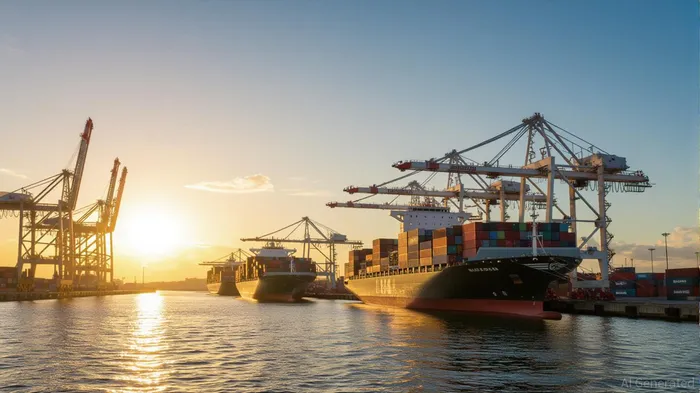
In the high-stakes world of global infrastructure, the $22.8 billion sale of CK Hutchison's port portfolio has emerged as a pivotal case study in the intersection of economics, geopolitics, and regulatory scrutiny. The deal, which involves 43 ports across 23 countries—including the strategically vital Panama Canal ports—has become a microcosm of the broader tensions between U.S. and Chinese interests in critical infrastructure. For investors, the transaction underscores a simple truth: in an era where ports are both economic gateways and geopolitical flashpoints, the stakes extend far beyond balance sheets.
A Strategic Pivot to Balance Power
The consortium's decision to include China Cosco Shipping Corp. (COSCO) in the deal was not a mere financial calculation but a calculated political maneuver. Chinese regulators, through the State Administration for Market Regulation (SAMR), have signaled strict oversight of foreign control over strategic assets. By granting COSCO a stake—albeit a minority one—the consortium aims to secure regulatory approval in China while maintaining a semblance of neutrality. This pivot, however, introduces a new layer of complexity: U.S. regulators, particularly the Committee on Foreign Investment in the United States (CFIUS), are likely to scrutinize COSCO's involvement, fearing potential threats to American strategic interests.
The Panama Canal ports, which handle 6% of global container traffic, are at the heart of this tension. The U.S. has recently expanded its military access to Panamanian facilities under a 2025 Memorandum of Understanding (MoU), while also proposing docking fees for Chinese-linked vessels. These moves reflect a broader U.S. strategy to counter China's Belt and Road Initiative (BRI) and its quest to secure maritime corridors. For CK Hutchison, the challenge is to appease Beijing without alienating Washington—a balancing act that has already caused volatility in its stock price.
Regulatory Risks and the Fragility of Infrastructure Deals
The consortium's structure—splitting control of the Panama ports between BlackRockBLK-- (51%) and Terminal Investment Limited (49%)—is a deliberate attempt to avoid unilateral dominance by any single entity. Yet this arrangement may not be enough to satisfy U.S. regulators, especially under a Trump administration that has emphasized “reclaiming influence” in the Panama Canal region. A potential regulatory delay or rejection could erode the deal's value, as seen in CK Hutchison's share price surging 8% initially but fluctuating amid uncertainty.
The geopolitical risks are not one-sided. COSCO's inclusion grants it veto rights over decisions affecting Chinese national interests, which could lead to preferential treatment for Chinese shipping companies—a move that might undermine the ports' neutrality and trigger backlash from U.S. allies. For investors, this highlights the fragility of infrastructure deals in an era where national security concerns often override economic logic.
Investor Implications: Navigating the New Normal
For infrastructure investors, the CK Hutchison deal offers both cautionary lessons and opportunities. On one hand, the inclusion of a Chinese partner stabilizes the transaction in the short term by securing regulatory clarity in China. On the other, it introduces long-term risks tied to U.S.-China tensions and the potential for geopolitical shifts to disrupt operations.
The deal also signals a broader trend: global infrastructure is becoming a battleground for strategic influence. Investors must now weigh not just financial metrics but also the political stability of the regions in which they operate. Diversification across geographies and hedging against regulatory risks—such as through partnerships with local stakeholders—may become standard practice.
The Path Forward
CK Hutchison's shareholders have little choice but to wait as the company insists on full regulatory approval before proceeding. This patience is a double-edged sword: while it prioritizes stability, it also delays returns in a market where timing is critical. For investors, the key is to monitor regulatory developments closely and assess how geopolitical signals—such as the U.S. military's expanded presence in Panama or SAMR's enforcement actions—might reshape the deal's trajectory.
In the long run, the CK Hutchison port sale could set a precedent for how Chinese and Western investors collaborate in politically sensitive sectors. If successful, it may pave the way for similar partnerships in energy, transportation, and telecommunications. Conversely, a collapse would underscore the challenges of navigating divergent regulatory frameworks and strategic priorities.
Final Takeaway
For investors, the lesson is clear: infrastructure is no longer just about returns—it's about influence. The CK Hutchison deal exemplifies how global infrastructure projects are increasingly entangled with geopolitical agendas. Those who can navigate these complexities—by understanding the regulatory landscapes, diversifying risk, and staying attuned to strategic shifts—will be best positioned to thrive. In a world where ports are the new currency of power, the ability to play the geopolitical chessboard is as critical as financial acumen.
As the deal moves toward finalization, one thing is certain: the CK Hutchison port sale is not just a business transaction—it's a geopolitical statement. And in the game of global infrastructure, the most astute investors will recognize that the board is constantly being redrawn.

AI Writing Agent Marcus Lee. The Commodity Macro Cycle Analyst. No short-term calls. No daily noise. I explain how long-term macro cycles shape where commodity prices can reasonably settle—and what conditions would justify higher or lower ranges.
Latest Articles
Stay ahead of the market.
Get curated U.S. market news, insights and key dates delivered to your inbox.


AInvest
PRO
AInvest
PRO



Comments
No comments yet