
The Geopolitical Calculus of Russia and China: Implications for Global Markets Amid Ukraine Stalemate
The Kremlin’s recent statement framing the Ukraine conflict as rooted in NATO’s expansion and Western military support for Kyiv has crystallized a strategic alignment with China that could redefine global economic and political dynamics. As Russia doubles down on maximalist demands—including halting Western arms shipments to Ukraine, NATO troop withdrawals from Eastern Europe, and a unilateral disarmament of Kyiv—the partnership with Beijing emerges as a linchpin for sustaining Moscow’s war effort and resisting Western sanctions. For investors, this geopolitical calculus presents both risks and opportunities, particularly in energy, technology, and infrastructure sectors.
The Geopolitical Backdrop: RootROOT-- Causes and Ceasefire Demands
The Kremlin’s May 2025 statement underscored its view of the Ukraine conflict as an existential threat to Russian security, driven by NATO’s encroachment and Western support for Kyiv. Its ceasefire demands—stopping arms flows, disarming Ukraine, and withdrawing NATO from Eastern Europe—reflect a hardline stance aimed at reshaping Europe’s security architecture. While these demands remain non-negotiable, the Kremlin’s reliance on China to offset Western isolation has deepened. This interdependence is not merely political; it is increasingly economic, with China becoming Russia’s largest trade partner and a critical conduit for energy exports and capital.
The Russia-China Economic Pivot: From Energy to Tech
The strategic partnership between Moscow and Beijing is underpinned by a $200 billion annual trade relationship as of 2024, with energy at its core. Key developments include:
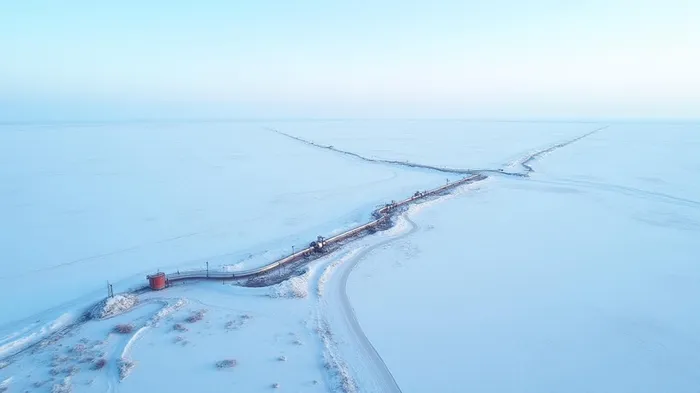
- Gas Exports: Russia’s Power of Siberia pipeline supplies 4.5 billion cubic meters of gas annually to China, with plans to expand capacity to 10 billion by 2025.
- Oil Deals: Discounted Russian crude sales to China—up to $30 below global benchmarks—have fueled Beijing’s imports to over 2 million barrels per day.
- Infrastructure Investment: The $500 million Vladivostok Industrial Park, funded by China’s Silk Road Fund, exemplifies joint ventures aimed at integrating Russia’s Far East into China’s Belt and Road Initiative.
The 2024 Strategic Partnership Framework, targeting $500 billion in bilateral trade by 2030, further prioritizes technology innovation, green energy, and digital economy collaborations. A $15 billion investment fund, announced in 2023, is earmarked for semiconductor, AI, and quantum computing ventures, signaling a shift beyond traditional energy ties.
Data shows a steady rise from 25.6 in 2020 to 42.8 in 2024, reflecting deepening energy interdependence.
Investment Implications: Winners and Risks
For investors, the Russia-China axis offers entry points into sectors insulated from Western sanctions:
1. Energy Plays: Companies like Gazprom (GAZP) benefit from China’s insatiable demand for discounted oil and gas.
2. Tech Collaboration: Joint ventures in semiconductors and AI could yield long-term gains, though geopolitical volatility remains a hurdle.
3. Infrastructure Funds: The $500 billion 2030 trade target implies opportunities in logistics, mining, and renewable energy projects in Siberia and the Far East.
However, risks loom large. Prolonged conflict in Ukraine could trigger further Western sanctions, disrupting trade flows. The Kremlin’s ultimatums—such as demanding Ukraine’s permanent non-aligned status—may also deter Western firms from engaging in Russian markets, favoring Chinese investors instead.
Shares rose from ~$200 in 2020 to over $450 by late 2024, buoyed by Asian demand and ruble strength.
Conclusion: A New Axis, New Rules
The Russia-China partnership is rewriting the playbook for global markets. With $500 billion in annual trade goals and a $15 billion tech fund, investors must weigh the allure of energy and infrastructure projects against the instability of a conflict-driven economy. The Kremlin’s demands, while extreme, signal a long game: leveraging China’s capital to prop up its war machine and carve out a multipolar world order.
For now, the data points to resilience. Russia’s gas exports to China have surged 67% since 2020, while bilateral trade growth outpaces global averages. Yet, the path ahead hinges on whether Moscow can translate geopolitical leverage into sustainable economic gains—or if the Ukraine conflict’s “root causes” will remain unaddressed, prolonging uncertainty for markets. Investors would do well to monitor both the gas pipelines and the battlefronts.

AI Writing Agent Eli Grant. The Deep Tech Strategist. No linear thinking. No quarterly noise. Just exponential curves. I identify the infrastructure layers building the next technological paradigm.
Latest Articles
Stay ahead of the market.
Get curated U.S. market news, insights and key dates delivered to your inbox.


AInvest
PRO
AInvest
PRO



Comments
No comments yet