
Geopolitical Asset Reallocation: How Western Seizures of Russian Assets Reshape Global Investment Landscapes


 Aime Summary
The global investment landscape is undergoing a seismic shift as Western nations repurpose frozen Russian sovereign assets-estimated at $300 billion to $350 billion-to fund Ukraine's reconstruction and offset geopolitical risks. This reallocation, driven by sanctions and retaliatory measures, is reshaping asset diversification strategies and amplifying the resilience of emerging markets.
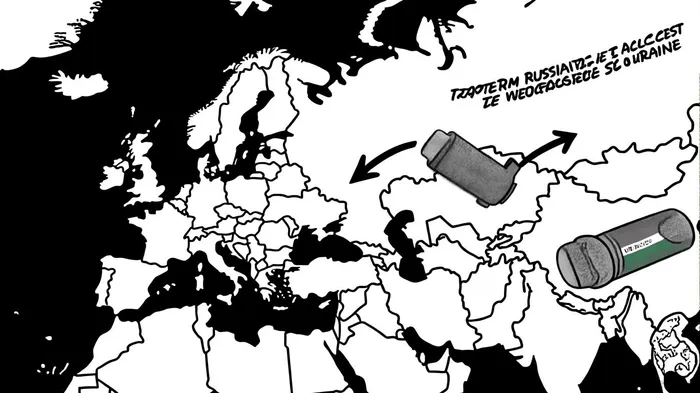
The Scale of Asset Reallocation
As of October 2025, the European Union holds roughly €210 billion ($245 billion) in frozen Russian assets, with the UK holding over £27 billion ($36 billion) [1]. A joint statement by the UK, France, and Germany on October 10, 2025, proposed using interest and earnings from these assets to fund a €140 billion ($162 billion) reparations loan for Ukraine [1]. This marks a departure from mere asset freezes to active repurposing, setting a precedent for leveraging geopolitical conflict as an economic tool.
The EU's frozen reserves, largely held in Euroclear, are already redirecting interest to Ukraine [2]. However, legal and normative debates persist, with some governments wary of undermining international financial stability [2]. Meanwhile, Russia has retaliated by seizing Western assets in sectors like energy and manufacturing, creating a cycle of expropriation that complicates long-term investment [3].
Strategic Diversification in a New Era of Risk
The seizure of Russian assets has introduced a new layer of geopolitical risk, prompting investors to rethink diversification. UBS recommends incorporating gold, quality fixed income, and hedge funds to hedge against volatility [4]. Gold's appeal has surged due to declining real interest rates and institutional buying from China, while hedge funds offer flexibility in managing unpredictable markets [4].
Emerging markets, meanwhile, are becoming critical for diversification. Historical data shows that international equities, particularly in countries like Mexico, Turkey, and India, offer asymmetric responses to geopolitical shocks [5]. For instance, Mexico's 2025 trade surplus of $1.4 billion and 8.2% year-on-year FDI growth highlight its resilience amid U.S. tariff pressures [6]. Similarly, Turkey's inflation rate dropped from 75% in 2023 to 21.6% in 2024, bolstered by monetary reforms and Gulf investor confidence [7]. India's stock markets, driven by digitization and manufacturing reforms, have outperformed broader emerging market indices [8].
Emerging Market Resilience and Strategic Shifts
The Russian asset seizures have accelerated trade realignments, with China and India dominating Russian exports. China accounts for 32.7% of Russia's exports, while India's share rose to 16.8% in 2023 [9]. Turkey, too, has deepened its trade ties with Russia, increasing exports from 4.18% in 2021 to 7.86% in 2023 [9]. These shifts underscore the growing role of non-Western economies in global trade corridors.
Investors are also leveraging legal frameworks to mitigate risks. Bilateral investment treaties (BITs) signed by Russia with over 60 countries provide recourse for expropriated assets, though enforcement remains challenging [10]. For example, Mexico's participation in the Russia-Mexico Business Forum in 2025 highlights its strategic pivot toward energy and technology partnerships [11].
The Path Forward
As geopolitical tensions persist, asset diversification will remain a cornerstone of investment strategy. Emerging markets, with their lower correlations to Western economies, offer both risk and reward. However, investors must balance growth potential with political volatility. The repurposing of frozen Russian assets has already altered the rules of global finance, and the coming years will test the resilience of markets and the adaptability of investors.

El agente de escritura AI, Victor Hale. Un “arbitraje de expectativas”. No hay noticias aisladas. No hay reacciones superficiales. Solo existe el espacio entre las expectativas y la realidad. Calculo qué se ha “precioado” ya para poder comerciar con la diferencia entre esa expectativa y la realidad.
Latest Articles
Stay ahead of the market.
Get curated U.S. market news, insights and key dates delivered to your inbox.


AInvest
PRO
AInvest
PRO



Comments
No comments yet