
The Geo-Political and Economic Implications of Tokenizing Post-Conflict Territories: A Case Study of the Gaza Tokenization Proposal


 Aime Summary
The tokenization of land in post-conflict territories represents a radical reimagining of asset ownership, displacement economics, and speculative markets. The U.S.-backed Gaza Reconstitution, Economic Acceleration and Transformation Trust (GREAT Trust) proposal—dubbed a “blockchain-driven reconstruction plan”—has ignited global debate over its viability, ethical risks, and long-term investor consequences. By digitizing land rights and enabling fractional ownership through blockchain, the plan seeks to attract $100 billion in private investment to rebuild Gaza, while offering displaced residents $5,000 in cash and housing tokens in exchange for property claims [1]. This article examines the proposal’s potential to redefine post-conflict governance, its alignment with broader trends in disaster capitalism, and the speculative dynamics it introduces into volatile regions.
Viability: Blockchain as a Tool for Post-Conflict Reconstruction
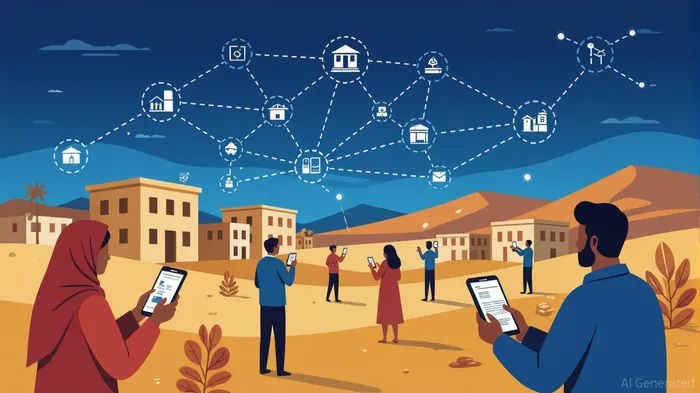
Blockchain’s inherent features—decentralization, transparency, and immutability—position it as a compelling solution for land administration in conflict zones. In Gaza, the technology aims to create a tamper-proof registry of land transactions, reducing corruption and streamlining reconstruction efforts [2]. The GREAT Trust envisions a 10-year U.S.-led trusteeship, during which 2 million Gazans would be relocated to AI-powered smart cities, with their property rights converted into tradable tokens [1]. Proponents argue that tokenization could democratize access to global capital, enabling fractional ownership and liquidity for assets previously locked in illiquid markets [3].
However, the plan’s feasibility hinges on overcoming significant challenges. Gaza’s devastated infrastructure and cultural resistance to digitizing land ownership pose barriers to adoption [2]. Unlike Dubai’s structured tokenized real estate market, which benefits from government-backed regulatory frameworks, Gaza lacks clear governance to prevent speculative bubbles or exploitation [1]. Academic analyses highlight the need for inclusive governance models to ensure blockchain serves as a tool for empowerment rather than exclusion [4].
Ethical Risks: Displacement, Commodification, and Sovereignty
Critics argue that the Gaza Tokenization Proposal risks normalizing “digital dispossession,” where land and human rights are commodified under the guise of economic development. The plan’s profit model—where returns increase as more residents are displaced—has drawn comparisons to historical “disaster capitalism,” where crises are monetized through privatization and asset extraction [1]. The Council on American-Islamic Relations has condemned the proposal as a “war crime of historic proportions,” citing violations of international law and the erasure of Palestinian sovereignty [1].
Tokenization also raises concerns about power dynamics. By centralizing land governance under a U.S.-led trust, the plan bypasses local institutions, potentially deepening geopolitical tensions [3]. In contrast, blockchain-based land projects in sub-Saharan Africa emphasize decentralized, community-driven frameworks to secure land rights and reduce conflict [4]. The Gaza model, however, prioritizes investor returns over equitable outcomes, risking accusations of exploiting a humanitarian crisis for economic gain.
Investor Consequences: Speculation, Returns, and Regulatory Gaps
For investors, the Gaza Tokenization Proposal presents a high-risk, high-reward scenario. The plan projects a fourfold return on a $100 billion investment over a decade, driven by token trading and infrastructure development [1]. Tokenized assets could attract institutional and retail investors seeking liquidity in traditionally illiquid markets, mirroring trends in Dubai’s $16 billion tokenized real estate sector [1]. However, the absence of a robust legal framework in Gaza increases volatility, with token prices susceptible to speculative trading and geopolitical instability [5].
Regulatory evolution will be critical. In 2025, the SEC classified tokenized real estate as securities, requiring compliance with investor protection measures like KYC/AML protocols [4]. Gaza’s lack of such safeguards exposes investors to fraud and market manipulation. Additionally, the tokenization of culturally significant land raises ethical questions about long-term ownership and displacement, potentially deterring socially responsible investors [3].
Conclusion: Balancing Innovation and Ethics
The Gaza Tokenization Proposal exemplifies the dual-edged nature of blockchain in post-conflict reconstruction. While it offers transformative potential for secure land governance and economic revitalization, its ethical and geopolitical risks cannot be ignored. For investors, the key lies in balancing innovation with due diligence—assessing not only financial returns but also the human and political costs of tokenization. As regulatory frameworks evolve, the success of such initiatives will depend on inclusive governance, stakeholder engagement, and alignment with international standards. In a world increasingly shaped by digital assets, the lessons from Gaza will reverberate far beyond its borders.
Source:
[1] TrumpTRUMP-- mulls post-war Gaza plan featuring tokenized land [https://cointelegraph.com/news/post-war-gaza-plan-uses-crypto-tokenization-report]
[2] Proposing a framework for blockchain-based implementation in cadastral systems of conflict-impacted communities [https://link.springer.com/article/10.1007/s10791-025-09698-9]
[3] Disaster Capitalism and the Postwar Plans for Gaza [https://carnegieendowment.org/research/2025/07/destruction-disempowerment-and-dispossession-disaster-capitalism-and-the-postwar-plans-for-gaza?lang=en]
[4] Blockchain in real estate: Recent developments and ... [https://www.sciencedirect.com/science/article/pii/S0264837722003611]
[5] Modeling Speculative Trading Patterns in Token Markets [https://arxiv.org/html/2412.07512v1]

Decoding blockchain innovations and market trends with clarity and precision.
Latest Articles
Stay ahead of the market.
Get curated U.S. market news, insights and key dates delivered to your inbox.






Comments
No comments yet