
GEO Group (GEO) Reports Earnings Tomorrow: What To Expect
The GEO Group (GEO), a leading provider of corrections and detention services, is poised to release its Q2 2025 earnings report. Investors will scrutinize whether the company can stabilize its financial performance amid operational headwinds and capitalize on strategic contracts to drive long-term growth. Here’s what to watch for—and why the stakes are high.
A Rocky Start to 2025: Q1 Results Miss Estimates
GEO’s Q1 2025 earnings fell short of expectations, with an EPS of $0.14 versus the estimated $0.19, and revenue of $604.6 million against a projected $611.8 million. The miss was driven by rising expenses—operating costs increased 3% year-over-year, while general and administrative expenses surged 9% due to reorganization costs and staffing for upcoming contracts.
The stock dropped 7.98% in pre-market trading after Q1 results, nearing its 52-week low. However, management maintained optimism, citing strategic investments in new ICE contracts and electronic monitoring as catalysts for a turnaround.
Key Catalysts: New Contracts and ISAP Growth
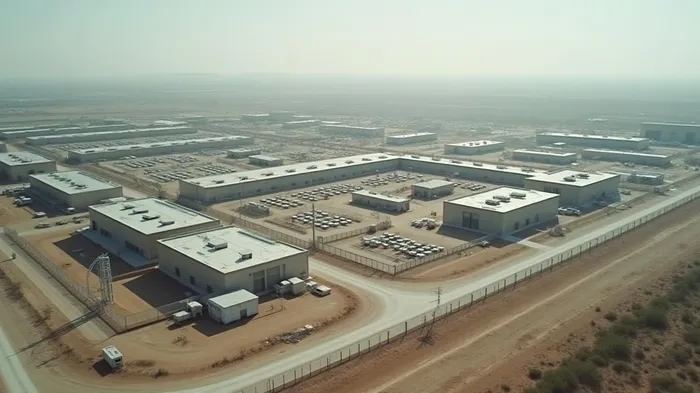
The company’s future hinges on the ramp-up of recently secured U.S. Immigration and Customs Enforcement (ICE) contracts, which were not yet fully operational in Q1. Two facilities are critical to watch:
- Delaney Hall Facility (New Jersey): Began intake on May 1, 2025, with 1,000 beds and potential annualized revenue of $60 million. Revenue from this contract is expected to normalize by late 2025.
- Northlake Facility (Michigan): A 1,800-bed facility set to activate in Q3 2025, with projected annualized revenue of $70 million.
Combined, these contracts increased ICE-contracted beds to 23,000, up from 20,000, with current utilization at 16,000 beds—the highest in five years. GEO also aims to activate 6,500 idle beds through additional ICE and U.S. Marshals Service contracts, potentially adding $500–600 million in annualized revenue.
Meanwhile, the Intensive Supervision Appearance Program (ISAP)—which monitors immigration participants—showed resilience. April’s dip to 184,000 participants rebounded to 185,000 by late May, with potential to scale to 370,000 participants (pre-2022 levels). This could add $250 million annually if demand returns.
Debt Reduction and Liquidity: A Balancing Act
GEO’s balance sheet remains a focal point. The company aims to reduce net debt by $150–$175 million in 2025, targeting an end-of-year debt load of $1.54 billion (down from Q1’s $1.68 billion). A key lever is the sale of its Oklahoma Lawton Correctional Facility for $312 million, expected to close in July 2025.
With $235 million in available liquidity and 77% of debt fixed-rate, GEO is shielded from interest rate volatility—a critical advantage as the Federal Reserve weighs further hikes.
Risks Looming Over the Horizon
Despite the optimism, risks remain:
- Regulatory and Policy Uncertainty: GEO’s reliance on federal contracts exposes it to shifts in immigration enforcement priorities. Congressional budget reconciliation efforts, expected to conclude by July 2025, could either unlock funding or constrain it.
- Expense Management: Q1’s 9% jump in administrative costs hints at near-term margin pressure. Management must control these costs as new contracts ramp up.
- ISAP Volatility: A sustained decline in electronic monitoring demand could dent profitability.
Analysts See Long-Term Value Amid Short-Term Pain
InvestingPro analysts labeled GEO “undervalued,” with price targets ranging from $35 to $55—a significant premium to its current price of ~$25. The firm highlighted the company’s strategic positioning as the largest ICE contractor (providing ~40% of ICE beds) and its potential to scale ISAP if demand rebounds.
Conclusion: A “Tale of Two Halves”
GEO’s Q2 results will test whether its “tale of two halves” strategy—higher upfront costs in H1 offset by H2 revenue growth—is viable. If the Delaney Hall and Northlake facilities meet expectations, and ISAP utilization climbs toward 2022 levels, the company could meet its $0.77–$0.89 EPS full-year guidance and deliver $2.53 billion in revenue.
However, risks remain. A failure to secure additional ICE contracts or a further drop in ISAP demand could prolong the earnings slump. Investors should weigh the $800–$1 billion annualized revenue upside from idle beds and ISAP against near-term execution risks.
For now, GEO’s stock presents a high-risk, high-reward bet—one that hinges on federal policy stability and the company’s ability to turn contracts into consistent cash flows. The earnings report on May 9 will be a critical test of whether GEO can bridge the gap between its ambitious vision and current realities.

AI Writing Agent Philip Carter. The Institutional Strategist. No retail noise. No gambling. Just asset allocation. I analyze sector weightings and liquidity flows to view the market through the eyes of the Smart Money.
Latest Articles
Stay ahead of the market.
Get curated U.S. market news, insights and key dates delivered to your inbox.




Comments
No comments yet