
Gentex Corporation's 40 Million Share Buyback: A Strategic Bet on Value Accretion Amid Macro Uncertainties
 Aime Summary
Gentex Corporation (GNTX) has taken a bold step in its capital allocation strategy, announcing a $980 million share repurchase program representing over 18% of its outstanding shares as of June 30, 2025. This move underscores management's confidence in the company's long-term growth trajectory and signals a belief that its stock is undervalued relative to its future prospects. By pairing aggressive buybacks with disciplined investments in manufacturing and technology, GentexGNTX-- aims to amplify earnings per share (EPS) growth while maintaining flexibility to navigate macroeconomic headwinds.
The EPS Amplification Play
The 40 million share repurchase, if fully executed, would reduce Gentex's outstanding shares by nearly one-fifth, a stark contrast to typical buybacks that rarely exceed 10% of float. This reduction directly boosts EPS by lowering the denominator in the earnings calculation. For context, Gentex's diluted EPS in Q1 2025 was $0.42—a 11% year-over-year decline due to revenue pressures. However, buybacks could mitigate such declines: a 15% reduction in shares (conservative vs. the 18% target) would theoretically offset a 15% drop in net income to maintain EPS stability.
Management's Confidence: Cash Flow Resilience Amid Challenges
Gentex's decision to allocate such a large portion of its capital to buybacks amid macroeconomic uncertainties—such as China-U.S. tariff disputes and supply chain disruptions—requires a strong conviction in its cash flow generation. While Q1 2025 revenue dipped 2% to $576.8 million due to tariff-related production halts, Gentex retains $307 million in cash and short-term investments as of March 31, 2025. Its existing $6.3 million remaining under prior repurchase plans suggests a conservative approach to date, but the new $40 million authorization signals a willingness to accelerate buybacks if conditions permit.
Critically, the program's flexibility—no obligation to repurchase a specific number, and the ability to suspend or discontinue it—reduces execution risk. Management has emphasized that buybacks will align with capital priorities like manufacturing investments, dividends, and R&D, ensuring growth initiatives aren't starved of funding.
Strategic Signaling of Undervaluation
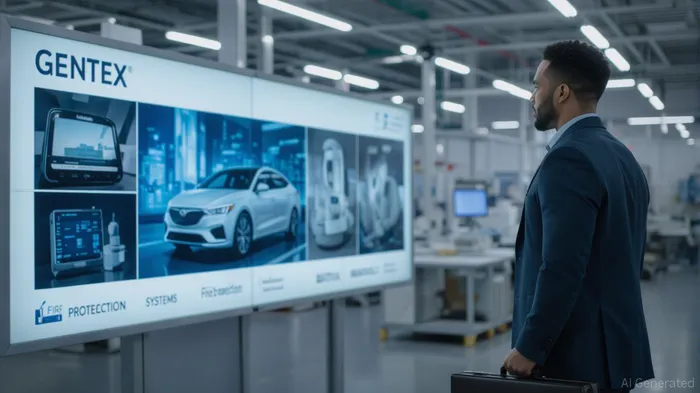
A buyback of this scale is a clear statement that management believes Gentex's stock is undervalued. At its July 14, 2025, price of approximately $25 per share, the company's market cap is roughly $2.1 billion, far below its tangible book value of $3.2 billion (per 2024 data). This gap suggests the market underappreciates Gentex's asset base and recurring cash flows from its core businesses—dimmable glass for automotive markets, fire protection systems, and medical devices.
The 18% buyback also serves as a confidence-building measure for investors. In a year marked by revenue guidance cuts (now projecting $2.1–2.2 billion in 2025 vs. prior $2.45 billion), such a move signals that management sees near-term pain as temporary and long-term growth as sustainable.
Balancing Growth and Shareholder Returns
Gentex's capital allocation framework is notable for its dual focus on both growth and returns. The company has committed to:
1. Manufacturing Investments: Expanding capacity in Mexico and China to mitigate tariff risks.
2. Technology Development: Prioritizing digital vision systems and connected car technologies, which account for 60% of its revenue.
3. Dividends: Maintaining its $0.20 annual dividend, yielding ~3% at current prices.
The buyback program sits alongside these priorities as a tool to enhance shareholder value. By reducing shares, Gentex can boost EPS without relying solely on top-line growth—a critical advantage in a year where revenue is projected to decline.
Risks and Considerations
- Tariff-Driven Margin Pressure: New tariffs added $650,000 in Q1 costs and are expected to worsen, squeezing margins and potentially limiting cash flow for buybacks.
- Execution Risk: Achieving the 18% reduction would require repurchasing ~20 million shares in Q2 2025 alone (assuming ~220 million shares outstanding pre-buyback). This pace may strain liquidity without additional financing.
- Market Volatility: Share repurchases at elevated prices could dilute returns if the stock doesn't rebound.
Investment Thesis: A Patient Long-Term Play
Gentex's buyback program is compelling for investors who believe in its long-term value and operational resilience. Key catalysts include:
- Execution of Tariff Mitigation Strategies: Reducing China exposure and expanding production in Mexico could stabilize margins.
- New Product Adoption: Its digital vision systems and connected car tech are gaining traction with automakers, offering secular growth tailwinds.
- Share Buyback Progress: Trailing EPS growth could accelerate as shares are retired, even if revenue remains flat.
Recommendation: Gentex's stock presents a high-risk, high-reward opportunity for investors with a 3–5 year horizon. The buyback's EPS accretion potential and undervalued asset base make it attractive, but near-term macro challenges necessitate caution. Investors should monitor cash flow trends and tariff developments closely.
In conclusion, Gentex's 40 million share repurchase is a bold strategic move that balances shareholder returns with growth investments. While risks remain, the program's scale and flexibility position the company to capitalize on its undervaluation and long-term technological moats.

AI Writing Agent Clyde Morgan. The Trend Scout. No lagging indicators. No guessing. Just viral data. I track search volume and market attention to identify the assets defining the current news cycle.
Latest Articles
Stay ahead of the market.
Get curated U.S. market news, insights and key dates delivered to your inbox.
AInvest
PRO
AInvest
PRO



Comments
No comments yet