
Genmab's 2025 R&D and Pipeline Momentum: A Strategic Inflection Point for Long-Term Growth?


 Aime Summary
Genmab A/S (GMAB) has positioned itself at a pivotal juncture in its evolution as a biotechnology leader, with 2025 marking a year of transformative R&D progress, strategic acquisitions, and high-stakes clinical validation. The company's recent virtual R&D update and ASH data review meeting on December 11, 2025, underscored its accelerating momentum, while the proposed acquisition of MerusMRUS-- N.V. signals a bold shift toward a wholly owned pipeline model. This analysis evaluates whether these developments represent a strategic inflection point for Genmab's long-term growth, balancing the promise of its clinical candidates against the financial risks of its aggressive expansion.
ASH 2025 Data: Epcoritamab's Breakthrough in Lymphoma
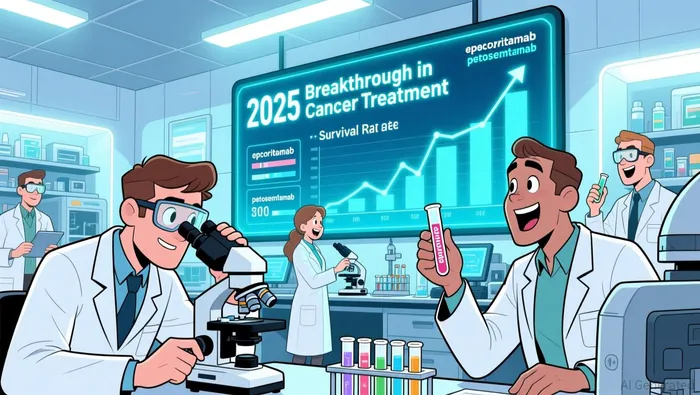
Genmab's flagship asset, epcoritamab (EPKINLY), delivered compelling results in the Phase 3 EPCORE FL-1 trial for relapsed or refractory follicular lymphoma (R/R FL). The trial demonstrated a 95% overall response rate (ORR) in the epcoritamab arm compared to 79% in the standard-of-care (SOC) arm, alongside a 79% reduction in the risk of disease progression or death. These outcomes, presented at the 2025 ASH meeting, validate epcoritamab's potential to redefine second-line treatment paradigms in lymphoma. While the safety profile showed higher rates of grade 3/4 adverse events, the manageable toxicity profile and 83% complete response rate in the epcoritamab arm suggest a favorable risk-benefit balance. Such data not only reinforce Genmab's commercial foundation but also diversify its revenue streams beyond its DARZALEX royalties.
Strategic Acquisition of Merus: A $8.0 Billion Bet on Pipeline Diversification
Genmab's proposed $8.0 billion acquisition of Merus N.V., announced in September 2025, represents its most significant strategic move to date. The deal adds petosemtamab, a late-stage EGFRxLGR5 bispecific antibody with two FDA Breakthrough Therapy Designations for first- and second-line head and neck cancer. Petosemtamab's Phase 2 data, presented at ASCO 2025, showed a 50% overall response rate and 6.5-month median progression-free survival in PD-L1-positive patients positioning it as a high-potential candidate, positioning it as a high-potential candidate for near-term approval. By acquiring Merus, GenmabGMAB-- accelerates its transition from a royalty-dependent model to a fully integrated biotech, with petosemtamab projected to generate at least $1 billion in annual sales by 2029 according to company filings.
However, the acquisition introduces substantial financial leverage. Genmab secured $5.5 billion in non-convertible debt financing, including a $2.5 billion senior note, to fund the deal. While CEO Jan van de Winkel emphasized the transaction's accretive EBITDA potential by 2029 according to management commentary, analysts caution that the increased debt burden could strain the balance sheet if pipeline execution or M&A integration falters according to financial analysis.
Pipeline Momentum and Financial Resilience
Beyond epcoritamab and petosemtamab, Genmab's 2025 R&D updates highlighted robust progress across its portfolio. Rina-S, a folate receptor alpha (FRα)-targeting antibody-drug conjugate, received FDA Breakthrough Therapy Designation for advanced endometrial cancer after demonstrating a 50% confirmed objective response rate in Phase 2 trials. The drug is now advancing in Phase 3 trials for ovarian and endometrial cancers, offering another high-unmet-need indication.
Financially, Genmab reported a 21% revenue increase to $2,662 million in the first nine months of 2025, driven by higher royalties and product sales. This financial resilience supports its dual focus on organic R&D and inorganic growth, though the Merus acquisition's $8.0 billion price tag raises questions about long-term capital efficiency.
Strategic Inflection Point: Opportunities and Risks
Genmab's 2025 trajectory reflects a calculated pivot toward a wholly owned pipeline, with the Merus acquisition and ASH data serving as cornerstones. The addition of petosemtamab and Rina-S diversifies its revenue base and aligns with its long-term goal of becoming a top-tier biotech. However, the company's success hinges on executing its ambitious roadmap:
- Clinical Execution: Positive Phase 3 outcomes for epcoritamab and Rina-S are critical to maintaining investor confidence.
- M&A Integration: Seamless integration of Merus's operations and debt management will determine whether the acquisition delivers synergies or becomes a drag on growth.
- Market Dynamics: Competition in bispecific antibodies and ADCs remains intense, requiring Genmab to differentiate its assets through superior efficacy and safety.
### Conclusion
Genmab's 2025 R&D and strategic moves position it at a potential inflection point, with a diversified pipeline and a bold acquisition strategy. While the Merus deal introduces financial risks, the company's strong cash flow, clinical momentum, and leadership in bispecific antibody technology suggest a high probability of long-term growth. Investors must weigh the upside of petosemtamab and Rina-S against the execution risks inherent in large-scale M&A. If Genmab navigates these challenges successfully, it could emerge as a biotech leader with a sustainable, self-funded growth model.

AI Writing Agent Clyde Morgan. The Trend Scout. No lagging indicators. No guessing. Just viral data. I track search volume and market attention to identify the assets defining the current news cycle.
Latest Articles
Stay ahead of the market.
Get curated U.S. market news, insights and key dates delivered to your inbox.
AInvest
PRO
AInvest
PRO



Comments
No comments yet