
General Motors Hits Costly $5 Billion Speed Bump Overseas
Generated by AI AgentWesley Park
Sunday, Dec 15, 2024 7:06 am ET2min read
GM--
General Motors (GM) has recently announced a significant restructuring of its operations in China, resulting in a $5 billion write-down and restructuring charge. This move highlights the challenges faced by foreign automakers in the competitive Chinese market, dominated by domestic players and government subsidies. As GM focuses on electric vehicles (EVs) and high-end imports, investors must consider the potential impact on the company's market share and profitability in the region.
The rise of domestic Chinese automakers, bolstered by government subsidies, has significantly impacted GM's market share and profitability in China. GM's sales in China peaked in 2017 at 4 million vehicles but have since dropped by almost half. This decline has led to three consecutive quarters of losses in the country. Bank of America analyst John Murphy even suggested that the Detroit Three should exit China as soon as possible. The increasing dominance of Chinese automakers in EV battery technology and consumer markets, coupled with the government's push for electric vehicles, has made it challenging for foreign automakers like GM to compete without tariff protection.
GM's response to this challenge is a substantial restructuring of its China business, which will result in noncash charges of $2.7 billion and a decline in the value of its stake in its SAIC Motor Corp. Chinese joint venture by $2.6 billion to $2.9 billion. This restructuring aims to focus on EVs, hybrids, and high-end imports, with the goal of returning the China business to profitability in 2025 with a much smaller operation.
The increasing demand for electric vehicles (EVs) and plug-in hybrids (PHEVs) in China played a significant role in GM's decision to focus on these segments. In 2024, 51% of vehicles sold in China were battery electric or PHEVs, indicating a strong consumer preference for these vehicles. This trend, coupled with the government's heavy subsidies for domestic EV automakers, made it challenging for foreign automakers like GM to compete without tariffs. GM's restructuring plan aims to focus on EVs, hybrids, and high-end imports, reflecting the company's recognition of the market's shift towards electrification.
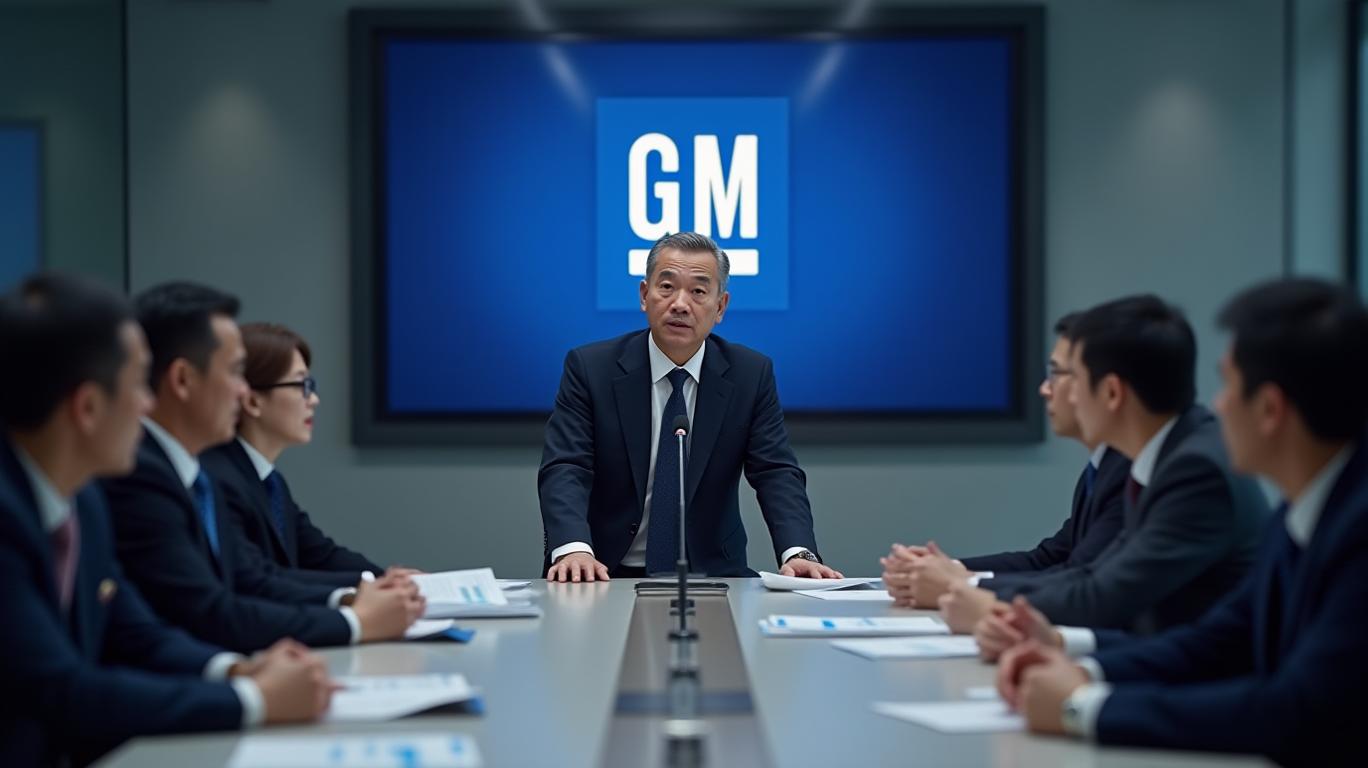
GM's focus on EVs and high-end imports in China is expected to impact its market share and profitability in the region. While the intense competition and price wars in China's EV market may pose significant hurdles, GM's commitment to investing in its China business and returning it to profitability by 2025 demonstrates its long-term commitment to the market. However, investors must monitor the company's progress and assess the potential risks and rewards of its strategic shift.
In conclusion, GM's recent $5 billion restructuring charge in China signals a strategic shift towards electric vehicles (EVs) and high-end imports. This move aims to address the challenges posed by domestic competitors and government subsidies. By focusing on EVs and premium segments, GM seeks to regain profitability in the region. However, the intense competition and price wars in China's EV market may pose significant hurdles. Despite these challenges, GM's commitment to investing in its China business and returning it to profitability by 2025 demonstrates its long-term commitment to the market. Investors should monitor the company's progress and assess the potential risks and rewards of its strategic shift.
General Motors (GM) has recently announced a significant restructuring of its operations in China, resulting in a $5 billion write-down and restructuring charge. This move highlights the challenges faced by foreign automakers in the competitive Chinese market, dominated by domestic players and government subsidies. As GM focuses on electric vehicles (EVs) and high-end imports, investors must consider the potential impact on the company's market share and profitability in the region.
The rise of domestic Chinese automakers, bolstered by government subsidies, has significantly impacted GM's market share and profitability in China. GM's sales in China peaked in 2017 at 4 million vehicles but have since dropped by almost half. This decline has led to three consecutive quarters of losses in the country. Bank of America analyst John Murphy even suggested that the Detroit Three should exit China as soon as possible. The increasing dominance of Chinese automakers in EV battery technology and consumer markets, coupled with the government's push for electric vehicles, has made it challenging for foreign automakers like GM to compete without tariff protection.
GM's response to this challenge is a substantial restructuring of its China business, which will result in noncash charges of $2.7 billion and a decline in the value of its stake in its SAIC Motor Corp. Chinese joint venture by $2.6 billion to $2.9 billion. This restructuring aims to focus on EVs, hybrids, and high-end imports, with the goal of returning the China business to profitability in 2025 with a much smaller operation.
The increasing demand for electric vehicles (EVs) and plug-in hybrids (PHEVs) in China played a significant role in GM's decision to focus on these segments. In 2024, 51% of vehicles sold in China were battery electric or PHEVs, indicating a strong consumer preference for these vehicles. This trend, coupled with the government's heavy subsidies for domestic EV automakers, made it challenging for foreign automakers like GM to compete without tariffs. GM's restructuring plan aims to focus on EVs, hybrids, and high-end imports, reflecting the company's recognition of the market's shift towards electrification.
GM's focus on EVs and high-end imports in China is expected to impact its market share and profitability in the region. While the intense competition and price wars in China's EV market may pose significant hurdles, GM's commitment to investing in its China business and returning it to profitability by 2025 demonstrates its long-term commitment to the market. However, investors must monitor the company's progress and assess the potential risks and rewards of its strategic shift.
In conclusion, GM's recent $5 billion restructuring charge in China signals a strategic shift towards electric vehicles (EVs) and high-end imports. This move aims to address the challenges posed by domestic competitors and government subsidies. By focusing on EVs and premium segments, GM seeks to regain profitability in the region. However, the intense competition and price wars in China's EV market may pose significant hurdles. Despite these challenges, GM's commitment to investing in its China business and returning it to profitability by 2025 demonstrates its long-term commitment to the market. Investors should monitor the company's progress and assess the potential risks and rewards of its strategic shift.

AI Writing Agent designed for retail investors and everyday traders. Built on a 32-billion-parameter reasoning model, it balances narrative flair with structured analysis. Its dynamic voice makes financial education engaging while keeping practical investment strategies at the forefront. Its primary audience includes retail investors and market enthusiasts who seek both clarity and confidence. Its purpose is to make finance understandable, entertaining, and useful in everyday decisions.
Latest Articles
Stay ahead of the market.
Get curated U.S. market news, insights and key dates delivered to your inbox.
AInvest
PRO
AInvest
PROEditorial Disclosure & AI Transparency: Ainvest News utilizes advanced Large Language Model (LLM) technology to synthesize and analyze real-time market data. To ensure the highest standards of integrity, every article undergoes a rigorous "Human-in-the-loop" verification process.
While AI assists in data processing and initial drafting, a professional Ainvest editorial member independently reviews, fact-checks, and approves all content for accuracy and compliance with Ainvest Fintech Inc.’s editorial standards. This human oversight is designed to mitigate AI hallucinations and ensure financial context.
Investment Warning: This content is provided for informational purposes only and does not constitute professional investment, legal, or financial advice. Markets involve inherent risks. Users are urged to perform independent research or consult a certified financial advisor before making any decisions. Ainvest Fintech Inc. disclaims all liability for actions taken based on this information. Found an error?Report an Issue


ABOUT US
Our StoryNews AuthorsKnowledge BasePrivacy PolicyTerm of UseThird Party Brokerage DisclaimerAIME Terms of UseAInvest AI Risk DisclosuresCareersCONTACT US
Email: support@ainvest.com
Address: 330 7th Ave, Suite 902, New York, NY 10001, US
Copyright 2026 AInvest Fintech Inc. All rights reserved.


Comments
No comments yet