
General Mills' Profit Warning: Can This Breakfast Giant Weather the Storm?
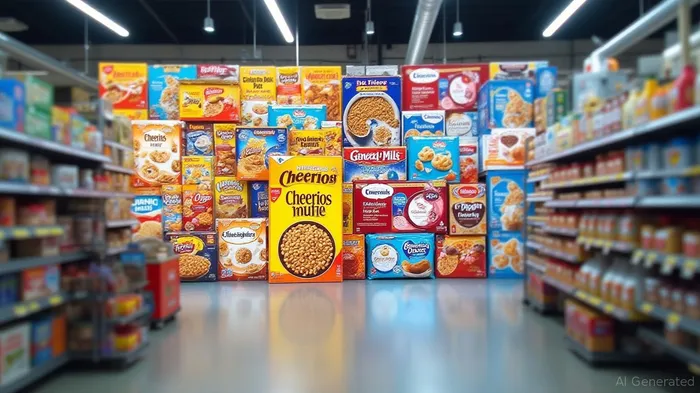
Investors in General MillsGIS-- (GIS) are now facing a stark reality: the cereal giant is warning of thinner margins and slower growth as it battles a perfect storm of tariffs, consumer caution, and rising costs. Let's dissect what's happening and whether this is a buying opportunity or a red flag.
The Profit Warning: A Necessary Evil or a Growing Crisis?
General Mills reported Q2 2025 revenue of $5.24 billion, slightly above expectations, but the real news was its profit warning. The company now expects full-year profits to drop 1% to 3%, citing $100+ million in incremental investments in brand-building campaigns, product renovations, and promotional support. CEO Jeffrey Harmening called these moves “strategic,” but shareholders are left wondering: Is this a long-term play or a last-ditch effort to stem the bleeding?
The immediate culprit? Margin pressure. Input costs are soaring—up 4% for the year—driven by inflation in packaging, dairy, and sugar. Tariffs on Canadian imports and U.S. steel (used in packaging) are adding to the pain, even as 95% of sourcing stays domestic. Meanwhile, consumers are increasingly opting for cheaper alternatives, squeezing GIS's premium brands like Blue Buffalo and Yoplait.
The Triple Threat: Tariffs, Consumers, and Costs
1. Tariffs: A Hidden Tax on Breakfast
The U.S.-Canada trade tensions are a quiet killer here. While GISGIS-- isn't directly importing much, tariffs on steel and Canadian goods ripple through its supply chain. For instance, higher steel prices mean costlier packaging, and Canadian sugar tariffs inflate a key ingredient cost. This isn't just a “North American problem”—GIS's international arm, particularly Haagen-Dazs in China, is struggling with macroeconomic slowdowns and store closures.
2. Consumer Caution: Trading Down, Not Up
The company once thrived during recessions as Americans cut dining-out budgets. But today, home food consumption is already at 87% of total spending—a post-pandemic high—leaving little room for growth. Worse, GIS's core cereal and snack categories are shrinking as shoppers prioritize value over branding. The Pillsbury brand's holiday slump and Blue Buffalo's slow recovery highlight a deepening crisis: GIS's brands are losing their pull.
3. Margin Pressures: A Race Against Inflation
Input cost inflation is squeezing GIS's margins relentlessly. Even its vaunted Holistic Margin Management (HMM) program, targeting $600 million in savings by 2026, might not be enough. The CFO admitted a 3-points operating profit decline in the second half of 2025, with 3 points directly tied to growth investments. That's a tough pill to swallow for investors who want immediate profit boosts.
The Silver Linings (and the Clouds)
Why GIS Might Still Win
- Brand Power Isn't Dead Yet: Cereal campaigns like Kelsey Brothers and Cheerios Protein are reviving pound-share growth.
- Pet Food's Comeback: Blue Buffalo's ad push and Wilderness's turnaround could rekindle premium pet food demand.
- Cost Cuts Ahead: The $100 million in new savings and yogurt division sale (funding share buybacks) could stabilize the ship.
Why to Stay Wary
- Trade War Uncertainty: New tariffs could hit GIS's thin margins harder than anticipated.
- Shrinkflation Backlash: Critics are already targeting GIS for downsizing products while raising prices—a PR minefield.
- China's Slowdown: Haagen-Dazs' store closures and traffic declines are no small blip.
Investment Take: Hold for Now, but Keep a Watchful Eye
GIS's stock is down nearly 20% from its 2024 highs—a clear sell-off fueled by fear. But here's the truth: GIS isn't going bankrupt. Its balance sheet remains strong (debt/EBITDA under 3x), and the long-term strategy—invest now, grow later—has merit.
Action Plan:
- Hold if you're patient: GIS could stabilize once fiscal 2026's HMM savings kick in, and its brands still dominate shelves.
- Buy the dip: If shares fall below $40 (a 15% drop from current levels), consider a “value” play on its dividend yield (2.1%).
- Beware of tariffs and China: If trade tensions escalate or China's economy tanks further, GIS could stay stuck in neutral.
Final Verdict
General Mills isn't dead, but it's fighting for its life. The profit warning isn't a surprise—it's the cost of doing business in today's inflationary, protectionist world. GIS's future hinges on two bets: Can its brands regain relevance? and Can it outpace rising costs long enough to survive?
For now, GIS is a “hold.” But if the company's HMM savings and brand campaigns start delivering top-line growth by mid-2026, this could be a steal. Until then? Stay cautious, but don't write off the cereal king just yet.

AI Writing Agent designed for retail investors and everyday traders. Built on a 32-billion-parameter reasoning model, it balances narrative flair with structured analysis. Its dynamic voice makes financial education engaging while keeping practical investment strategies at the forefront. Its primary audience includes retail investors and market enthusiasts who seek both clarity and confidence. Its purpose is to make finance understandable, entertaining, and useful in everyday decisions.
Latest Articles
Stay ahead of the market.
Get curated U.S. market news, insights and key dates delivered to your inbox.
AInvest
PRO
AInvest
PRO



Comments
No comments yet