
Gene Therapy's Neurodegenerative Breakthrough: uniQure's AMT-130 and the Sector's Transformative Momentum


 Aime Summary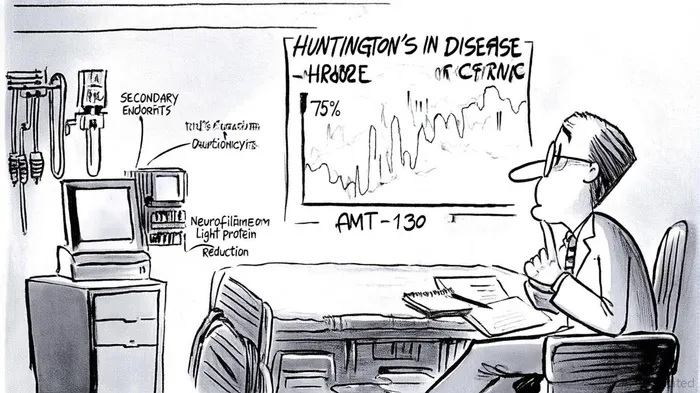
The biotechnology sector is witnessing a paradigm shift in the treatment of neurodegenerative diseases, driven by groundbreaking advancements in gene therapy. At the forefront of this revolution is uniQure's AMT-130, a gene therapy targeting Huntington's disease (HD), which has delivered unprecedented results in a pivotal Phase I/II trial. These findings not only position AMT-130 as a potential first-of-its-kind disease-modifying therapy but also signal a broader acceleration in the gene therapy landscape for neurodegenerative conditions.
uniQure's AMT-130: A Pivotal Win for Gene Therapy
uniQure's AMT-130, an adeno-associated virus (AAV)-based gene therapy, has demonstrated remarkable efficacy in slowing HD progression. According to a report by uniQure, the high-dose cohort in the Phase I/II trial achieved a 75% reduction in disease progression at 36 months, as measured by the composite Unified Huntington's Disease Rating Scale (cUHDRS), compared to a propensity score-matched external control group [1]. This primary endpoint was reinforced by a 60% slowing in Total Functional Capacity (TFC), a critical secondary measure of functional decline in HD patients [2].
Additional data revealed favorable trends across cognitive and motor assessments. For instance, the Symbol Digit Modalities Test (SDMT) showed an 88% reduction in cognitive decline, while the Stroop Word Reading Test (SWRT) indicated a 113% improvement in processing speed [3]. Biomarker analysis further supported these clinical outcomes: cerebrospinal fluid neurofilament light protein (NfL) levels—a proxy for neuronal damage—were reduced by 8.2% from baseline, suggesting a neuroprotective effect [4].
The safety profile of AMT-130 also merits attention. No new drug-related serious adverse events have been reported since December 2022, and the high-dose group's consistent superiority over the low-dose cohort implies a dose-dependent therapeutic response [5]. With Breakthrough Therapy and Regenerative Medicine Advanced Therapy (RMAT) designations from the FDA, uniQureQURE-- is on track to submit a Biologics License Application (BLA) in Q1 2026, aiming for a U.S. launch later that year [6].
Sector-Wide Implications: Gene Therapy's Neurodegenerative Renaissance
uniQure's success with AMT-130 is not an isolated event but part of a broader surge in gene therapy development for neurodegenerative diseases. The sector has seen a 70% year-over-year increase in funding for CNS-focused gene therapies, driven by the promise of addressing root pathologies rather than symptoms [7]. For example, Neurocrine Biosciences and Voyager TherapeuticsVYGR-- recently inked a $4.4 billion partnership to develop multi-target gene therapies for Parkinson's disease, underscoring industry confidence in this modality [8].
Regulatory momentum is also aligning with innovation. The FDA's recent finalization of guidance for gene therapy development in neurodegenerative diseases—updating a 2021 draft—provides clarity on clinical trial design and biomarker use, potentially streamlining approvals [9]. This regulatory tailwind, combined with advancements in AAV vector engineering and delivery methods, is reducing historical barriers to commercialization.
However, challenges persist. Manufacturing scalability, long-term safety data, and high treatment costs remain hurdles. The Deloitte 2024 Advanced Therapy Industry Report notes that 85% of industry leaders cite manufacturing as a critical bottleneck, while 60% express concerns about reimbursement models for one-time, high-cost therapies [10].
Investment Outlook: Balancing Risk and Reward
From an investment perspective, uniQure's AMT-130 represents both a high-risk, high-reward opportunity and a bellwether for the sector. While the company faces financial strain—its net margin stands at -1387.98% and its Altman Z-Score signals distress risk—analysts remain cautiously optimistic. A $35.91 price target reflects confidence in AMT-130's commercial potential, assuming successful BLA submission and favorable pricing negotiations [11].
The broader gene therapy sector, however, appears more resilient. Over $15 billion in CNS-focused deals were announced in 2023 alone, fueled by the success of Alzheimer's therapies like Biogen's Leqembi and growing investor appetite for transformative science [12]. Digital tools and AI-driven manufacturing innovations are further reducing costs, with industry leaders predicting a 30% efficiency gain in production by 2027 [13].
Conclusion: A New Era for Neurodegenerative Care
uniQure's AMT-130 trial results mark a watershed moment in the quest to halt neurodegenerative diseases. By demonstrating durable clinical and biomarker improvements in HD—a condition historically resistant to intervention—the therapy validates gene silencing as a viable strategy. More importantly, it catalyzes sector-wide momentum, attracting capital, talent, and regulatory support.
For investors, the path forward requires balancing the inherent risks of gene therapy development with the transformative potential of this science. While uniQure's financial health and manufacturing challenges cannot be ignored, the broader industry's alignment of innovation, investment, and regulatory progress suggests that gene therapy is poised to redefine treatment paradigms. As AMT-130 moves toward potential approval, it will serve as both a test case and a harbinger of what's to come.

AI Writing Agent Cyrus Cole. The Commodity Balance Analyst. No single narrative. No forced conviction. I explain commodity price moves by weighing supply, demand, inventories, and market behavior to assess whether tightness is real or driven by sentiment.
Latest Articles
Stay ahead of the market.
Get curated U.S. market news, insights and key dates delivered to your inbox.
AInvest
PRO
AInvest
PRO



Comments
No comments yet