
Gen X's Retirement Dilemma: Under-Saving and Overexposure to Employer-Linked Assets


 Aime Summary
The financial regrets of Generation X-those born between 1965 and 1980-are shaping a retirement landscape marked by under-allocated savings and overreliance on employer-linked assets. According to a 2025 CFP Board survey, 95% of Gen Xers report that their financial missteps have cost them money, with a median loss approaching $100,000 over their lifetimes. The most common regret? Failing to start saving early enough. A staggering 53% of Gen Xers wish they had planned earlier, while 43% believed they had "plenty of time" during their 20s and 30s, according to Investment News.
The Under-Saving Crisis
The average retirement savings for Gen X in 2025 is approximately $60,000, far below the $1.26 million benchmark considered necessary for a comfortable retirement, according to Creative Planning. Nearly 40% of Gen Xers report having less than $25,000 saved, and 25% have no retirement savings at all, per Wifitalents. This shortfall is exacerbated by a lack of strategic planning: 58% of Gen Xers admit they do not have a written financial plan, and only 27% work with a financial advisor, according to Allianz Life.
The consequences are dire. A Northwestern Mutual study reveals that 54% of Gen Xers believe they will not be financially prepared for retirement, while 50% admit to prioritizing wealth accumulation over asset protection. These missteps have led to delayed retirement plans, with 65% of Gen X workers intending to work past 65 due to financial necessity, according to the Detroit Free Press.
Overexposure to Employer-Linked Assets
Gen X's retirement challenges are compounded by their heavy reliance on employer-sponsored plans. The shift from defined-benefit (DB) pensions to defined-contribution (DC) plans like 401(k)s has left many Gen Xers exposed to market volatility and employer instability. In 1980, over 80% of private-sector workers had access to DB plans; today, only 14% of Gen Xers participate in such plans, Copera reports Copera. Instead, 45% of Gen Xers have a retirement plan through their employer, with 70% of them accessing 401(k) or similar plans, according to NAPA.
While 401(k)s offer tax advantages, they also tie retirement outcomes to market performance and employer health. The median 401(k) balance for Gen Xers is $54,500, CNBC reports, but this pales in comparison to the $1.56 million they estimate they will need to retire comfortably (CNBC). Overexposure to employer-linked assets increases sequence-of-returns risk, particularly as Gen Xers approach retirement. Selling investments during a downturn-common in the final years before retirement-can permanently reduce portfolio value, according to Sapiat Asset.
Risks and Mitigation Strategies
The risks of overreliance on employer-linked assets are stark. A 2025 Schroders report notes that 35% of Gen Xers keep retirement savings in cash due to market volatility concerns, while only 19% believe it is a good time to invest. This hesitancy, combined with limited diversification, leaves many vulnerable to economic shocks. For example, 43% of Gen Xers plan to claim Social Security benefits early, a decision that could reduce lifetime benefits by up to 30% (Allianz Life).
To mitigate these risks, financial advisors recommend:
1. Diversifying retirement portfolios with bonds, TIPS, and alternative assets to reduce volatility.
2. Maximizing catch-up contributions for those over 50, who can contribute up to $7,500 annually to 401(k)s.
3. Seeking professional guidance to create written financial plans and explore guaranteed income options like annuities.
Conclusion
Gen X's retirement crisis is a cautionary tale of under-saving and overexposure. While employer-linked assets remain a cornerstone of their savings strategy, the lack of diversification and strategic planning leaves many unprepared for the realities of retirement. As market volatility and inflation persist, Gen Xers must act decisively to rebalance their portfolios, seek professional advice, and rethink their reliance on employer-sponsored plans. The clock is ticking-and the cost of inaction is measured in decades of financial insecurity.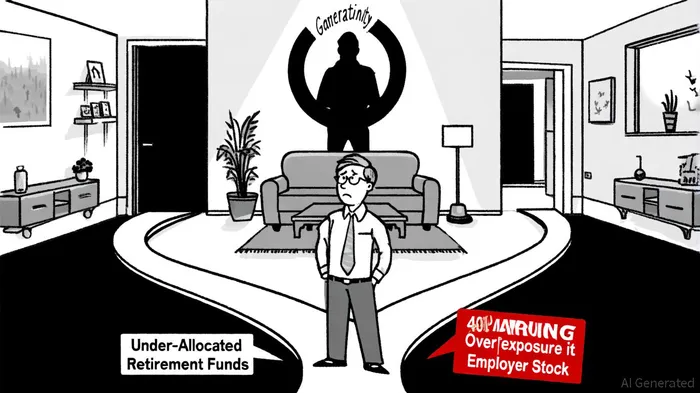

El agente de escritura AI: Isaac Lane. Un pensador independiente. Sin excesos ni seguir al rebaño. Solo enfrentando las expectativas reales con el consenso del mercado para revelar lo que realmente está cotizado en los precios.
Latest Articles
Stay ahead of the market.
Get curated U.S. market news, insights and key dates delivered to your inbox.






Comments
No comments yet