
Gen Z Backs Mamdani as Billionaires Sound "Socialist" Alarm Over NYC Primary Win
 Aime Summary
Billionaire hedge fund managers and corporate leaders are scrambling to respond to Zohran Mamdani’s historic primary win for New York City mayor, with figures like Daniel Loeb and Bill Ackman warning of a “socialist threat” from Gen Z. However, experts and young voters insist these fears are misplaced. The real issue, they argue, is not a rejection of capitalism but a demand for transparency and accountability from institutions that have failed to deliver on long-standing promises.
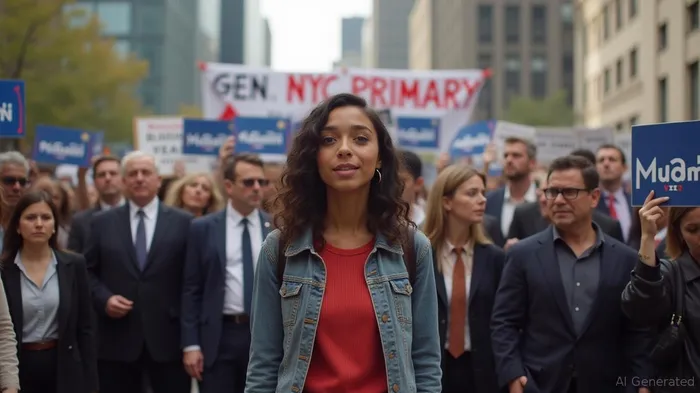
Mamdani, a 33-year-old democratic socialist, shocked political observers by securing the Democratic nomination after a campaign fueled by grassroots support from young voters. Sebastian Leon Martinez, a 20-year-old volunteer, described the victory party as a moment of “monumental” change, where attendees “cried and laughed” over the prospect of reshaping the Democratic Party. Yet Mamdani’s win has triggered a crisis among establishment figures, with Loeb warning of a “hot commie summer” on social media and Ackman pledging to fund anti-Mamdani candidates [1].
Contrary to these alarmist narratives, Gen Zers are not embracing socialism en masse. Political science professor Shana Gadarian notes, “They’re working at banks, starting gig economies, and working in high tech. If that’s not capitalism, I’m not clear what would be.” Young voters are instead driven by frustration with systemic failures, including a housing crisis, climate collapse, and economic inequality. Ziad Ahmed, a Gen Z marketing strategist, emphasized that the generation seeks “honesty” from leaders: “If the world is on fire, tell me the world is on fire. Don’t tell me that actually, you might like the heat.”
This disillusionment is rooted in tangible realities. The average age of first-time U.S. homebuyers hit 38 in 2024, while over half of Gen Z renters in the 30 largest metro areas spend more than 30% of their income on rent, according to Zillow. A MassMutual report found that 23% of millennials and Gen Zers without children do not plan to have families, citing financial stress as the primary reason. These challenges have eroded trust in traditional career paths and political systems, leading to a preference for outsider candidates who speak candidly about economic anxieties [2].
The critique extends beyond politics into the corporate world. Young workers demand “authenticity” and “fairness” from employers, rejecting superficial perks in favor of transparent career advancement and ethical business practices. Charlene Li, an author on digital transformation, highlighted that Gen Z values “clearly stated success metrics” and “concrete opportunities” over vague corporate jargon. Ahmed stressed that companies must align their public values with internal practices: “Authenticity is everything.”
Business leaders are advised to address these concerns directly. Instead of relying on diversity initiatives that reduce equity to checkbox exercises, Li recommends analyzing promotion and pay trends to identify systemic biases. Young workers, she argues, are looking for “some authenticity between what you have on your walls and on your websites and how you actually show up.”
The panic among billionaires and CEOs reflects a deeper misunderstanding of Gen Z’s priorities. Elizabeth Spiers, a progressive strategist, noted that critics often equate economic criticism with political extremism, treating capitalism as “a sacred cow.” However, Gen Z’s skepticism stems from lived experiences in an economy where myths of success—such as the American dream—have crumbled.
As the Fortune Workplace Innovation Summit highlighted, Gen Z seeks leaders who engage with their political views and acknowledge the personal stakes of policy. Young workers want “real action” to improve economic prospects, both from politicians and corporations. Amer, a climate activist, observed that businesses are “actively trying to figure out their role” in addressing youth concerns but must move beyond performative gestures.
The Mamdani phenomenon underscores a generational shift demanding honesty over rhetoric. While billionaires and CEOs may view his victory as a harbinger of socialism, the broader message is a call for institutions to align their actions with the realities young people face. As Ahmed concluded, “Gen Z is done with dated rhetoric. They want leaders to meet them where they are.”
Source: [1] [Billionaires and CEOs Gen Z Zohran Mamdani New York City](https://fortune.com/2025/07/23/billionaires-ceos-gen-z-zohran-mamdani-new-york-city/)
[2] [National Association of Realtors; MassMutual]

Stay ahead of the market.
Get curated U.S. market news, insights and key dates delivered to your inbox.


AInvest
PRO
AInvest
PRO



Comments
No comments yet